A technical bottleneck in the hunt for Earth-like planets
Finding a rocky planet in a habitable zone is not just a matter of building a bigger telescope. The harder problem is separating a dim planetary signal from the overwhelming brightness of the host star. That challenge sits at the center of a NASA-funded research effort now underway at the University of Central Florida and partner institutions, where scientists are building prototype photonics systems intended to help future observatories detect and study potentially habitable worlds.
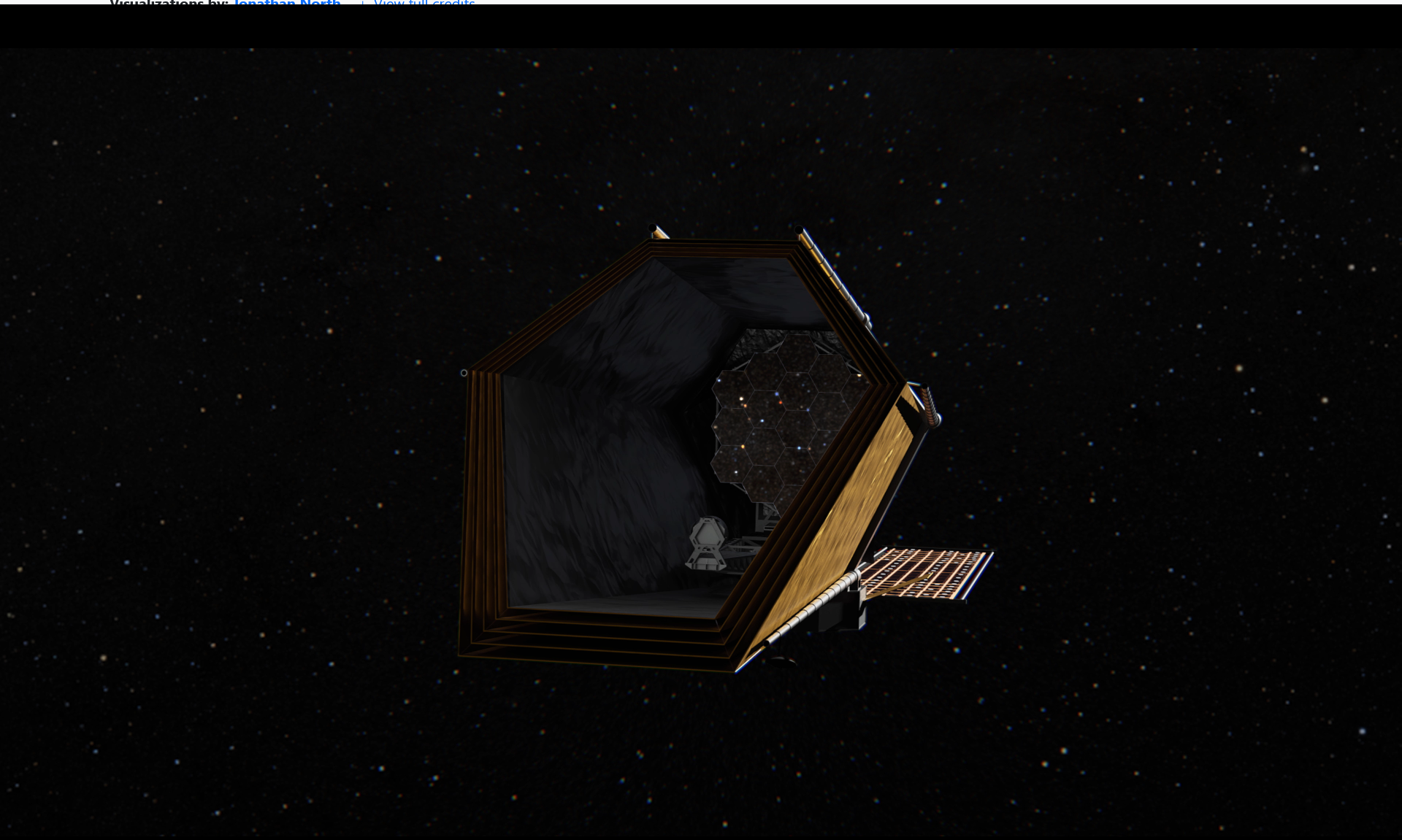
The work is tied to the planned Habitable Worlds Observatory, or HWO, a large infrared, optical and ultraviolet space telescope NASA intends to launch in the 2040s. As described in the source material, HWO is being designed specifically to search for rocky planets in circumstellar habitable zones and characterize their atmospheres. It is also expected to support broader astrophysics research. But to do its most ambitious exoplanet work, it will need extreme stability and precision in how light is measured, shaped and controlled as it moves through the telescope and coronagraph.
That is where the current effort comes in. Researchers at UCF’s Center for Research and Education in Optics and Lasers, working with collaborators from UC Santa Cruz, the University of Sydney and the Space Telescope Science Institute, are developing enabling technology through a three-year NASA-funded project called the Photonics-Enabled Exoplanet Spectroscopic System, or PEEPSS.
Why starlight is such a formidable obstacle
The basic difficulty in direct exoplanet imaging is scale. A planet sitting in the habitable zone of its star is usually very close to that star from the perspective of a telescope, and the star is vastly brighter than the planet. The source text quotes UCF professor Stephen Eikenberry, the principal investigator of PEEPSS, explaining that if the star is roughly 10 billion times brighter than the target world, even reducing that glare by a factor that sounds impressive can still leave enough residual light to bury the planetary signal.
This is why astronomers rely on coronagraphs, instruments designed to block a star’s light so that reflected light from orbiting planets can reach a detector. But coronagraphs are not magic shields. Tiny flaws in optics can allow starlight to leak through the system. When the underlying target is extremely faint, even microscopic imperfections become mission-level problems.
For future telescopes trying to detect possible biosignature-bearing worlds, that issue is not marginal. It is foundational. If residual starlight cannot be suppressed and measured with exquisite accuracy, the telescope may struggle to confirm whether a faint source is a planet at all, much less analyze the gases in its atmosphere.
What PEEPSS is trying to add
The PEEPSS project is aimed at this precision layer. According to the source text, the team is building and testing prototype systems that could help astronomers directly observe planets otherwise obscured by the light of their parent stars. The contribution from UCF draws on expertise in fiber optics and photonics, fields that increasingly matter wherever light has to be manipulated with extreme control.
Although the supplied text is truncated before the full technical description is completed, it makes clear that the system is meant to improve how wavefront errors and leaked starlight are handled in a telescope-plus-coronagraph architecture. In practice, that means using advanced optical techniques to better isolate the tiny planetary signal that survives after the star’s glare has been suppressed.
This work sits in an important category of space technology development: the incremental but mission-critical engineering that makes headline science possible. Public attention often goes to the telescope itself, the rocket launch or the discovery image. Yet many of the decisive advances happen years earlier in laboratories where teams are solving problems of noise, drift, calibration and optical contamination.
Why this matters for the Habitable Worlds Observatory
The Habitable Worlds Observatory is expected to become a flagship instrument for exoplanet science once it launches. Unlike multipurpose observatories later adapted for planet hunting, HWO is being framed from the start around the search for rocky, potentially habitable planets and the analysis of their atmospheres. That makes performance demands especially stringent.
To identify atmospheric chemistry on small distant worlds, astronomers need more than detection. They need stable observations that can distinguish a planet’s faint reflected light from the instrumental and stellar artifacts around it. Any improvement in wavefront control, starlight rejection or signal cleanliness can compound into a major increase in scientific yield.
That is why prototype work now has outsized importance. By the time a flagship observatory enters detailed implementation, the most critical enabling technologies need to be mature enough to lower mission risk. Programs like PEEPSS help determine whether future instruments can move from aspirational design goals to operational capability.
Beyond one telescope
The source text also notes that the UCF-led work could support other next-generation telescopes beyond HWO. That is a significant point. Technologies for direct imaging and spectroscopic isolation of exoplanets are not useful only for one mission architecture. If successful, they can influence how multiple observatories approach high-contrast imaging.
This matters because the search for habitable worlds is broadening from discovery to characterization. In the first phase of exoplanet science, the main question was whether planets around other stars were common. That question has largely been answered in the affirmative. The next phase asks which of those worlds are rocky, temperate and chemically interesting. The phase after that asks whether any show atmospheric combinations difficult to explain without biology.
Each step raises the bar for instrumentation. A detector that can find a planet is not necessarily enough to determine what is in its atmosphere. The deeper the scientific question, the less tolerance there is for stray light, instability and optical error.
A long timeline, but a consequential one
The 2040s launch window for HWO means the observatory itself remains a long-term project. But that timeline is typical for major space science missions, and it is precisely why component technologies are being developed now. Building confidence in photonics-enabled systems takes years of iteration, testing and validation.
For the public, projects like PEEPSS may look abstract compared with a launch or a planetary image. For the field, they are part of the mechanism by which ambitious science becomes credible. Directly observing a faint Earth-sized world near a brilliant star is one of astronomy’s most demanding technical goals. Progress depends on solving the optical details that decide whether a planet can be separated from the glare around it.
If HWO eventually fulfills its promise, it will do so not only because of mirror size or mission scope, but because supporting technologies were ready when needed. The current effort at UCF and its partner institutions is an example of that pipeline at work: targeted engineering meant to improve the odds that a future observatory can do one of the most difficult things in modern astronomy, which is to find and read the light of a distant habitable world.
This article is based on reporting by Universe Today. Read the original article.
Originally published on universetoday.com