Robotic Intelligence for Lunar Exploration
As NASA prepares for long-term missions on the Moon under the Artemis program, the agency is exploring ways to leverage robotic systems to handle routine tasks, freeing astronauts to focus on science and exploration. Robotic motion control, however, requires sophisticated technology, including advances in decision-making and object recognition. To address these challenges, NASA has partnered with Boulder, Colorado-based robotics company PickNik Inc.
Testing at Johnson Space Center
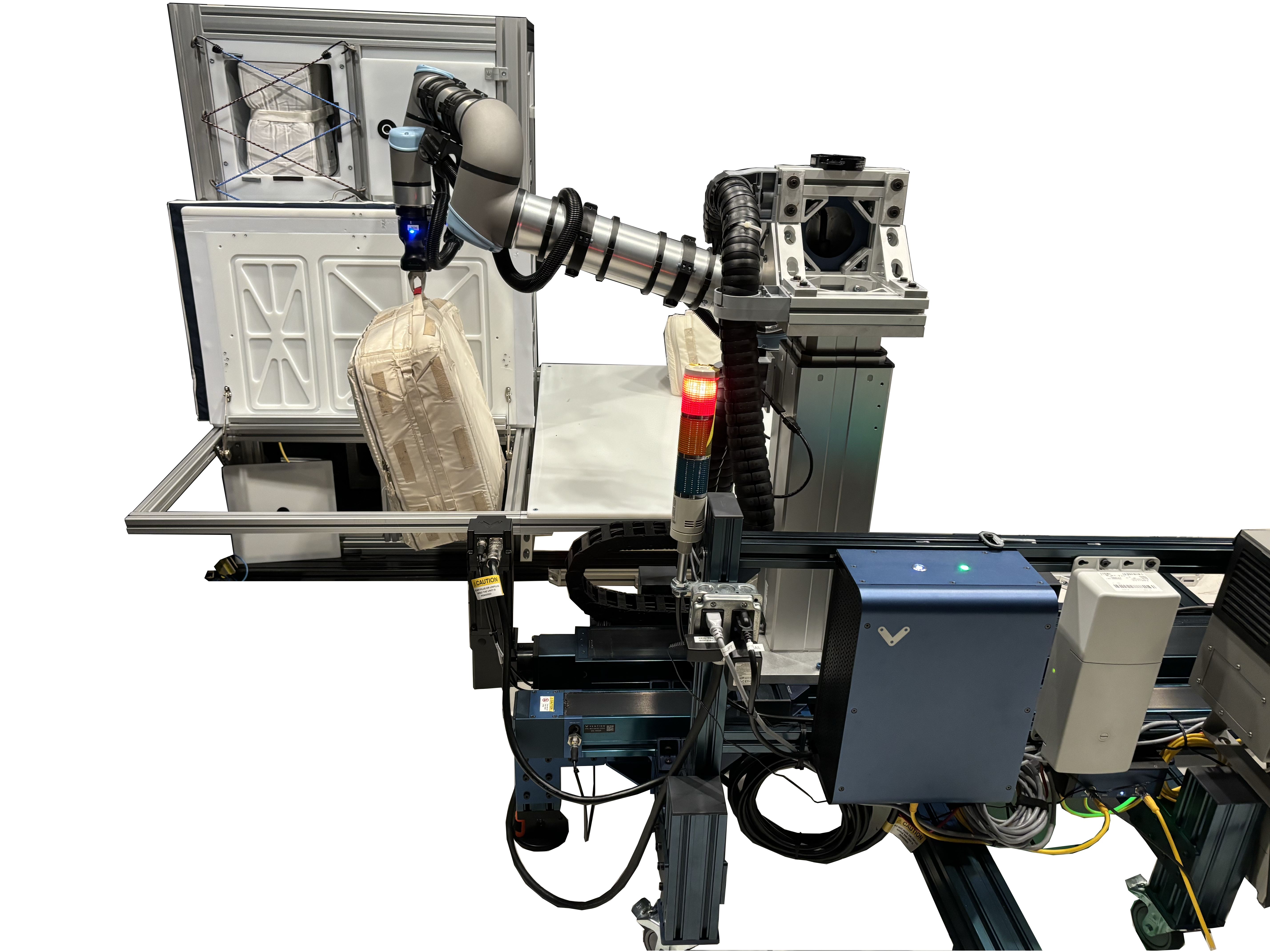
PickNik recently collaborated with Shaun Azimi, who leads the Dexterous Robotics team at NASA’s Johnson Space Center in Houston, along with other agency roboticists. The team tested software that enabled a robotic arm to recognize a spacecraft hatch, turn the latch, grasp the handle, and open the door. The arm then successfully transferred cargo bags between the hatch and a storage bin. These tests were conducted at NASA Johnson’s new Integrated Mobile Evaluation Testbed for Robotics Operations (IMETRO) facility, with funding from NASA’s Small Business Innovation Research (SBIR) program.
MoveIt Pro Software
PickNik designed and refined the robotic software, called MoveIt Pro, with support from early government investments. Commercially released in 2023, MoveIt Pro has found a significant customer base across various industries. Automotive giant BMW is using the software on its robotic assembly lines. Lightspeed, a company specializing in modular construction, employs MoveIt Pro to program large robotic arms that build panels for affordable housing. Hivebotics uses the software to automate its flagship cleaning robot.
Impact of NASA Support
Ezra Brooks, principal software engineer at PickNik, noted that the 35-person company might not have a product without NASA’s early support. Robotic software requires years of research and development to refine algorithms and create a commercial product. NASA enabled much of that foundational work, demonstrating how space agency investments can lead to terrestrial benefits.
Broader Implications
NASA’s technological advancements unlock key capabilities for missions at the Moon and beyond while benefiting commercial industries on Earth. For 50 years, NASA has documented the everyday benefits of space technology through its Spinoff publication. The collaboration with PickNik exemplifies how space exploration drives innovation that improves life on Earth.
Future Prospects
As Artemis missions progress, robots equipped with intelligent motion control will likely play an increasing role in lunar operations. The ability to autonomously perform tasks like hatch operation and cargo handling will be critical for establishing a sustainable human presence on the Moon. The success of MoveIt Pro in industrial settings also suggests a growing market for advanced robotic software.
This article is based on reporting by NASA. Read the original article.
Originally published on nasa.gov