Why a common kind of planet may be harder to read than expected
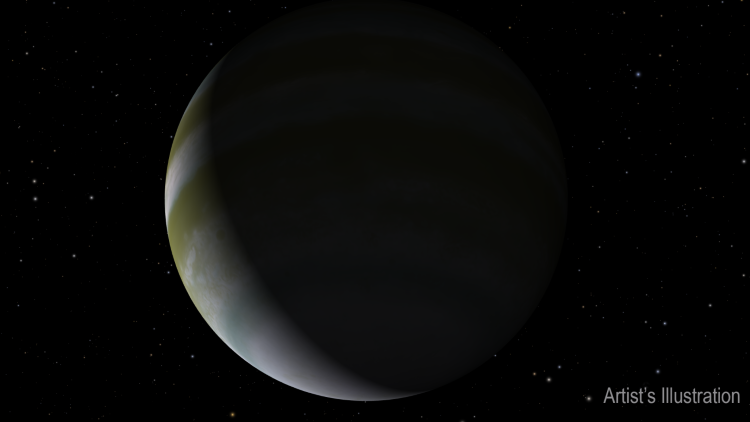
Sub-Neptune planets are among the most abundant worlds found beyond the Solar System, yet they remain some of the least intuitive to understand. They are larger than Earth, smaller than Neptune, and common enough that they make up a substantial share of the more than 6,300 confirmed exoplanets reported to date. Even so, astronomers still struggle to pin down what these planets are actually made of and how their interiors are arranged.
A new study led by researchers at the University of Chicago, working with colleagues in the United States and Canada, argues that one of the field’s main observational tools may be missing a large fraction of the water these worlds contain. The paper, published in The Astrophysical Journal, focuses on TOI-270 d, a sub-Neptune about 73 light-years from Earth, and suggests that water on such planets may be hidden below a hydrogen-rich atmosphere rather than mixed evenly throughout the upper layers that telescopes can observe.
The result matters because astronomers have increasingly relied on the James Webb Space Telescope to infer the chemistry of exoplanet atmospheres. If the new modeling is right, spectra from Webb may reveal only part of the story for a broad class of planets that are already central to exoplanet science.
What researchers modeled on TOI-270 d
TOI-270 d is a useful test case because it is both relatively nearby and already studied with modern instruments. The planet was discovered in 2019 and has about twice Earth’s radius and roughly 4.2 times Earth’s mass. It circles a red dwarf star every 11.4 days, in a compact system that also includes sister planets TOI-270 b and TOI-270 c.
Previous observations with JWST identified carbon dioxide, methane, and hydrogen in TOI-270 d’s atmosphere. That chemical combination has pointed researchers toward the likelihood of water, but not toward a simple answer about where that water sits or what form it takes. Water on a world like this could exist under conditions far removed from familiar terrestrial environments. It may be mixed with hydrogen, separated into deeper layers, or present in states controlled by extreme temperature and pressure.
To investigate that uncertainty, the team ran computer models that simulated both the planet’s atmosphere and its interior. Their goal was not merely to confirm the presence of water, but to test how water and hydrogen might behave together under the inferred conditions on TOI-270 d.
The study’s central conclusion is that temperature and composition interact in a way that can physically separate the two. On TOI-270 d, the researchers found that a relatively water-rich interior combined with a temperature near 537 degrees Celsius could allow water to sink beneath the hydrogen layer. If that is happening, telescope observations would mostly sample the upper hydrogen-dominated atmosphere while missing a potentially much larger reservoir below.
Why this changes the interpretation of telescope data
The implication is not that Webb is failing. It is that the structure of some planets may make even excellent observations incomplete by design. Telescopes read light that passes through or emerges from the outermost atmospheric layers. If those layers are not well mixed with the deeper interior, then the measured chemistry may underrepresent what is below.
That is a significant shift from a simpler picture in which sub-Neptune interiors are assumed to be broadly mixed. A well-mixed planet would make atmospheric readings a stronger guide to the whole world. A layered planet would not. In that case, astronomers could be underestimating the water content of some of the galaxy’s most common planets.
This matters beyond one object. Sub-Neptunes have no close analog in our own Solar System, which makes them scientifically awkward: they are common in the Milky Way but absent from the planetary lineup most familiar to researchers and the public. Without a nearby example, astronomers have had to piece together their nature from mass, radius, and atmospheric data, often through indirect inference.
That task is made harder by the fact that many sub-Neptunes appear to have thick, hazy atmospheres. Those atmospheres already complicate observation. The new study adds another layer of caution by suggesting that even when molecules are detected, the deeper structure may still be obscured.
What comes next for sub-Neptune research
The work does not settle the question for all sub-Neptunes, nor does it directly image buried water. It is a modeling study built around a specific planet with a specific known set of atmospheric signatures. But it gives astronomers a clearer physical framework for interpreting future observations and for revisiting older assumptions.
For Webb and for the broader exoplanet community, that means the next stage of research may focus less on whether water-related chemistry is present and more on how planetary layering affects what can be seen from afar. Similar planets with comparable masses, temperatures, and atmospheric compositions may now be examined through that lens.
TOI-270 d is especially valuable because it sits in a multiplanet system that may let scientists compare related worlds formed around the same star. Differences among the three planets could help researchers test whether layered interiors are common outcomes or a more specialized case.
More broadly, the study is a reminder that exoplanet science is moving from census-taking to planetary interpretation. It is no longer enough to count worlds and classify them by size. The harder problem is understanding their internal architecture, chemistry, and evolution, especially for categories unlike anything orbiting the Sun.
If water can be hidden beneath hydrogen on hot sub-Neptunes, that would reshape how one of the galaxy’s dominant planet types is understood. It would also sharpen the limits of what atmospheric spectroscopy alone can tell us. For a field built on decoding distant worlds through thin slices of light, that is both a caution and an opportunity: the data remain powerful, but the models used to read them may need to become more sophisticated.
In that sense, TOI-270 d is not just another exoplanet result. It is a case study in how quickly the frontier is shifting. The more precise the instruments become, the more important planetary structure becomes in explaining what those instruments do and do not see.
This article is based on reporting by Universe Today. Read the original article.
Originally published on universetoday.com