NASA Adds a New Test Facility at Langley
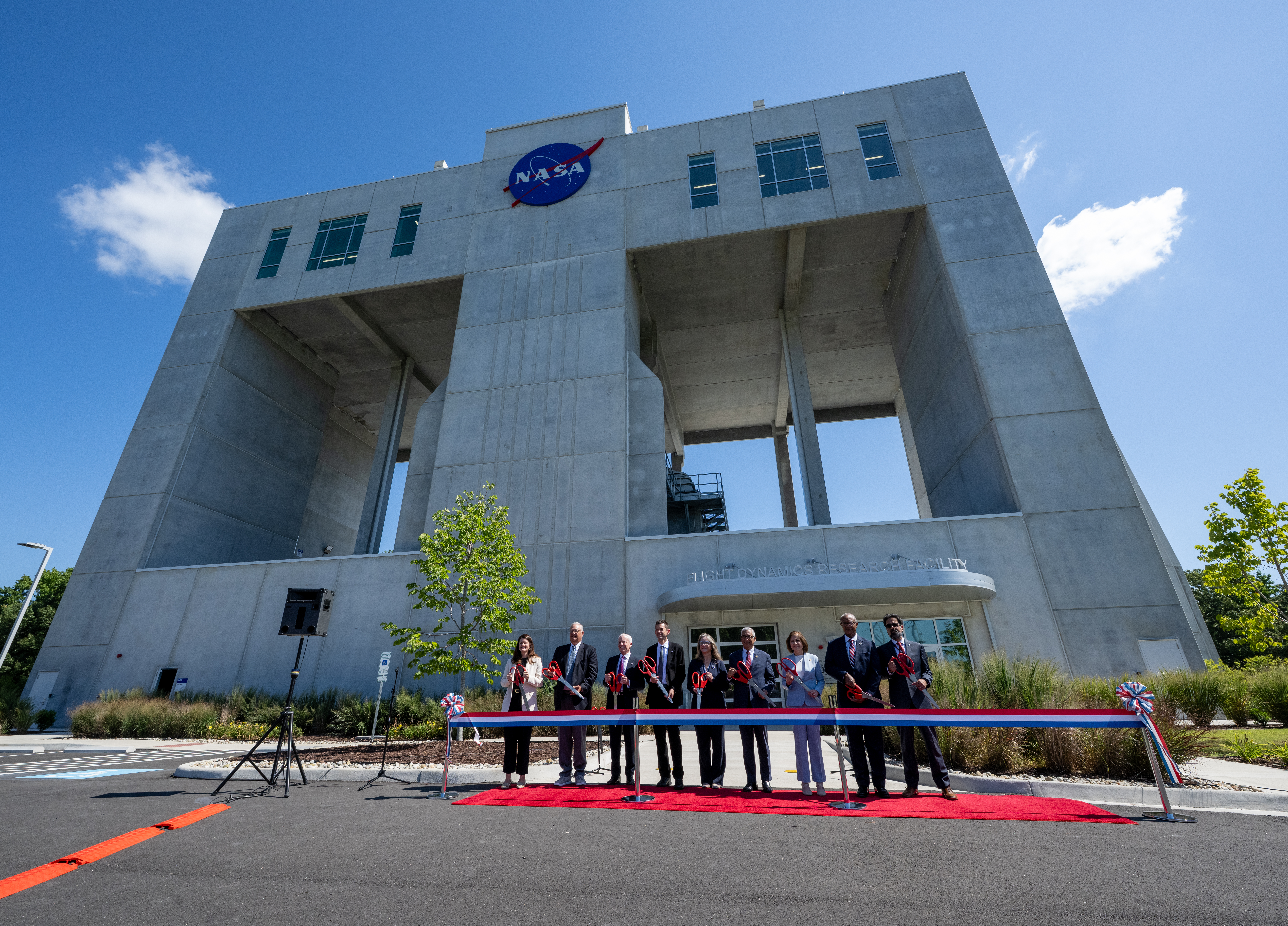
NASA has opened the Flight Dynamics Research Facility at its Langley Research Center in Hampton, Virginia, marking the agency’s first major new wind tunnel in more than 40 years. The ribbon-cutting on July 31 brought together NASA leadership and Virginia officials for what the agency framed as a significant addition to its research infrastructure.
The opening is notable not because wind tunnels are new to NASA, but because major new ones are rare. Aeronautics test facilities are expensive, specialized, and built for long horizons. When NASA says this is its first major new wind tunnel in over four decades, it signals a durable capital investment in the physical side of aerospace research at a time when digital simulation tools often dominate headlines.
What the Facility Is Meant to Do
According to NASA, the state-of-the-art facility will support research and technology development tied to the agency’s aeronautics, exploration, and science goals. That description spans more than aircraft design. It places the new tunnel inside NASA’s broader effort to connect atmospheric flight testing, systems engineering, and mission development across multiple programs.
NASA also explicitly linked the facility to Artemis and to the goal of establishing a sustained human presence on the lunar surface through development of a Moon Base. That connection may seem indirect at first glance, since a wind tunnel is commonly associated with aircraft and atmospheric vehicles rather than lunar operations. But in practice, the tools and methods used in flight dynamics research can support a wide range of engineering problems, including vehicle stability, control systems, entry and descent concepts, and technologies intended to operate across different mission environments.
The agency’s emphasis suggests that the facility is not being treated as a narrow aeronautics asset. It is being positioned as cross-program infrastructure that can contribute to long-cycle aerospace development, from flight science to space exploration architecture.
Why a New Wind Tunnel Matters in 2026
A new wind tunnel opening in 2026 stands out because aerospace development is balancing two approaches at once. On one side, simulation, digital twins, and advanced computational fluid dynamics have become far more powerful. On the other, physical validation remains indispensable. Designers still need controlled test environments where they can observe how models, components, and systems behave under measurable conditions.
That is especially true when agencies and companies are pushing into more complex mission sets. Advanced aircraft concepts, high-performance autonomous systems, reentry technologies, and hybrid mission architectures all create scenarios where engineering teams need confidence that models match reality. Physical testing reduces uncertainty in ways software alone cannot.
For NASA, the decision to build a major new wind tunnel therefore says something larger about how the agency sees the next era of aerospace work. It expects enough demand for real-world experimental capability to justify a facility designed to serve for decades. In an era of growing public-private activity in aerospace, that kind of infrastructure can also reinforce NASA’s role as a foundational research institution rather than only a mission operator.
Langley’s Continuing Role
Langley Research Center has long been central to NASA’s aeronautics work, and the new facility extends that identity. Hampton’s Langley campus has historically been one of the agency’s core sites for air and space vehicle research, making it a logical home for a major new wind tunnel. By placing the Flight Dynamics Research Facility there, NASA is strengthening an existing technical ecosystem instead of dispersing that capability into a new location.
That matters for workforce and continuity. Specialized testing facilities depend not just on buildings and hardware, but on engineers, technicians, instrumentation experts, and data teams who know how to operate them effectively. Locating the new tunnel at Langley lets NASA build on institutional knowledge already tied to aerodynamic and flight research.
The opening ceremony itself reflected that broader importance. NASA Administrator Jared Isaacman joined other NASA leaders, federal officials, state officials, and local representatives for the ribbon-cutting. The lineup underscored that this is both a technical asset and a public investment with regional and national significance.
What NASA Is Signaling
NASA’s announcement was brief, but the subtext is clear. The agency is signaling commitment to research infrastructure that supports long-term capability, not just near-term program milestones. Major facilities shape what kinds of experiments can be run, how quickly concepts can be iterated, and which technologies are mature enough to move forward.
That infrastructure logic matters in several areas at once:
- Aeronautics programs need modern experimental environments to validate new vehicle concepts.
- Exploration programs benefit from flight dynamics research that reduces uncertainty in mission design.
- Science missions often rely on engineering advances first proven in dedicated research settings.
By tying the facility to all three, NASA is presenting the wind tunnel as a shared platform rather than a single-program expense. That framing increases its strategic value inside the agency.
The Limits of What Is Known So Far
The announcement does not provide detailed technical specifications, operating envelopes, or early project schedules for research campaigns. That means the significance of the facility, for now, rests more on what NASA says it is for than on public engineering detail about how it will be used first.
Still, even the limited information is enough to establish why the opening matters. New national research hardware of this scale is uncommon. In aerospace, where timelines stretch across decades and safety margins are unforgiving, a facility opening can be as meaningful as a mission launch because it expands what becomes possible later.
The Bottom Line
NASA’s Flight Dynamics Research Facility is a quiet but consequential development. It is the agency’s first major new wind tunnel in more than 40 years, it reinforces Langley’s role as a core aeronautics center, and it is being positioned as infrastructure for aeronautics, science, and exploration programs, including Artemis-era ambitions.
The immediate story is a ribbon-cutting in Virginia. The larger story is that NASA is investing again in the physical research backbone required to design, test, and validate the systems that future flight and space programs will depend on.
This article is based on reporting by NASA. Read the original article.
Originally published on nasa.gov