NASA Wants Spacecraft to Think Faster and More Independently
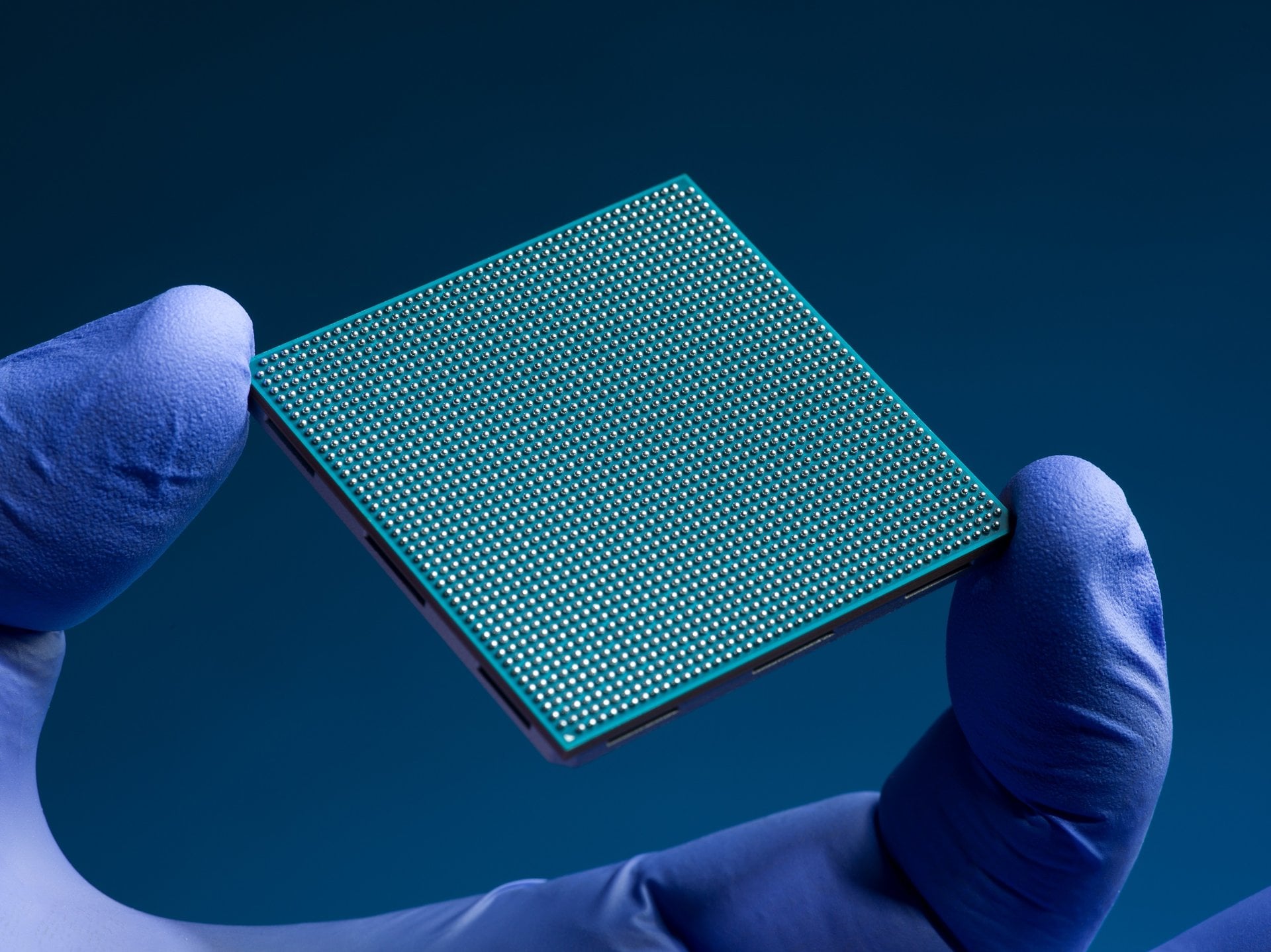
NASA’s next-generation computing push for deep-space missions has cleared an early but important checkpoint. The agency’s High Performance Spaceflight Computing processor, or HPSC, has completed its first round of environmental tests, according to the supplied report from Universe Today.
The chip is being developed to solve a growing mismatch in spaceflight: missions are gathering more data, operating farther from Earth, and asking onboard systems to make more decisions with less immediate human oversight. Traditional space-qualified processors have been valued for durability and reliability, but their performance has lagged behind the needs of modern exploration.
HPSC is intended to change that balance. NASA says the radiation-hardened processor could deliver 100 times the computing capability of current systems while still surviving the harsh conditions of space, including extreme temperatures and radiation.
Why Spacecraft Need More Computing Power Now
The basic problem is distance. When spacecraft and crews move farther from Earth, communication delays become harder to work around. A system operating on the Moon, Mars, or beyond cannot always wait for human instructions if a fault appears, an observation opportunity opens, or a scientific instrument needs rapid adjustment.
That makes onboard autonomy more than a convenience. It becomes part of mission capability. The source text notes that autonomous systems could accelerate scientific returns through faster data analysis. Instead of sending large volumes of raw information home and waiting for interpretation, future spacecraft could process more of it locally and act on the results sooner.
There is also a practical engineering case. Modern missions routinely carry more sophisticated instruments than their predecessors. Those instruments generate more data, and processing that data efficiently can determine how much science a mission actually gets done. Computing shortfalls can become mission bottlenecks just as surely as power or bandwidth limits.
What HPSC Is and Who Is Building It
HPSC is being developed through a commercial partnership involving NASA and Arizona-based Microchip Technology Inc. The work is managed under NASA’s Game Changing Development program, with the Space Technology Mission Directorate based at NASA Langley overseeing the effort. NASA’s Jet Propulsion Laboratory helped define mission requirements, fund industry studies, and select Microchip as the commercial partner.
The processor is described as a system-on-a-chip, or SoC, the kind of compact integrated architecture common in smartphones and tablets. In this case, however, the idea is not consumer convenience but space survivability. The design integrates the essential elements of a computing system into a single microchip while being built to withstand years in the space environment.
That combination is the heart of the project. Consumer computing has advanced rapidly, but most terrestrial chips are not designed for radiation-heavy, temperature-variable conditions. Spaceflight hardware, by contrast, has typically been rugged but comparatively underpowered. HPSC aims to narrow that gap.
An Early Test With Bigger Implications
Passing an initial round of environmental testing does not mean the processor is ready for flight tomorrow. But it does indicate that the project is progressing on the problem that matters most for space electronics: proving that better performance does not come at the cost of survivability.
The source text emphasizes how long NASA has relied on older chips because they were known to be hardy and reliable. That conservatism is understandable. In space, component failure can be mission-ending. Yet relying on decades-old processing approaches also limits what spacecraft can do. HPSC represents NASA’s attempt to break that tradeoff by modernizing onboard computing without abandoning the strict durability demands of flight hardware.
That matters not only for flagship exploration missions. If the platform becomes widely usable, it could support a broad range of missions that need more intelligence at the edge, from robotics to instruments to communications-heavy science platforms.

Why AI Is Part of the Story
The source article frames HPSC as an AI processor, and that reflects a larger shift in how space agencies think about autonomy. AI in this context is not just about headline-grabbing machine intelligence. It is about enabling systems to classify, prioritize, route, and respond faster than legacy hardware allows.
Future missions may need to identify the most valuable scientific observations in real time, monitor spacecraft health continuously, and manage complex operational conditions with limited intervention from Earth. Those tasks depend on compute capacity as much as on software design. A smarter spacecraft still needs enough local processing power to run the models and algorithms that give it useful autonomy.
By building that capability into a radiation-hardened chip, NASA is effectively trying to make advanced onboard decision support a standard mission tool rather than a bespoke experiment.
A Commercial Model for Government Space Tech
Another notable element of the HPSC effort is the partnership structure. NASA is not building the processor alone inside a closed agency pipeline. Instead, the project combines government mission requirements with commercial development from Microchip Technology.
That model can be strategically important. If a space-grade processor becomes commercially available or commercially sustained, it could be used by a wider ecosystem of missions and contractors, potentially lowering barriers to adoption. It also aligns with a broader trend in space technology development, where NASA increasingly acts as a demanding customer and technical partner while industry carries part of the development burden.
The source text notes that Microchip funded its own research and development as part of the effort. That detail suggests industry sees value in the resulting platform beyond a single NASA program.
What the Test Milestone Signals
HPSC’s first environmental-test success is best understood as a credibility milestone. NASA is trying to move space computing into a new performance class while preserving the resilience required for real missions. The promise is substantial: far more onboard computing, more autonomous operations, and faster scientific payoff from increasingly data-rich spacecraft.
If the chip continues to meet expectations, it could help redefine what spacecraft are able to do for themselves. In an era of longer communication delays and heavier data demands, that may be one of the most important infrastructure upgrades in exploration technology.
For now, the takeaway is straightforward. NASA has not merely proposed a smarter space processor; it has moved that processor through an early environmental proving step, bringing a higher-autonomy future for spacecraft a little closer to operational reality.
This article is based on reporting by Universe Today. Read the original article.
Originally published on universetoday.com