Artemis 3 Crew Announcement Sparks Debate
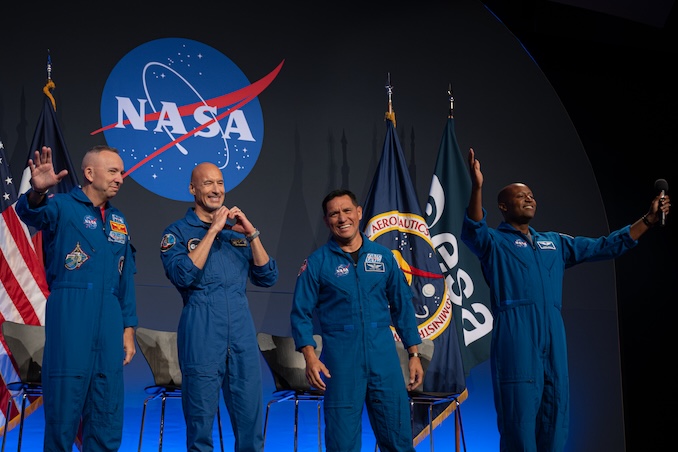
On June 9, 2026, NASA announced the four astronauts selected for the Artemis 3 mission, the first crewed flight of the Artemis program. The crew consists of Commander Randy Bresnik, Pilot Luca Parmitano, and Mission Specialists Frank Rubio and Andre Douglas. Notably, all four are men, a fact that quickly drew criticism from space enthusiasts and advocates for gender equality.
The announcement was made during an event at NASA's Johnson Space Center in Houston, Texas. The mission, scheduled for next year, will test rendezvous and docking procedures in low-Earth orbit with the lunar landers being developed by SpaceX and Blue Origin. It is a critical step toward returning humans to the Moon.
Public Reaction and Social Media Outcry
Following the announcement, social media platforms saw a wave of disappointment and outrage. One Reddit user described the crew selection as "massively upsetting," arguing that women represent 50% of the population and deserve at least one seat on every government-run mission. Similar sentiments were echoed across Twitter and other forums.
NASA Administrator Jared Isaacman acknowledged the backlash in a post on X (formerly Twitter), writing, "I have seen reactions ranging from disappointment to outrage." He then proceeded to defend the selection process, emphasizing that the astronauts were chosen based solely on their experience, skill sets, and availability.
Isaacman's Defense: Merit Over Quotas
Isaacman, who has personally flown to space twice with 50% female crews, stressed that the decision was not a reflection of NASA's commitment to diversity. "My closest advisors and some of the smartest engineers I know are women," he wrote. "In our latest NASA leadership organization, nearly 50% of the center directors and mission directorate leadership are women."
He also pointed to the most recent astronaut candidate class, selected under his administration, which was majority female—six women and four men. "They were the best of the best, including one astronaut [Anna Menon] I previously went to space with," Isaacman added.
Meet the Artemis 3 Crew
The Artemis 3 crew brings a wealth of experience. Commander Randy Bresnik, 58, is a veteran of 149 days in space, having flown on a space shuttle mission and served on the International Space Station. Pilot Luca Parmitano, 49, is a European Space Agency astronaut with two long-duration stays on the ISS. Mission Specialist Frank Rubio, 49, holds the U.S. record for the longest single spaceflight at 371 days aboard the ISS in 2022-23. The fourth member, Andre Douglas, 40, is a space rookie but brings broad engineering expertise to the mission.
A Broader Context: NASA's Diversity Efforts
While the Artemis 3 crew is all-male, NASA has made strides in gender diversity in recent years. The 2025 Astronaut Candidate Class, announced on September 22, 2025, included 10 candidates: U.S. Army CW3 Ben Bailey, Anna Menon, Rebecca Lawler, Katherine Spies, U.S. Air Force Maj. Cameron Jones, Dr. Lauren Edgar, U.S. Navy Lt. Cmdr. Erin Overcash, Yuri Kubo, Dr. Imelda Muller, and U.S. Air Force Maj. Adam Fuhrmann. Six of these candidates are women.
Isaacman's defense highlights a tension between merit-based selection and the desire for representation. He argues that the Artemis 3 crew was chosen for their specific skills needed for the mission's objectives, not to fulfill a diversity quota. However, critics contend that a government agency should lead by example in ensuring equitable representation.
Looking Ahead: Artemis and Beyond
The Artemis 3 mission is a pivotal step in NASA's plan to establish a sustainable presence on the Moon. The crew will test critical docking procedures with lunar landers, paving the way for future landings. As the program progresses, NASA will have opportunities to select more diverse crews for subsequent missions.
Isaacman's comments suggest that future astronaut selections will continue to prioritize qualifications, but the agency remains committed to diversity at all levels. The debate over the Artemis 3 crew underscores the broader challenges of balancing merit and representation in high-stakes endeavors like space exploration.
This article is based on reporting by Spaceflight Now. Read the original article.

Originally published on spaceflightnow.com