NASA Sets a Public Broadcast Around a Science Opportunity
NASA has outlined its live coverage plans for the total solar eclipse crossing parts of the Northern Hemisphere on August 12, pairing a public broadcast with a set of research activities that turn the celestial event into a coordinated science campaign.
According to the agency, totality will be visible in parts of Greenland, Iceland, northern Russia, the Atlantic Ocean, Spain, and a small corner of Portugal. Outside the path of totality, a partial solar eclipse will be visible across a much larger area, including parts of the United States, most of Canada, much of Europe, and northwestern Africa.
The announcement is more than a programming notice. NASA’s plan shows how eclipses continue to serve two functions at once: they are major public-facing astronomy events, and they remain rare scientific windows for observing the Sun and the atmosphere under unusual conditions.
Where and When the Eclipse Will Be Seen
The agency’s advisory says the eclipse broadcast will begin at 1:15 p.m. Eastern on Wednesday, August 12. NASA lists totality beginning in Iceland at 1:45 p.m. Eastern and in Spain at 2:28 p.m. Eastern. It also notes that viewers in other Northern Hemisphere locations will still be able to observe a partial eclipse, even if they are not inside the narrow path where the Moon completely covers the Sun.
That geographic spread is part of what makes this event notable. Total solar eclipses are always local in their most dramatic phase, but this one reaches across multiple regions with very different viewing conditions and audiences. NASA is using that range to structure a live stream that combines views from along the path with interviews from subject-matter experts.
The format reflects the agency’s recent approach to major sky events: make the science broadly accessible while also drawing attention to the underlying mission work. NASA says the broadcast will be available through its online platforms, and it is also inviting the public to submit questions through social media during the event.

Why Eclipses Still Matter to Solar Science
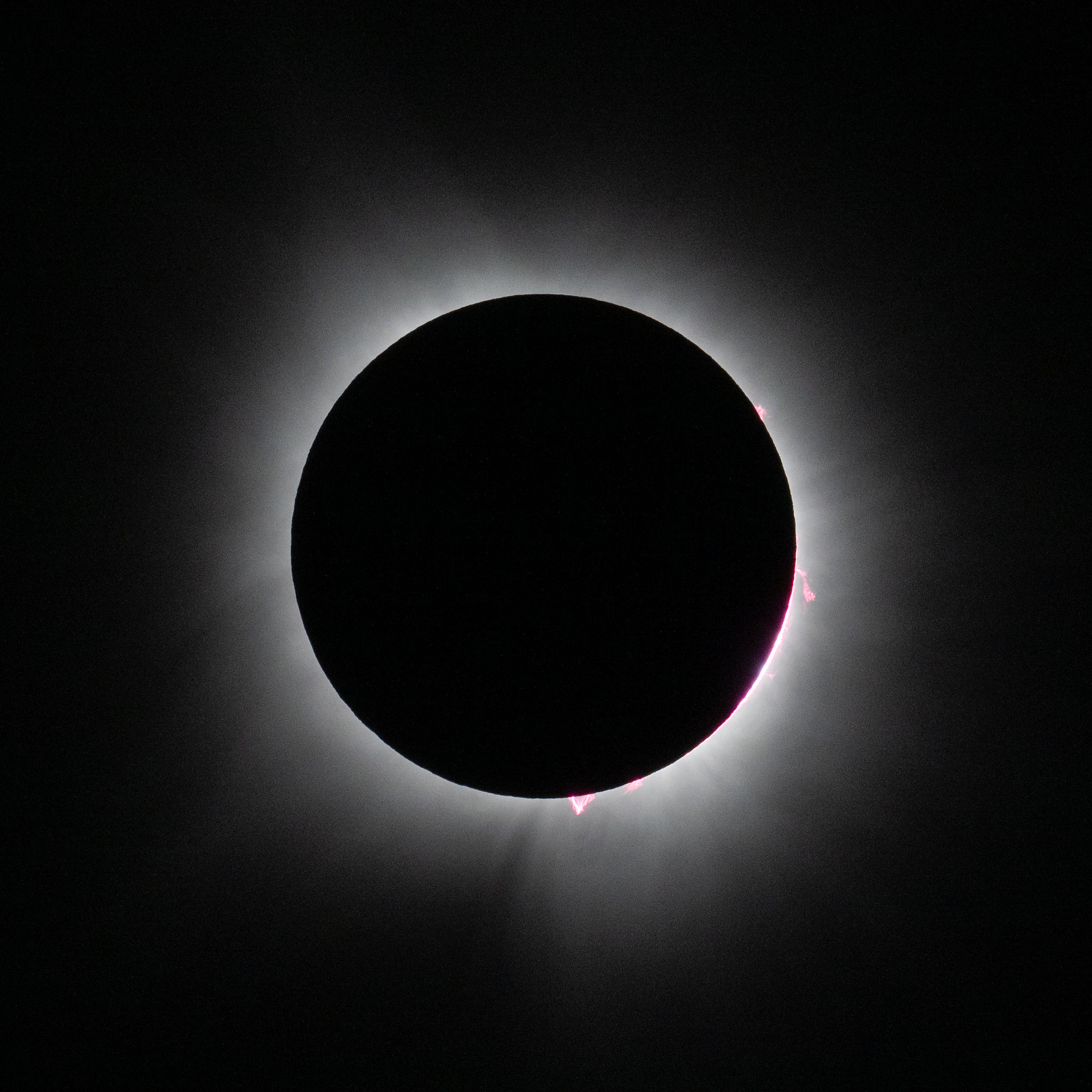
For the public, a total solar eclipse is a dramatic visual event. For researchers, it can provide a temporary change in observing conditions that is hard to duplicate. When the Moon blocks the Sun’s bright face, the faint outer atmosphere known as the corona becomes much easier to study. That is one reason eclipses remain scientifically valuable even in an era of dedicated solar observatories.
NASA says that during the August 12 eclipse it will conduct experiments in the path of totality. One NASA-funded science team will use a WB-57 high-altitude research aircraft to chase the Moon’s shadow in order to investigate the dynamics of the Sun’s corona.
That detail is significant because it shows the eclipse is being treated not just as a viewing opportunity but as a moving observational platform. An aircraft operating at high altitude can extend observing possibilities and place instruments above some of the atmospheric disturbances that limit ground-based measurements. The source text does not detail the instrument package or precise experiment design, but the goal is explicit: studying coronal dynamics during totality.
The corona remains one of the most compelling targets in solar physics. It is tied to questions about solar heating, magnetic structure, and space weather behavior. Every additional data set gathered under favorable eclipse conditions can help refine the picture, especially when combined with observations from other platforms.
Balloons, Students, and the Atmosphere
NASA’s eclipse plans also include a student-led atmospheric research component. The agency says the NASA-supported Nationwide Eclipse Ballooning Project will send students from several U.S. universities to Iceland and Spain. There, they will launch scientific balloons before, during, and after the eclipse to study how the temporary darkening of the sky affects Earth’s atmosphere.
This part of the program broadens the mission beyond solar observation alone. An eclipse briefly changes local light and heating conditions, offering researchers a chance to measure short-term atmospheric responses. Those changes may be subtle and transient, but that is exactly why synchronized launches around the eclipse window can be useful.
The project also reflects a recurring pattern in modern space and Earth science: major observation campaigns increasingly blend frontline research with hands-on training. In this case, students are not only witnessing the eclipse. They are participating directly in data collection tied to a narrow and time-sensitive scientific event.
That educational dimension matters because it converts public excitement into research capacity. Eclipses attract broad attention, but structured programs like balloon campaigns create a more durable legacy by giving early-career researchers experience with instrumentation, operations, and field science.
Public Engagement Is Part of the Mission
NASA’s advisory emphasizes access as much as experimentation. The agency says photos of the eclipse, dependent on visibility, will be made available shortly after the event through its Flickr account. It also encourages viewers to engage on X, Facebook, and Instagram and to submit questions that NASA experts can answer during the live broadcast.
That kind of outreach is not incidental. Eclipses are among the few astronomy events that reliably attract mass audiences well beyond the usual science-news public. By packaging the event as both spectacle and investigation, NASA can connect a general audience to specific research questions: what is happening in the corona, how does Earth’s atmosphere respond, and how do scientists actually gather that data?
The August 12 eclipse also follows the widely watched April 8, 2024 total solar eclipse over North America, which NASA references in its advisory with an image from Dallas. The agency is clearly building on the momentum from that event, using the next major eclipse visible to parts of the Northern Hemisphere to maintain public interest in solar science and observational campaigns.
What This Announcement Signals
NASA’s update is a reminder that eclipse coverage is now an integrated product: live media event, distributed science operation, and public education effort all at once. The most important detail is not simply that a stream will be available. It is that the agency is organizing multiple observing layers around a brief natural event that moves quickly across geography.
For viewers in the path of totality, the eclipse will be a rare visual experience. For viewers outside it, the live stream offers a way to follow totality in real time while hearing directly from experts. For researchers, the value lies in the temporary observing conditions and the coordinated experiments that take advantage of them.
That combination is why the August 12 eclipse matters. It is both a public moment and a scientific campaign, and NASA is treating it as such.
- NASA’s live broadcast is scheduled to begin at 1:15 p.m. Eastern on August 12.
- Totality will be visible in parts of Greenland, Iceland, northern Russia, the Atlantic Ocean, Spain, and a small part of Portugal.
- NASA says aircraft and balloon experiments will study the solar corona and Earth’s atmosphere during the event.
This article is based on reporting by NASA. Read the original article.

Originally published on nasa.gov