A rare easy-to-see event for weekend skywatchers
Skywatchers across North and South America are set for one of the best-placed lunar occultations of a bright star in 2026. Universe Today reports that on the evening of Saturday, April 25, the waxing gibbous Moon will pass in front of Regulus, the brightest star in Leo, producing a particularly favorable event for observers across a broad stretch of the Americas.
Lunar occultations are straightforward in concept but dramatic in practice. From the right locations, the Moon appears to blot out a star as it moves across the sky. In this case, the target is Regulus, a first-magnitude star bright enough to stand out even when close to the Moon’s glare. That combination makes the event more accessible than many specialized astronomy observations.
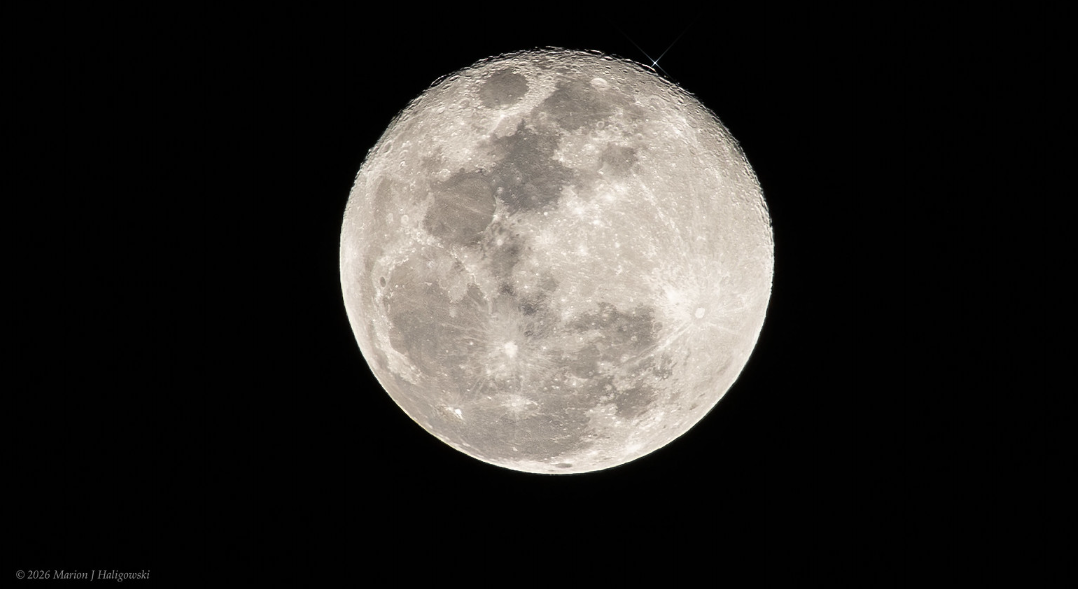
According to the supplied source text, the Moon will be about 70% illuminated and waxing when the occultation occurs. The article places the event around 1:19 Universal Time on April 26, corresponding to the evening of April 25 across much of the Americas.
Who gets the best view
Universe Today says the occultation will be visible for eastern North America, the Caribbean, southern Central America, and northeastern South America. In the contiguous United States, conditions improve the farther south and east an observer is located. That is because Regulus will disappear behind the Moon’s dark leading limb under darker twilight skies after sunset.
That detail is important. A star vanishing behind the unlit edge of the Moon is usually easier and more dramatic to see than a disappearance against the bright sunlit side. It creates the impression that the star abruptly switches off.
The report adds that regions southward across the Caribbean and South America should see the full event under dark skies. By contrast, observers in areas west of the US East Coast to the Mississippi River face a less favorable setup, with Regulus going behind the Moon before sunset and reappearing around dusk. West of the Mississippi, the occultation takes place in daytime skies.
Why this occultation stands out
The supplied article calls it one of the best-placed lunar occultations of a bright star for 2026. That matters because not all occultations are equally practical for casual observers. Some happen over remote regions, in bright daylight, or with stars too faint to make for a satisfying event.
Regulus is different. As Alpha Leonis, it is among the sky’s more recognizable bright stars. Pair that with a prominent waxing gibbous Moon and a Saturday-night viewing window, and the event becomes unusually approachable for anyone willing to check local timing and cloud cover.
It is also visually compelling because occultations compress motion that is normally too slow to notice. The Moon’s drift against the stellar background becomes obvious when a bright point disappears or reappears at the lunar edge. For new observers, that can be a vivid introduction to the fact that the sky is dynamic, not fixed.
The graze line offers the most dramatic version
Universe Today highlights one especially interesting zone: the graze line, where the Moon’s limb just barely nicks the star. Along that path, Regulus can appear to blink on and off repeatedly as lunar mountains and valleys alternately block and reveal it.
The report says the northern graze line for this event crosses upstate New York diagonally from Lake Ontario to Long Island. For observers close to that line, the occultation could become much more than a simple disappearance and reappearance. Instead, it may turn into a rapid sequence of interruptions that reflects the jagged topography of the Moon’s edge.
That effect is not just dramatic. The article notes that such observations can provide useful information for mapping the lunar limb profile. In other words, even an event visible to amateurs can have observational value.

Can it be seen in daylight?
The supplied text raises another intriguing possibility: spotting Regulus in the daytime. According to the article, a first-magnitude star sits near the edge of what may be possible with binoculars or a small telescope under excellent conditions and a deep blue sky. The nearby Moon can help by acting as a guidepost.
That does not make daytime viewing easy. But it does widen the event’s appeal. Observers outside the best nighttime footprint may still have something to try if they have the right equipment, stable skies, and precise timing.
Even where the event is not ideal, the Moon-Regulus pairing itself should still be noticeable at dusk, offering at least a close conjunction for casual skywatchers who miss the actual disappearance.
Why events like this matter
Large astronomical headlines usually belong to eclipses, planetary discoveries, rocket launches, or major observatory results. But simple visual events like this occultation play a different role. They connect public interest to the sky without requiring a major instrument, special travel, or expert knowledge.
A lunar occultation of a bright star is an accessible reminder that observational astronomy is still one of the easiest forms of hands-on science. Clear skies, patience, and basic timing are often enough.
That accessibility also helps astronomy outreach. Events visible across large populated regions create a shared viewing opportunity, which is exactly the sort of phenomenon that clubs, schools, and amateur groups can use to bring in new observers.

A good night to look up
The most important requirement remains weather. But if skies cooperate, much of the Americas will get a strong view of the Moon crossing Regulus on the night of April 25. For the best-placed observers, the star should vanish behind the Moon and later reappear in a way that makes celestial mechanics feel immediate and tangible.
For those on the graze line, the spectacle may be even better. And for everyone else, the event is a useful prompt to spend a few minutes outdoors with the sky. Astronomy does not always need a once-in-a-century eclipse to be memorable. Sometimes it just needs the Moon, a bright star, and a well-timed weekend evening.
This article is based on reporting by Universe Today. Read the original article.
Originally published on universetoday.com