A rare interstellar visitor is yielding new chemical clues
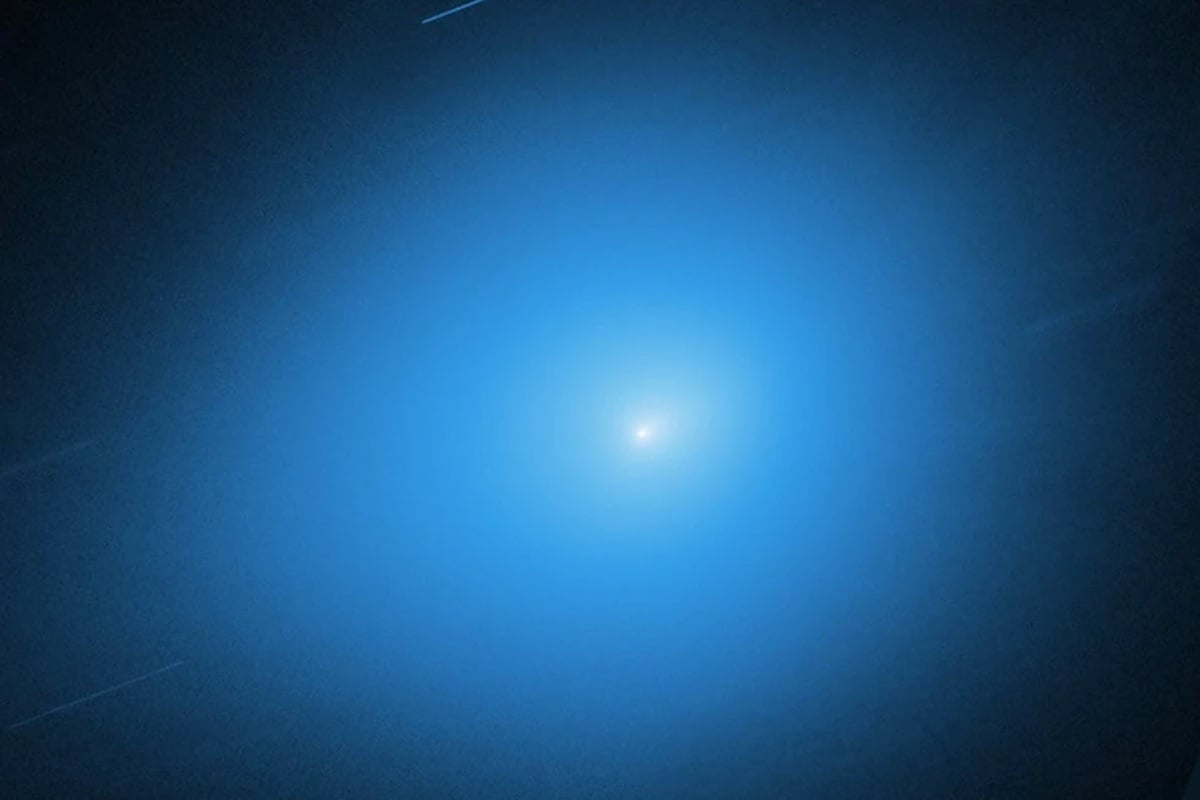
Interstellar comet 3I/ATLAS has already earned a place in astronomy history as only the third known object from another star system observed passing through our own. Now it is offering something even more valuable: a direct look at the chemistry of matter formed elsewhere in the galaxy.
According to a new analysis described in Universe Today, researchers examining James Webb Space Telescope observations found that 3I/ATLAS is rich in methane ice. That conclusion comes from mid-infrared signatures gathered as the object moved through the inner Solar System, adding a new layer of detail to an object already known to have shown a coma largely composed of carbon dioxide in earlier observations.
Why 3I/ATLAS matters
3I/ATLAS was first identified on July 1, 2025, becoming the third confirmed interstellar object to pass through the Solar System. It reached perihelion, or closest approach to the Sun, on October 30, 2025, then continued outward. By April 2026, the comet had passed beyond Jupiter’s orbit and was heading back into interstellar space.
That trajectory means scientists have only a narrow window to study it. Lead author Matthew Belyakov of Caltech, as quoted in the supplied source text, said the object has likely been traveling through the galaxy for at least a billion years and that its high speed gave researchers only a limited chance to collect data. Webb is expected to observe it once more in the spring, but the object is already becoming difficult to track as it recedes.
Methane adds a new piece to the puzzle
The methane result matters because comets and asteroids preserve material from the birth of planetary systems. Their chemical makeup can reveal the environment in which they formed. In the case of an interstellar object, that makes composition studies especially important: rather than sampling leftovers from our own Solar System, astronomers are effectively examining preserved debris from a different stellar neighborhood.
The supplied source text says the new work was published in The Astrophysical Journal Letters and focused on mid-infrared signatures from 3I/ATLAS as it approached the Sun. Those observations allowed the team to infer that the comet’s interior is rich in methane. Combined with the earlier finding of a carbon-dioxide-heavy coma, the picture emerging is of an object with a volatile-rich makeup that does not map neatly onto the behavior seen in earlier interstellar visitors.
How it compares with earlier interstellar objects
The two previous interstellar objects, 1I/'Oumuamua and 2I/Borisov, did not behave the same way. The supplied text notes that 'Oumuamua was already leaving the Solar System when it was discovered in 2017, giving scientists only about 80 days of observations and producing data that remained inconclusive. Its odd behavior fueled years of debate. 2I/Borisov, detected in 2019, was more recognizably comet-like, but 3I/ATLAS is now broadening the sample again by presenting a different chemical profile.
That diversity is one reason interstellar objects are so scientifically important. Each one offers a separate test case for how planetary systems form and what kinds of icy bodies they produce. If 3I/ATLAS truly formed in an environment especially rich in methane-bearing ices, then it may represent conditions that were uncommon, or at least not preserved in the same way, among small bodies in our own system.
A glimpse of other planetary systems
Webb’s infrared instruments are particularly well suited to this kind of work because they can identify compounds released as a comet warms and outgasses. For interstellar objects, that turns a fleeting flyby into a temporary chemistry lab. Researchers cannot send probes to distant star systems, but they can analyze the fragments those systems occasionally fling across interstellar space.
That is why 3I/ATLAS has become more than a passing curiosity. It is a messenger carrying chemical evidence from beyond the Sun’s family of planets. The new methane-rich reading does not answer every question about where it came from or what exact environment created it. But it does make one thing clearer: the material architecture of other planetary systems may be stranger, more varied and more informative than a Solar-System-only view can show.
This article is based on reporting by Universe Today. Read the original article.
Originally published on universetoday.com