A new flagship for airborne Earth science
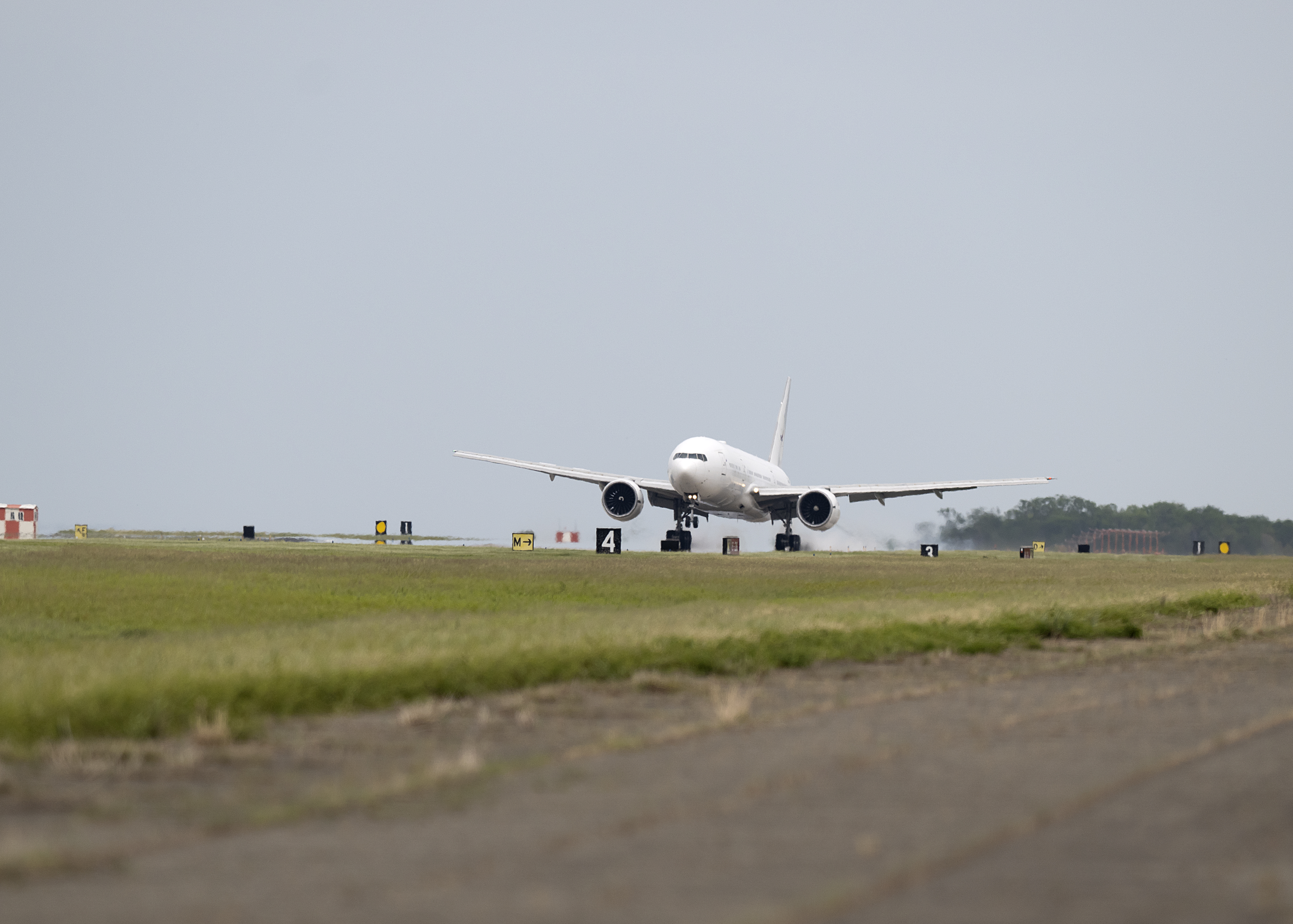
NASA’s Boeing 777 has returned to Langley Research Center in Hampton, Virginia, after completing a major round of structural modifications in Waco, Texas. The aircraft is being transformed from a former passenger jet into what NASA says will become the largest airborne research laboratory in its fleet, a platform designed to carry instruments, operators and long-duration missions for Earth science campaigns.
The 777’s arrival marks an important transition point. Since January 2025, the aircraft has been in Texas receiving the hardware and structural upgrades needed to support science operations. It has now completed a check flight and a three-hour transit back to Langley, bringing the project out of the heavy-modification phase and closer to mission integration and testing.
For NASA, the program is not just about replacing one plane with another. It is about rebuilding a national airborne science capability around a larger, more flexible platform at a time when remote sensing, weather monitoring and Earth system research all demand better data over longer ranges.
What changed on the aircraft
The modifications were extensive. NASA says the aircraft now includes dedicated research stations and extensive wiring so payload systems can communicate with instruments such as lidar and infrared imaging spectrometers during flight. Cabin windows were enlarged, and open portals were installed on the underside of the fuselage to mount remote-sensing equipment.
Those changes matter because airborne science platforms are only as useful as their ability to integrate specialized instruments cleanly and reliably. A conventional airliner can carry people for long distances. A science aircraft must also provide stable interfaces for sensors, operator workflows, power distribution and line-of-sight access for measurements. The structural work completed in Texas was aimed at making the 777 capable of doing all of that at scale.
The aircraft’s size is one of its biggest advantages. NASA says it will be able to accommodate 50 to 100 operators and carry 75,000 pounds of equipment on flights lasting up to 18 hours. That combination of payload, personnel and endurance creates a much broader mission envelope than smaller research aircraft can support.

The successor to a legendary workhorse
NASA acquired the 777 in 2022 to succeed the agency’s retired DC-8 airborne science aircraft. That earlier platform served Earth science for nearly 40 years and became a familiar symbol of NASA’s airborne campaigns. Replacing it is therefore both a technical and institutional challenge.
The agency’s own language reflects that continuity. Officials described the DC-8 as an extraordinary workhorse and presented the 777 as the next step in expanding airborne research capacity. The larger aircraft is expected not only to support more instruments, but also to bring in more partners and create more educational opportunities around science missions.
That matters because airborne campaigns often function as collaborative operations spanning federal agencies, universities, instrument teams and early-career researchers. A platform that can carry more people and more hardware changes the scale and complexity of the science that becomes possible.
Why airborne science still matters
Satellites dominate much public discussion about Earth observation, but aircraft remain essential. They can fly beneath cloud layers, test instruments before orbital deployment, collect targeted high-resolution data and respond quickly to specific events such as storms, fires or unusual atmospheric conditions. In some cases, aircraft provide the only practical way to gather the exact measurements scientists need.
The modified 777 is designed for that role. NASA says airborne missions use cutting-edge instruments to explore and understand Earth, and the 777 is intended to expand the agency’s ability to collect data that improve life on the planet while deepening knowledge of the Earth system as a whole.
The aircraft’s enlarged windows and fuselage portals illustrate the mission directly. These are not cosmetic changes. They are the physical openings through which science happens, allowing remote-sensing systems to view the atmosphere, land and other targets during flight.

The first mission is already on the calendar
NASA says the 777’s inaugural science mission is planned for January 2027 and will focus on high-impact winter weather events, including severe cold air outbreaks. That mission profile offers a glimpse of the aircraft’s practical value. Winter-weather research can require long flights, multiple instruments and coordinated observations over broad areas, all of which fit the strengths of a large airborne laboratory.
The timeline also underscores that the project is moving from infrastructure to operations. Returning the aircraft to Langley does not mean the work is finished, but it does mean the program is now much closer to the point where the public will be able to judge it by the quality of the science it produces rather than by the complexity of its retrofit.
If the program succeeds, NASA will have turned a widebody commercial jet into a high-capacity scientific observatory in the sky. That would be a notable engineering achievement on its own. More importantly, it would provide researchers with a rare and powerful tool for studying a planet whose most urgent questions increasingly demand better data, collected more flexibly, and at larger scale.
This article is based on reporting by NASA. Read the original article.
Originally published on nasa.gov