Artemis II Crew Captures Earth’s Day-Night Boundary
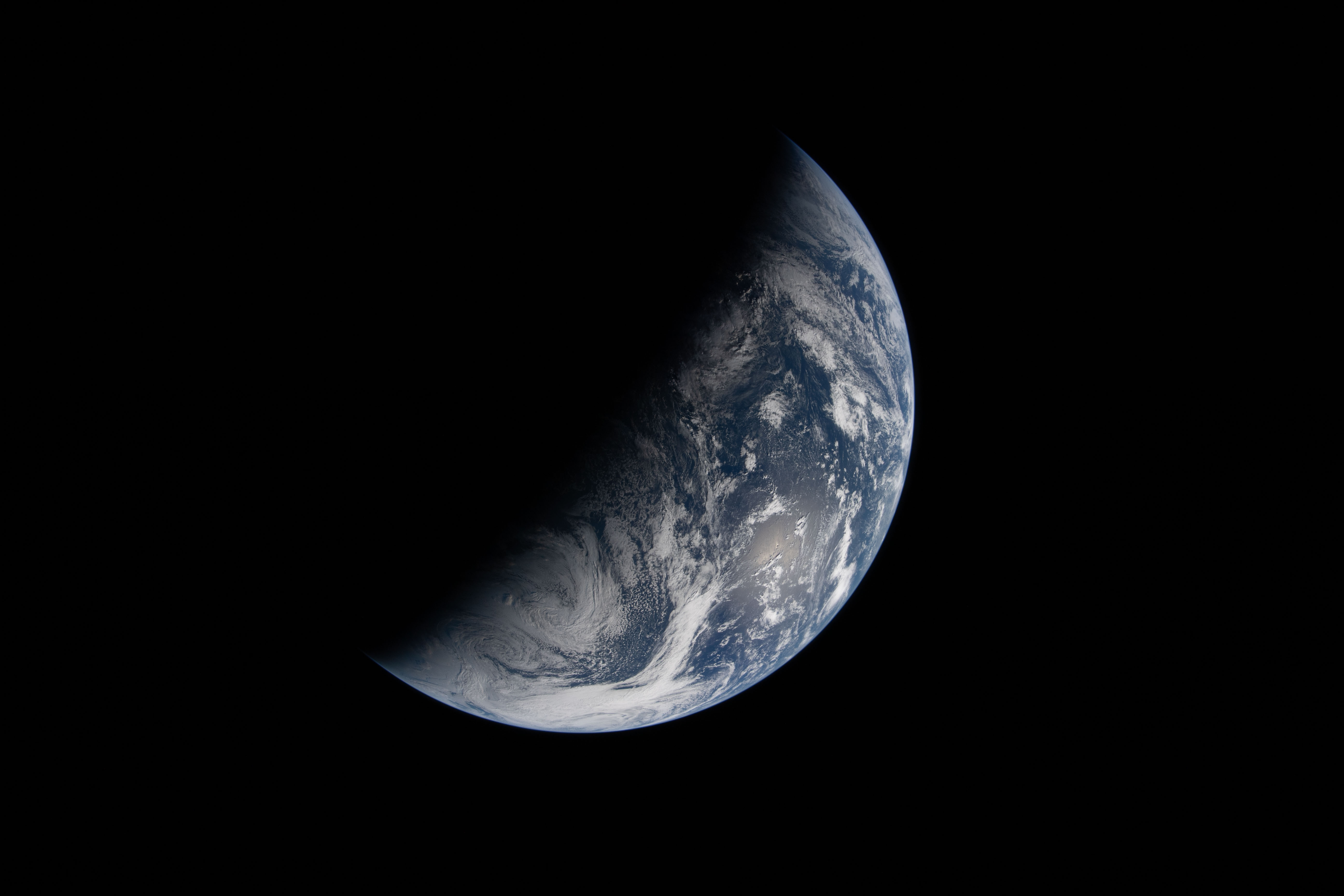
NASA released an Earth Day image showing Earth’s terminator, the line separating night and day, as seen by Artemis II astronauts during their journey to the Moon. The image was captured on April 2, 2026, and published by NASA on April 22 for Earth Day.
The image article is short, but it connects two parts of NASA’s mission that are often discussed separately: observing Earth from space and preparing for sustained exploration beyond Earth orbit. NASA says its science improves life on Earth by providing insights that can only be gathered from space and by helping put actionable satellite information in the hands of decision-makers.
Earth Science And Exploration In One Frame
The terminator image is visually simple but symbolically dense. It shows Earth as a planetary system, with day and night divided by orbital geometry rather than national borders. For Earth science, such views reinforce the value of remote observation. For human exploration, they mark the return of crewed lunar-era imagery as Artemis missions move toward the Moon.
NASA also links Earth observation to exploration technology. The agency says observations of Earth and technologies developed for those observations provide a foundation for exploring and sustaining human life on the Moon, Mars, and beyond.
- The image was captured by Artemis II astronauts on April 2, 2026.
- NASA released it for Earth Day on April 22, 2026.
- The view shows Earth’s terminator, the boundary between night and day.
- NASA framed the image around both Earth science and future exploration.
The release is not a new scientific result, but it is a public-facing reminder of why crewed exploration and Earth observation remain linked. The same spaceflight capabilities that carry astronauts outward also help societies understand the planet they leave behind.
This article is based on reporting by NASA. Read the original article.
Originally published on nasa.gov