Roman’s schedule moves up
NASA says the Nancy Grace Roman Space Telescope is now targeting launch as soon as early September 2026, a significant schedule update that moves the mission ahead of the agency’s previous commitment to launch no later than May 2027.
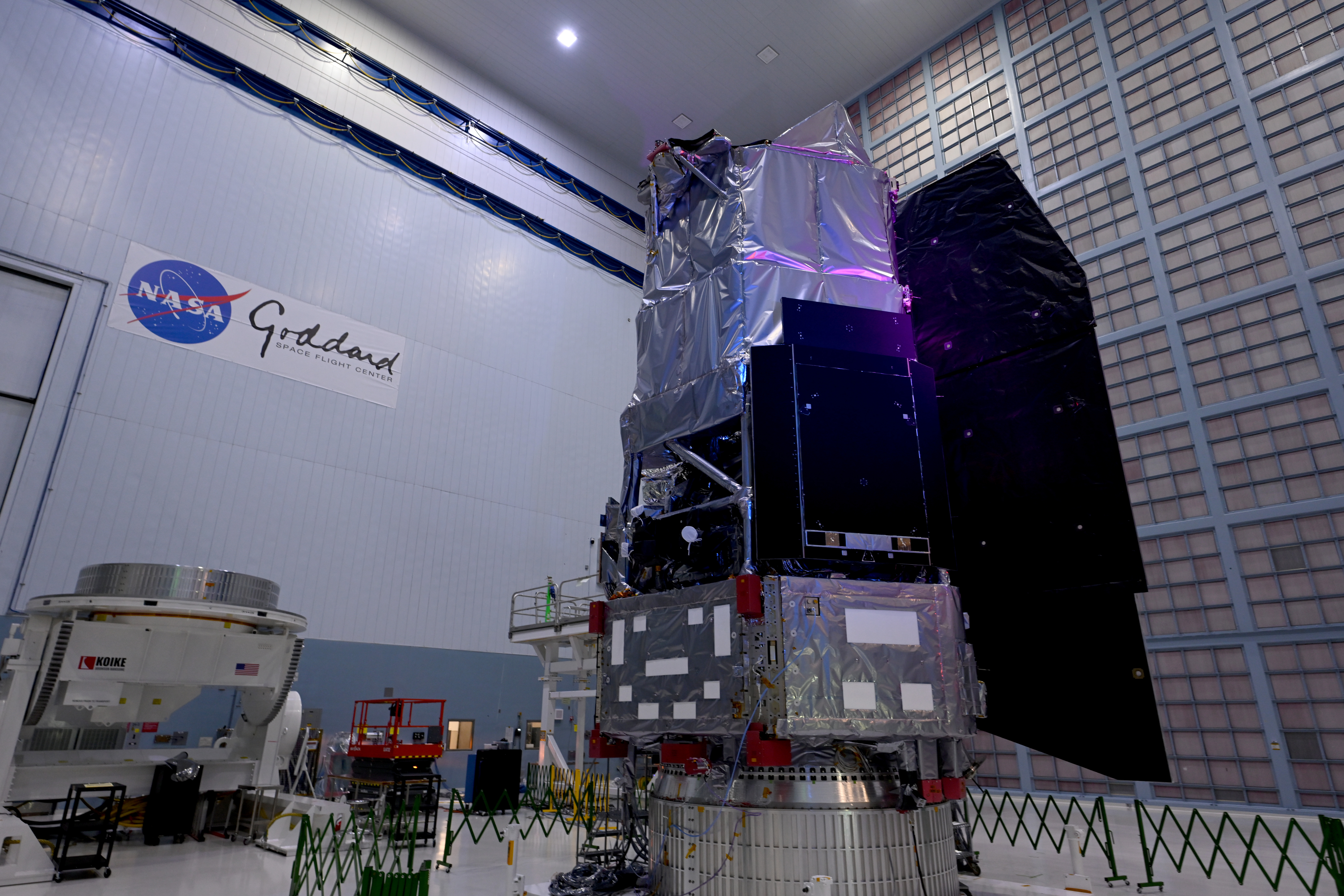
The new target was announced by NASA Administrator Jared Isaacman during an April 21 news conference at the agency’s Goddard Space Flight Center in Greenbelt, Maryland. According to NASA, the observatory is on track for delivery to the launch site at Kennedy Space Center in June, setting up a launch window that begins far earlier than the outside date the agency had previously committed to meet.
In large space observatories, moving a launch target forward is not a routine detail. It signals that hardware, integration, and program execution are progressing well enough for NASA to compress margin rather than consume it. In Roman’s case, the agency is framing the development path as an example of accelerated progress on a major science mission.
What Roman is built to do
Roman will combine a large field of view with sharp infrared vision to survey broad regions of the sky in a way that few previous observatories have been able to match. NASA says the telescope was designed with dark energy, dark matter, and exoplanets in mind, but it also emphasizes that Roman’s observational reach should make it useful across a much wider range of astronomical research.
The scale of the mission’s expected data return helps explain why. NASA says Roman could build a 20,000-terabyte archive over its five-year primary mission. Scientists are expected to use those observations to identify and study 100,000 exoplanets, hundreds of millions of galaxies, billions of stars, and rare objects and phenomena, including some that astronomers may never have seen before.
That breadth makes Roman something more than a narrowly specialized observatory. It is a survey engine. Missions like that often transform astronomy not only by answering preselected questions, but by generating datasets so large and so rich that they enable discoveries researchers did not initially design the mission around.

Why the schedule update matters
Roman has long been an important part of NASA’s future astrophysics portfolio, and its timetable has been closely watched. A launch target of early September 2026 moves the observatory meaningfully closer to operational science and reduces the wait for a mission expected to shape multiple fields at once.
The schedule change also matters in programmatic terms. NASA says Roman’s accelerated development shows what can happen when public investment, institutional expertise, and private enterprise are aligned on difficult missions. That language reflects more than celebration. Major science missions live under constant scrutiny on cost, schedule, and execution. Any sign that a flagship-class observatory is trending ahead rather than behind is consequential inside the space sector.
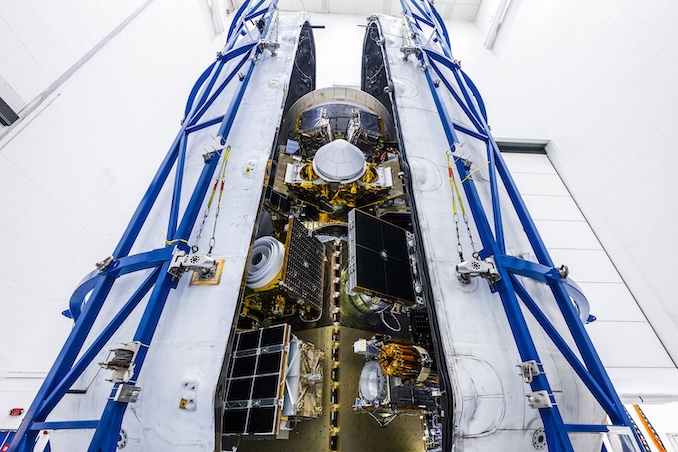
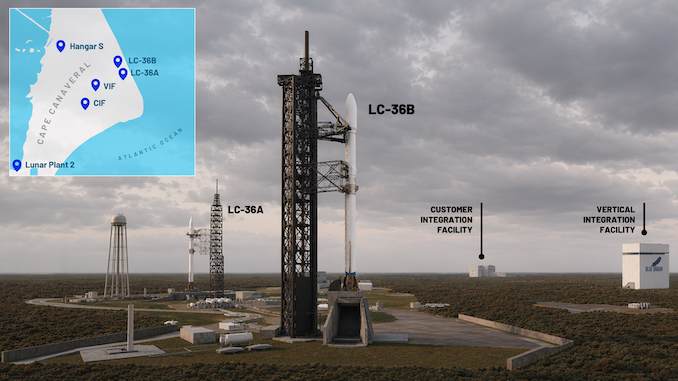
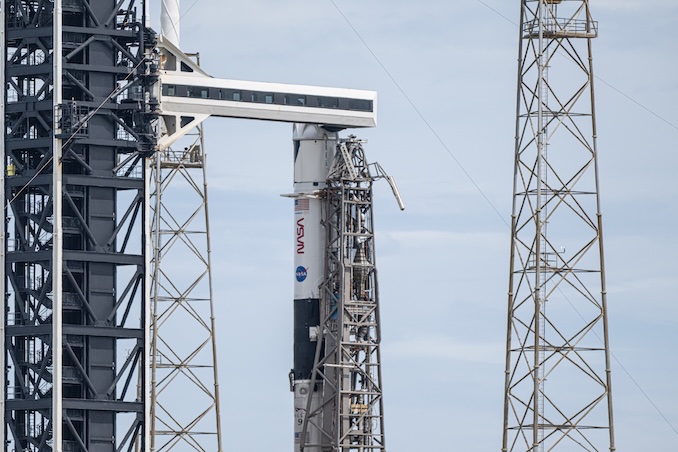
Roman will launch aboard a SpaceX Falcon Heavy from Launch Complex 39A at Kennedy Space Center in Florida. NASA says it and SpaceX will provide more information on a specific launch date later, and the agency will continue to share updates as prelaunch preparations progress.
A mission with broad scientific leverage
The reason Roman attracts so much attention is not just its hardware but its expected scientific leverage. Dark energy and dark matter remain two of the biggest unsolved problems in cosmology. Exoplanet science, meanwhile, has shifted from discovery into characterization and population-scale analysis. Roman is positioned to contribute to both directions at once.
Its wide-field infrared capability should allow astronomers to examine vast swaths of sky efficiently while retaining image quality sharp enough to support detailed science. That is a powerful combination. Narrow, deep observations can be transformative, but wide surveys often reveal structure, frequency, and rarity in ways smaller datasets cannot.
NASA’s description of the archive Roman is expected to produce underscores that point. Hundreds of millions of galaxies and billions of stars amount to a foundation for years of follow-on work, not just a sequence of mission highlights. The telescope is likely to become both a discovery platform and a reference dataset for other instruments and research programs.

What happens next
The immediate next milestone is delivery to Kennedy in June, assuming that schedule holds. After that comes the usual sequence of launch-site processing, vehicle integration, and countdown operations. NASA has not yet set a specific launch day in the supplied text, only the updated target of as soon as early September 2026.
That qualifier remains important. Space missions launch on engineering readiness, not on aspiration alone. Even so, the agency’s updated target is a concrete signal that Roman is advancing with momentum.
If the observatory launches on the new timeline, it will begin a mission designed to answer some of astronomy’s biggest open questions while also creating a dataset likely to fuel research for years. For NASA, the schedule pull-forward is a program milestone. For astronomers, it brings a high-capability survey telescope closer to operation. For the wider space sector, it is a reminder that not every major mission update is about delay. Sometimes the news is that a cornerstone observatory is moving faster than expected.
This article is based on reporting by NASA. Read the original article.
Originally published on nasa.gov