A missing class of black holes may finally have an explanation
Gravitational-wave astronomy has turned black-hole populations into something measurable rather than purely theoretical. With hundreds of detections now on the books, astronomers can compare the masses of colliding black holes against long-standing predictions about how massive stars die. One of the most persistent puzzles has been the so-called forbidden gap: a range of stellar black-hole masses that theory said should be disrupted by an extreme kind of supernova. New research highlighted by Universe Today suggests the evidence for that gap is becoming harder to ignore.
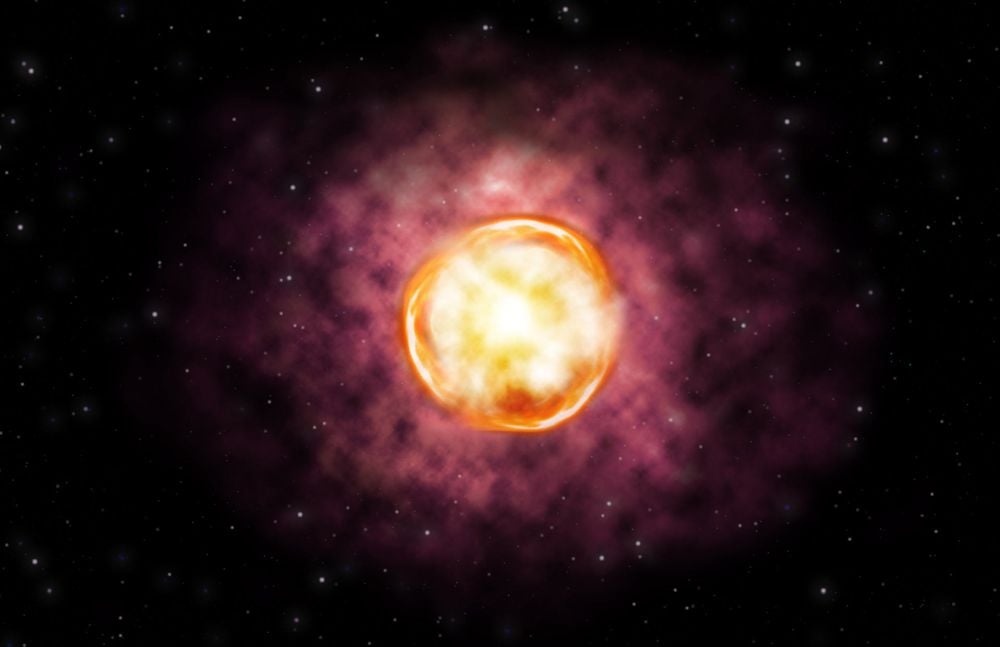
The supplied source points to work led by Monash University arguing that stellar black holes above about 45 solar masses are unusually rare in the gravitational-wave record. That pattern aligns with the idea that stars in a certain mass range do not quietly collapse into black holes at all. Instead, they can be destroyed in pair-instability supernovae so violent that nothing is left behind.
Why the gap matters
This is not just an accounting exercise. Black-hole masses are a record of stellar evolution. If a wide band of masses is missing, something important happened during the final stages of those stars’ lives. The source explains the core mechanism: in the most massive stars, extreme conditions can create electron-positron pairs from energetic radiation inside the star. That reduces internal pressure and destabilizes the star.
Rather than collapsing into a black hole in the usual way, the star can explode catastrophically. In the pair-instability case described in the source, the explosion is powerful enough to leave no remnant at all. That would naturally carve out a gap in the black-hole mass distribution.

Gravitational waves changed the evidence standard
For years, the forbidden gap was mainly a theoretical expectation. The difficulty was not conceiving it but proving it. Black holes are hard to count directly, and rare massive objects are even harder to characterize through conventional observation. Gravitational-wave detectors changed that by turning mergers into a new kind of census.
Each detection provides mass estimates for the merging objects, and over time those detections build a population picture. The source says that this growing catalog now points toward the scarcity of black holes in the predicted range. If so, the gap is no longer just a model artifact. It is becoming an empirical feature of the universe.
Why this is a milestone for stellar theory
Astrophysics often advances by linking invisible processes to measurable distributions. In this case, the invisible process is the internal collapse and explosion physics of extremely massive stars. The measurable outcome is the number and mass of black holes seen through gravitational waves. When those two line up, confidence rises not only in the explanation of the gap but in the broader theory of how the most extreme stars evolve and die.
The result also helps explain why the black-hole population is structured rather than continuous. Nature does not produce every possible remnant mass with equal ease. Some stellar paths are cut off by violent instabilities, and pair-instability supernovae appear to be one of the clearest examples.
A new window matures
The deeper significance of this story is how quickly gravitational-wave astronomy has moved from first detection to statistical insight. What began in 2015 as proof that spacetime ripples could be measured has become a way to test stellar evolution using black holes themselves as the data.
If the forbidden gap continues to hold up under a growing merger catalog, it will mark a satisfying convergence of theory and observation. Massive stars predicted to vanish without leaving black holes behind may finally be revealing themselves precisely through the absence they create. In astronomy, even missing objects can become a discovery once the data are rich enough to show that the emptiness is real.
This article is based on reporting by Universe Today. Read the original article.
Originally published on universetoday.com