InSight data is reshaping how scientists think about Mars
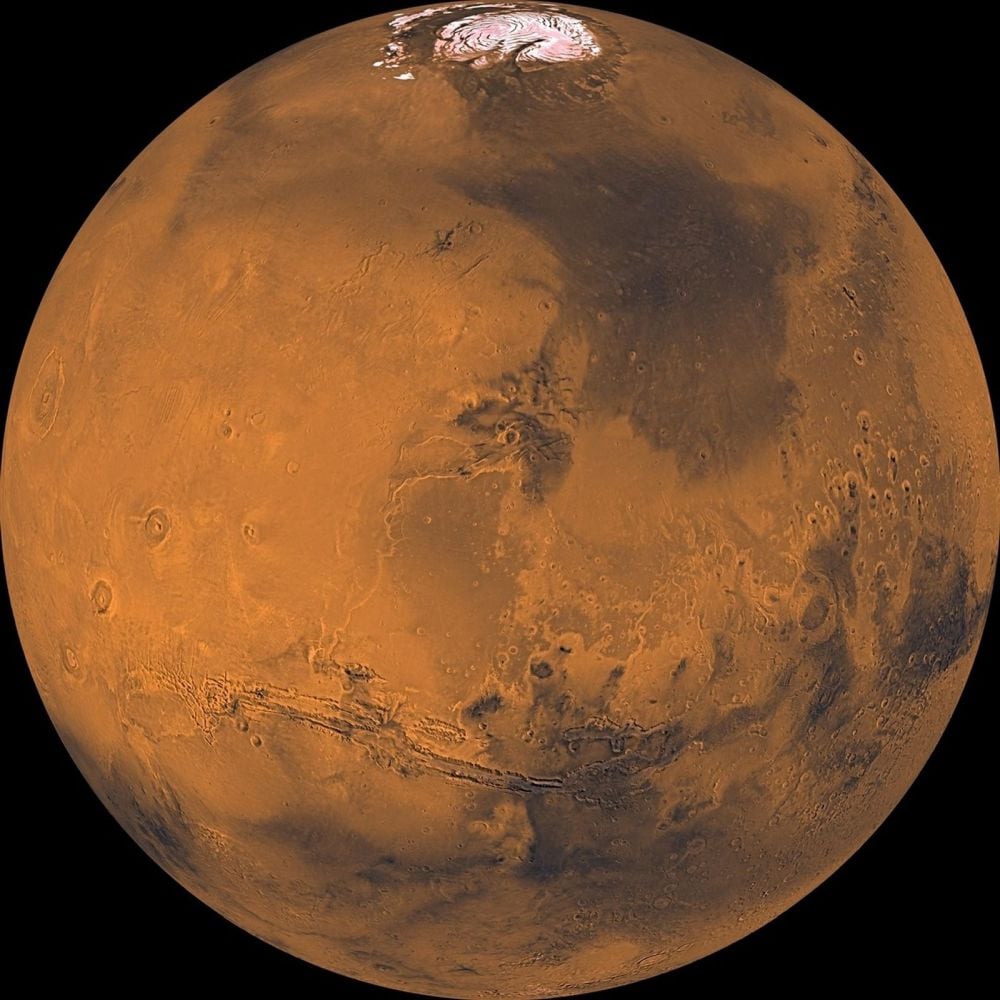
Mars may have hosted extensive, Earth-like magma systems beneath its surface even without plate tectonics, according to new research built on seismic data from NASA’s InSight lander. The finding points to a more dynamic interior than a simple stagnant-crust model would suggest and could change how scientists think about the thermal and geological evolution of terrestrial planets.
The work centers on one of the more intriguing signals returned by InSight before its mission ended: an intracrustal seismic discontinuity inside the Martian crust. Researchers now argue that this feature is evidence of magmatism within the crust itself. Their paper, published in Nature Astronomy, is titled Seismic evidence for a melt-depleted lower crust and transcrustal magmatism on Mars. The lead author is Dr. Tobermory Mackay-Champion, who was with the University of Oxford’s Department of Earth Sciences at the time of the study.
The result matters because Mars lacks active plate tectonics, a process on Earth that is deeply tied to volcanism, crustal recycling, and long-term planetary habitability. If Mars sustained large interior magma systems without that machinery, it strengthens the case that geologic complexity can emerge under a broader set of planetary conditions than previously assumed.
A stagnant-lid planet may not be geologically simple
Earth’s plate tectonics do more than shift continents. They help regulate temperature over geologic timescales through the carbon-silicate cycle, recycle nutrients such as phosphorous and sulphur, and create varied environments that can support resilience in the face of mass extinctions. For that reason, tectonics are often treated as a central feature in discussions of habitability.
But the connection is not absolute. Whether plate tectonics is strictly necessary for life remains unresolved, and Mars offers one of the best natural laboratories for probing that question. Along with Mercury and Venus, Mars is considered a “stagnant lid” planet, meaning its outer shell does not behave like Earth’s mobile tectonic plates. Yet it is also the best-studied of those worlds, thanks to decades of orbiters, rovers, and landers.
InSight was designed specifically to examine the Martian interior. Its full name, Interior Exploration using Seismic Investigations, Geodesy and Heat Transport, reflects that goal directly. Although the mission ended in early 2022 after dust covered its solar panels, and even though one of its instruments had deployment trouble before the end, the lander still produced a significant dataset on the planet’s inner structure. Scientists are continuing to extract new conclusions from those measurements.

The clue lies about 24 kilometers down
The new study focuses on the structure of Mars’s crust as inferred from seismic waves. Seismic analysis relies heavily on two main wave types, p-waves and s-waves, which travel differently through planetary materials and can reveal changes in composition, density, and state. InSight data showed a layered crust containing an intracrustal seismic discontinuity at roughly 24 kilometers depth, above a crust-mantle boundary at about 38 kilometers.
Until now, the nature of that discontinuity had remained unexplained. The new interpretation is that the deeper crust is melt-depleted and that magma once moved through a transcrustal system, meaning magma pathways and storage zones extended through broad sections of the crust rather than being confined to isolated reservoirs. That is a more elaborate internal architecture than a dormant, rigid Mars might suggest at first glance.
The phrase “melt-depleted lower crust” points to rock that has already had melt extracted from it. In planetary terms, that indicates active magmatic processing in the past. Rather than a crust that simply cooled in place, the lower layers appear to have been altered by the movement and separation of molten material. That supports the idea that Mars built and modified parts of its crust through widespread magmatic activity.
Why the finding matters beyond Mars
The significance of the result extends beyond one planet. Scientists use Mars to test broader ideas about how rocky worlds evolve when they do not have Earth-style tectonic recycling. If a stagnant-lid planet can still host extensive interior magma systems, then volcanism, crust formation, and heat transport may remain robust even without moving plates. That expands the range of plausible geological histories for terrestrial planets elsewhere.
The researchers state that the Martian crust preserves a record of early planetary evolution in the absence of plate tectonics. That makes Mars especially valuable because it may retain evidence of processes that Earth has partly erased through continual tectonic turnover. On Earth, plate motions constantly recycle old crust and reshape the surface. Mars, by contrast, can preserve very ancient structures for extremely long spans of time.
This preservation gives planetary scientists a chance to examine how early crustal development proceeded on a world that cooled and evolved differently. A better grasp of Martian magmatism can therefore inform models of rocky exoplanets as well as long-running debates about Venus and Mercury. It also bears on habitability research, not because the new paper proves anything about life, but because interior activity influences atmosphere, surface chemistry, and long-term environmental stability.

A more active picture of the Red Planet
Popular images of Mars often emphasize a geologically faded world: cold, dry, dusty, and largely inert. That picture has always been incomplete, given the giant volcanoes and evidence of extensive ancient activity visible from orbit. Still, the new interpretation sharpens the case that the planet’s interior was organized and dynamic in ways that are still being uncovered. The crust may contain a record not just of cooling, but of deep and sustained magmatic restructuring.
What makes the study notable is that it extracts this story from interior measurements rather than surface scenery alone. Remote images can show volcanic landscapes and ancient flows, but seismic data reaches into the architecture below. InSight’s contribution, even after the mission’s end, is to keep turning Mars from a surface mystery into an interior one with measurable structure and testable models.
For planetary science, that is the larger development. Mars is not only a target for exploration or a possible destination for future missions. It is also a comparative world that helps define what a terrestrial planet can be. If its crust truly records transcrustal magmatism despite the absence of plate tectonics, then the menu of planetary evolution pathways is wider than a simple Earth-versus-dead-world contrast. Mars may instead occupy a more interesting middle ground: tectonically still, but magmatically sophisticated.
- Researchers used NASA InSight seismic data to interpret an intracrustal discontinuity within Mars’s crust.
- The study argues that Mars has a melt-depleted lower crust and evidence of transcrustal magmatism despite lacking plate tectonics.
- The finding broadens models of how rocky planets can evolve and sustain complex interior processes.
This article is based on reporting by Universe Today. Read the original article.
Originally published on universetoday.com