Interstellar travel remains a dream constrained by physics
Interstellar travel has a uniquely stubborn quality as a scientific ambition. It is easy to describe and extraordinarily difficult to execute. A new Universe Today article revisits that tension by examining the scale of the challenge and the kinds of propulsion concepts that have been proposed since the dawn of the Space Age, with particular emphasis on nuclear rockets as part of the long-running search for practical options.
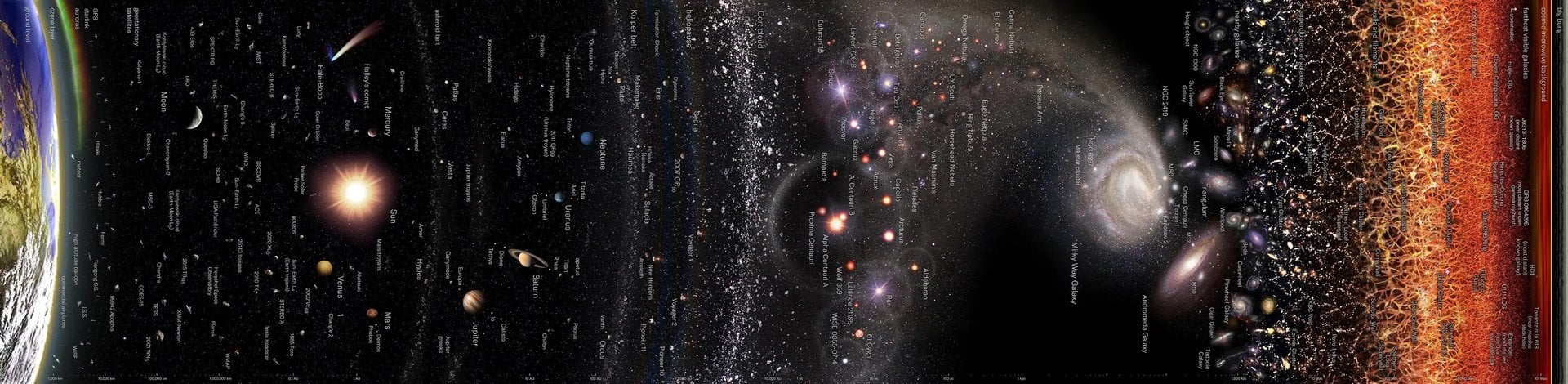
The core problem is not a lack of imagination. It is the combined burden of distance, energy, and time. Even the nearest stars sit far beyond the reach of conventional mission planning. As the article notes, traveling to another star system with present-day approaches would take centuries to millennia. That reality forces every serious proposal to confront the same basic question: how to move a spacecraft fast enough, for long enough, without requiring impossible amounts of mass and propellant.
The difficulty mirrors another familiar constraint in astronautics. Just as getting payload into orbit is dominated by the rocket equation, interstellar travel is dominated by the sheer energy demands of reaching a meaningful fraction of light speed. The article frames this as a problem bounded not just by engineering limits but also by Einstein’s theory of relativity, which places hard constraints on what propulsion can achieve.
The nearest targets are still unimaginably far away
Universe Today grounds the discussion by looking first at destinations. The exoplanet boom of the last two decades has transformed the map of nearby worlds. The article says scientists have now confirmed 6,333 exoplanets in 4,747 star systems. Among these, Earth-like terrestrial planets remain a minority, but a number of potentially interesting targets lie relatively close to the Solar System in astronomical terms.
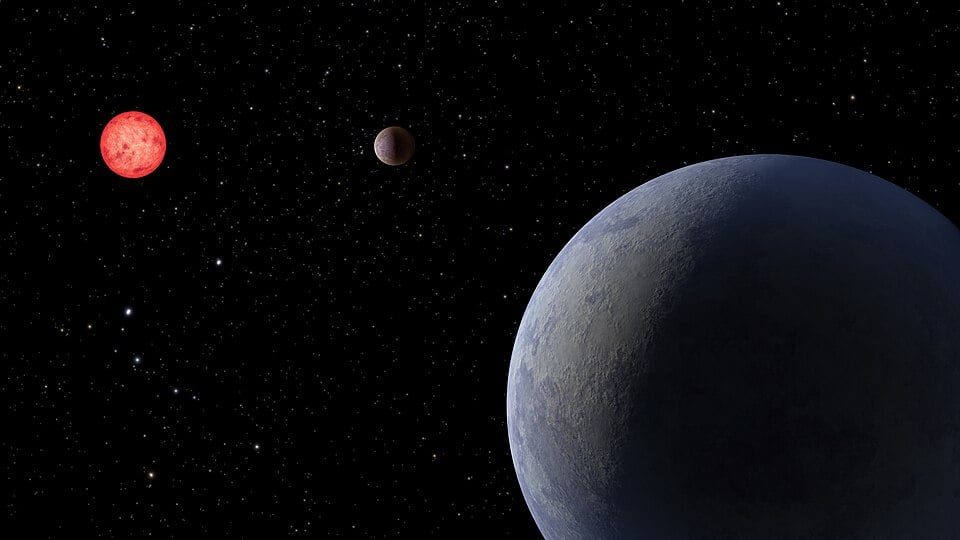
Within 50 light-years of Earth, the article reports that 31 known terrestrial planets have been identified, 30 of them orbiting low-mass red dwarf stars. The closest cited example is Proxima b, discovered in 2016. It is described as a rocky world comparable in size and mass to Earth that orbits within the habitable zone of Proxima Centauri. Even if such a planet proves scientifically compelling, however, its relative proximity does little to simplify the mission architecture required to reach it.
That is one of the article’s most important reminders. The discovery of candidate destinations does not eliminate the transportation problem. It merely makes the question more urgent and more concrete. Once nearby planets can be named and characterized, interstellar flight moves from speculative fantasy toward a real engineering challenge, even if the timetable remains extremely long.
How interstellar concepts evolved after the Space Age began
According to the article, proposals for interstellar spacecraft have changed significantly over time. Early visions tended to be large, ambitious projects associated more directly with governments and major space agencies. As technology advanced, proposals evolved toward more miniaturized and automated vehicles. At the same time, the institutional center of gravity shifted. Universe Today notes that the source of many concepts gradually moved away from agencies and toward nonprofit organizations and private research institutes.
That change reflects both realism and persistence. Large-scale crewed starflight remains so expensive and technically demanding that smaller robotic concepts often appear more plausible. Yet the persistence of the field shows that the dream itself has not receded. It has been reformulated. Researchers continue to ask what kind of propulsion, materials, automation, and patience would be required to send even a small probe across interstellar distances.
The article also highlights an interesting paradox: propulsion ideas have become both more exotic and more practical. More exotic, because pushing to interstellar speeds encourages thinking about physics at the edge of current capability. More practical, because some concepts narrow their ambitions to what might be built incrementally, especially for robotic missions.
Why nuclear rockets keep returning to the conversation
Nuclear propulsion has long occupied a middle ground between pure speculation and familiar chemical rocketry. That is part of why it remains central to discussions about deep-space travel. While the excerpted source text does not lay out every technical pathway in detail, the article’s framing makes clear that nuclear rockets belong to the family of proposals serious enough to remain under discussion whenever mission designers confront the limitations of conventional propulsion.
The appeal is straightforward. Interstellar travel requires far more energetic solutions than standard rockets can provide efficiently over extreme distances. Nuclear systems have therefore repeatedly appeared in studies because they promise much higher energy density than chemical propellants. In historical and contemporary debates alike, they represent one of the clearest attempts to bridge the gap between known engineering and the extreme performance interstellar missions demand.
That does not make them easy. Any nuclear-propelled mission would still face formidable barriers in cost, safety, development timelines, infrastructure, and political commitment. But compared with proposals that rely on entirely undiscovered physics, nuclear concepts often look like a hard problem rather than a magical one. That distinction matters in a field where many ideas collapse under the weight of impossible assumptions.
The real barrier may be commitment, not curiosity
Universe Today ultimately presents interstellar travel as a question not just of technology but of collective will. The article reduces the issue to two blunt variables: how much society is willing to spend and how long it is willing to wait. That framing is useful because it strips away the romance and exposes the strategic reality. Starflight is not blocked by lack of interest. It is blocked by the scale of resources, coordination, and endurance required to make progress over decades or longer.
That challenge has implications for how interstellar research is discussed today. The field often sits at the boundary between inspirational storytelling and serious systems analysis. By tying proposed destinations to propulsion limits and institutional history, the article argues for treating interstellar travel as a legitimate long-horizon engineering domain, even if no near-term mission is likely.
In that context, nuclear rockets matter because they keep the conversation anchored to technologies that, while demanding, remain recognizable within the broader history of astronautics. They are not a solution to every problem. They are a signpost pointing toward the level of ambition required.
A long-term project with no shortcuts
The modern era of exoplanet discovery has made interstellar travel feel more tangible by giving humanity real nearby worlds to think about. But the transportation gap remains immense. Universe Today’s overview is a reminder that no amount of excitement about habitable-zone planets changes the underlying math.
If interstellar missions ever move beyond concept studies and aspirational designs, they will require propulsion systems far beyond today’s mainstream launch vehicles, along with sustained investment and unusual patience. Nuclear propulsion remains one of the most serious categories in that discussion precisely because it does not pretend the challenge is small. It accepts the scale of the problem and tries to answer it with correspondingly large tools.
That may be the clearest takeaway. The road to another star, if it exists at all, will not be opened by optimism alone. It will be opened by advances in propulsion, disciplined engineering, and a willingness to commit resources across timescales much longer than most modern technology programs tolerate.
This article is based on reporting by Universe Today. Read the original article.

Originally published on universetoday.com