A New Geometric Feature in Saturn's Southern Sky
Saturn is arguably the most recognizable planet in the solar system, largely because of the vast ring system that makes it a favorite answer whenever anyone is asked to name a planet. Yet the gas giant's polar regions have quietly become one of planetary science's most engrossing puzzles. A rotating six-sided structure has been tracked in Saturn's northern polar atmosphere for years. The southern hemisphere, by contrast, had never shown a comparable geometric pattern. That appears to have changed.
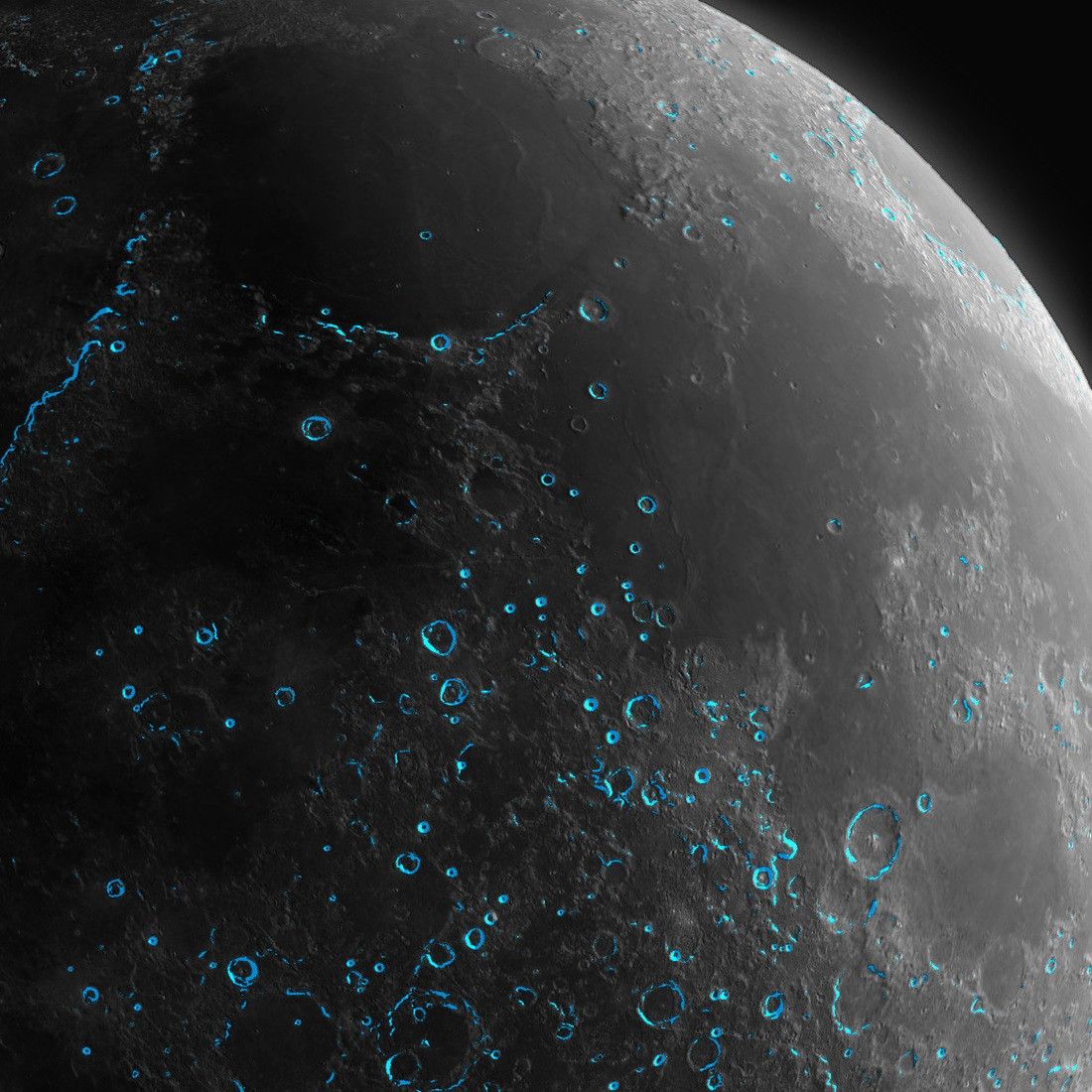
An international team of researchers reports a ten-sided wave pattern, or decagon, cutting through several layers of Saturn's southern atmosphere. The structure is described in a study published in Science Advances, and it represents the first time a feature of this kind has been identified in the planet's southern hemisphere. The work draws on imagery gathered by NASA's Hubble Space Telescope alongside observations from ground-based telescopes.
How the Researchers Collected Their Data
To identify the decagon, the team examined images captured between 2023 and 2025. The Hubble data came from the Outer Planet Atmospheres Legacy program, known as OPAL, which began in 2014. OPAL was established to capture annual images of the outer planets, Jupiter, Saturn, Uranus and Neptune, with the aim of better understanding the composition, behavior and evolution of their atmospheres. That steady, yearly cadence gives scientists a long-running record they can compare against, which is what makes a newly appearing structure detectable in the first place.
A European Ground-Based Partner
Supporting the space telescope observations were measurements from the Calar Alto Observatory, located in Spain. It is the largest astronomical observatory on the European continent, and its instruments helped the team build out the picture of atmospheric activity at Saturn's south pole. Combining orbital and ground-based views gives researchers multiple vantage points and wavelength coverage, which is useful when tracing wave patterns that span different depths in a planet's cloud deck.
Hexagon Versus Decagon
The contrast between Saturn's two polar structures is the heart of the new study. The well-known northern hexagon has six sides, while the southern feature has ten. Both are produced by Saturn's jet streams, but the streams themselves differ in strength and behavior.
- Northern hexagon: a six-sided structure driven by jet stream speeds of roughly 320 to 354 kilometers per hour, or 200 to 220 miles per hour. Its position has remained mostly fixed over time.
- Southern decagon: a ten-sided structure associated with faster jet stream speeds of about 400 to 420 kilometers per hour, or roughly 250 miles per hour.
- Vertical extent: the southern decagon cuts through multiple layers of the atmosphere rather than sitting at a single altitude.
- Motion: unlike the largely stationary northern hexagon, the southern decagon has been observed migrating eastward.
Why the Speed Difference May Matter
The northern and southern polar patterns emerge from the same broad mechanism, the fast-moving bands of wind that circle the planet at high latitudes. What differs is the energy and velocity involved. The southern jet stream feeding the decagon moves noticeably faster than the northern jet stream linked to the hexagon, and the resulting shape is more complex, with two additional corners.
That relationship between wind speed and the number of sides is one reason planetary scientists find these features so useful. Polar vortices and jet streams act as natural laboratories for atmospheric dynamics, letting researchers test how fluids behave on a rotating sphere under conditions that cannot be replicated at the same scale in a laboratory on Earth.
An Eastward-Drifting Pattern
The eastward migration of the southern decagon sets it apart from its northern counterpart. The study notes that the processes responsible for this movement are potentially tied to the atmospheric environment at the south pole, and the drift is one of the aspects researchers flag for continued investigation. Long-term monitoring through OPAL and follow-up ground-based campaigns will be essential to determining whether the migration is steady, cyclical, or tied to seasonal shifts as Saturn moves through its long orbit.
Saturn takes roughly three decades to complete one trip around the Sun, so each hemisphere experiences very extended seasons. The 2023 to 2025 window during which these images were collected captures only a slice of that cycle, which means the decagon's appearance and its eastward drift may look different when viewed across a broader span of observations.
What the Discovery Could Teach Scientists
Beyond the novelty of a ten-sided storm, the finding adds a new data point to the study of how planetary atmospheres organize themselves. Saturn's northern hexagon has been a topic of research for years, and having a second, structurally distinct polar pattern to compare against gives scientists a natural experiment. Differences in jet stream speed, vertical structure and motion between the two hemispheres can help refine models of atmospheric circulation on giant planets.
That work has implications beyond Saturn. The same fluid dynamics govern the banded atmospheres of Jupiter and the ice giants Uranus and Neptune, both of which are targets of the OPAL program. Understanding why one pole of a planet settles into a six-sided pattern while the other produces a ten-sided one pushes researchers to examine how rotation, wind shear and seasonal heating interact at the poles of a rapidly spinning world.
Open Questions and Next Steps
Several questions remain unresolved. Researchers still need to determine how long the southern decagon has existed, whether it was present but undetected in earlier images, and what governs its eastward motion. Continued annual imaging through Hubble's OPAL program, paired with observatories such as Calar Alto, will help track changes in the structure over time.
The imagery behind this research was produced with contributions from NASA, the European Space Agency and the Space Telescope Science Institute, with researchers including Agustin Sanchez-Lavega of the University of the Basque Country, Amy Simon of NASA's Goddard Space Flight Center, and Michael Wong of UC Berkeley. Image processing was carried out by Alyssa Pagan. Their combined effort has turned a familiar planet into a fresh source of questions about how atmospheres behave at the extremes of wind speed and rotation.
This article is based on reporting by Universe Today. Read the original article.
Originally published on universetoday.com