A new map is turning galaxy positions into a tool for cosmology
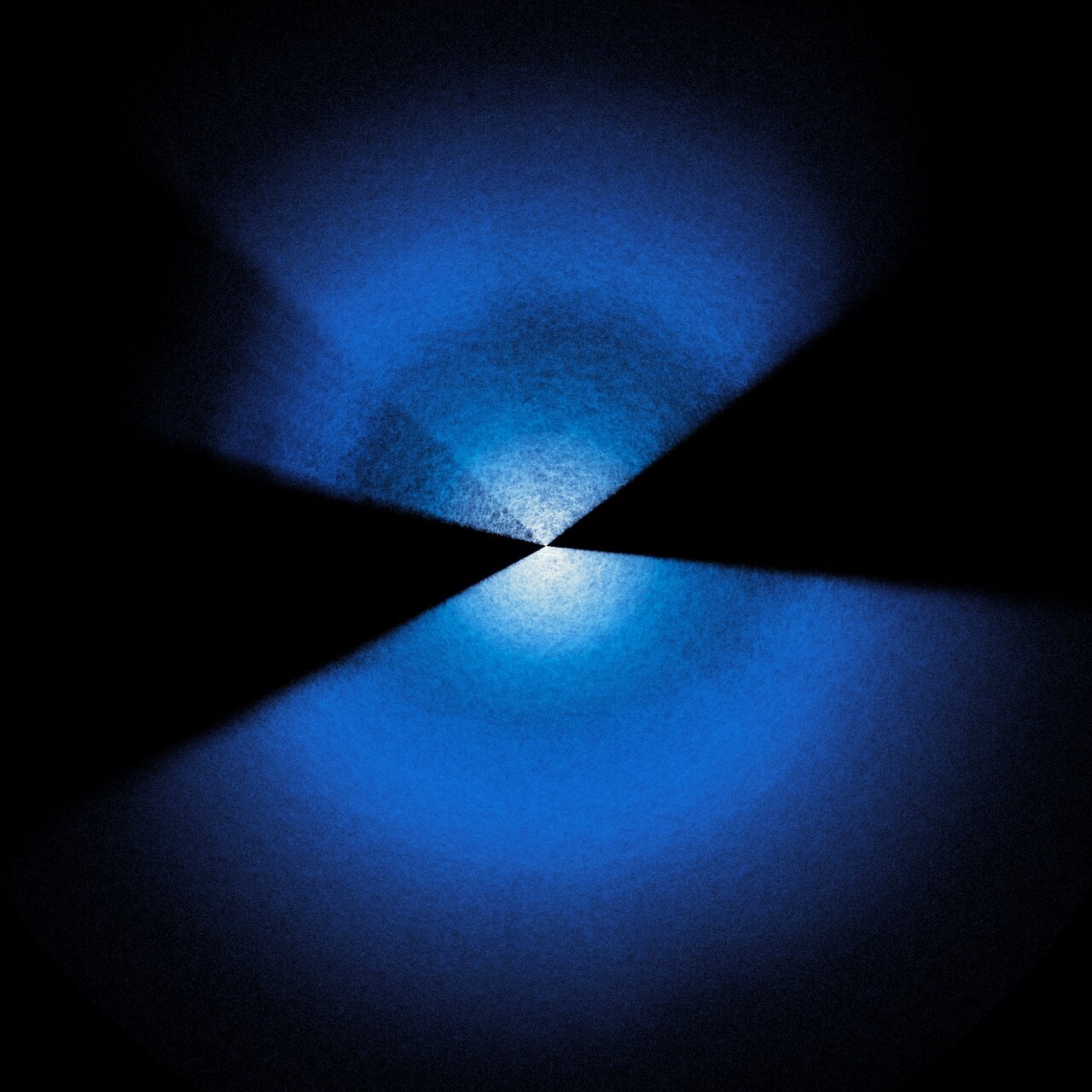
Researchers working with the Dark Energy Spectroscopic Instrument, or DESI, have created what the source material describes as the largest three-dimensional map of the universe ever produced. Built from observations gathered high above the Sonoran Desert in Arizona, the map uses the measured positions of more than 47 million galaxies and other objects to reveal the large-scale structure of the cosmos with unprecedented breadth.
The scientific ambition behind DESI is straightforward to describe and extremely hard to execute: chart where galaxies are located in three dimensions, then use those positions to infer how matter is distributed across the universe and how cosmic expansion has evolved over time. That makes the project a central instrument in one of modern astronomy’s hardest problems, the effort to understand dark energy.
Dark energy remains deeply mysterious. It is invoked to explain the observed acceleration of cosmic expansion, but what it is, how it behaves, and whether it changes over time are all still open questions. DESI does not solve that mystery directly. Instead, it builds the empirical scaffolding needed to test competing ideas by measuring the structure that visible galaxies trace across enormous distances.
Why a 3D map matters more than a 2D sky survey
Looking at the night sky tells astronomers where objects appear from Earth’s perspective, but not how far away they are with enough precision to reconstruct the universe’s architecture. DESI’s advance comes from adding that distance information. As described in the source text, precise distance measurements let researchers place galaxies relative to one another rather than seeing them only as points projected onto a flat sky.
That shift is crucial because galaxies are not randomly scattered. They follow a subtle pattern tied to an underlying framework of dark matter. DESI’s map therefore functions as a large-scale structural survey: the light from galaxies outlines a deeper cosmic arrangement that cannot be seen directly.
The result is more than an impressive visualization. It is a dataset that allows scientists to examine how visible matter sits within the broader scaffolding of the universe. In effect, DESI is turning galaxy positions into a measurement system for hidden structure.

How DESI fits into the dark energy effort
The project’s value lies in scale as much as in precision. Mapping more than 47 million galaxies gives researchers statistical power to detect patterns that would be invisible in smaller surveys. According to the source material, DESI’s work will continue into 2028, meaning the current map is not an endpoint but part of an expanding observational campaign.
That campaign feeds directly into the effort to understand whether dark energy has changed over cosmic time. If the distribution of galaxies, and the structure they trace, can be measured across vast volumes of space, scientists gain a better way to compare models of cosmic evolution against actual observations.
The source also notes that DESI is part of a broader ecosystem of instruments aimed at the same mystery, including the Rubin Observatory, the Euclid mission, and the upcoming Nancy Grace Roman Telescope. That broader context is important. Cosmology is moving into an era where multiple large surveys will overlap, complement one another, and test the same questions from different observational angles.
DESI’s contribution within that landscape is its sheer reach as a spectroscopic mapping instrument. By building a massive 3D census of celestial objects, it provides a structural backbone for future analysis.
Why the map matters now
Large cosmological datasets can sometimes sound abstract, but their importance lies in the discipline they impose on theory. Dark energy is easy to name and difficult to explain. Progress depends on measuring the universe well enough that hypotheses can be sharpened, challenged, or discarded. DESI’s map is valuable because it expands the observational footing under that process.
There is also a conceptual payoff. The source material quotes researcher Satya A. Gontcho describing galaxies as markers on a dark matter substructure. That image captures the logic of modern cosmology: what we can see is not the whole story, but it can still reveal the invisible patterns shaping the universe at the largest scales.
For the public, the appeal of a record-setting cosmic map is immediate. For researchers, the significance is deeper. Every accurately placed galaxy becomes another data point in a long attempt to understand why the universe looks the way it does and why its expansion history may not be constant. DESI is making that attempt much more data-rich.
As the survey continues through 2028, the map will likely become more detailed and more analytically useful. But even at this stage, it represents a major milestone: an observational structure large enough to help turn one of cosmology’s most persistent mysteries into a more measurable scientific problem.
Why this story matters
- DESI has mapped more than 47 million galaxies, producing the largest 3D map of the universe yet described in the source.
- The survey helps scientists trace large-scale cosmic structure and study dark energy through galaxy positions and distances.
- Its long timeline and overlap with other major observatories make it a core part of the next phase of cosmology research.
This article is based on reporting by Universe Today. Read the original article.

Originally published on universetoday.com