Why reproduction is becoming a spaceflight question
Space agencies have spent decades documenting how life in microgravity changes the human body. Muscle and bone loss, fluid shifts, cardiovascular changes, immune disruption, psychological strain, and radiation exposure are already established concerns for astronauts on long missions. As plans for a more permanent human presence on the Moon and, eventually, Mars move from concept toward execution, researchers are now confronting a harder and more intimate question: whether reproduction itself can function normally away from Earth.
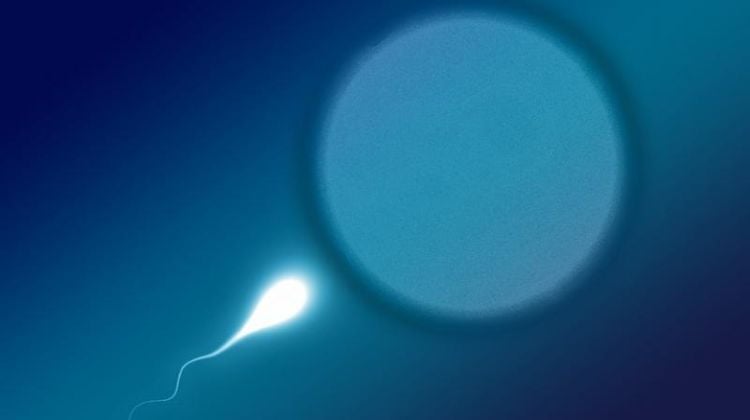
A new study highlighted this week adds evidence that the answer may be more complicated than simply getting sperm and eggs into the same environment. Researchers in Australia carried out laboratory experiments designed to simulate microgravity and examine how sperm from humans, pigs, and mice behave during fertilization-related processes. Their findings, published in Communications Biology, point to a specific vulnerability: not necessarily whether sperm can move, but whether they can navigate effectively enough to reach and fertilize an egg.
What the researchers tested
The experiments focused on a critical early stage of fertilization. In natural conditions, sperm do more than just swim forward. They must respond to fluid flow, orient themselves within narrow pathways, and follow chemical signals that help guide them toward the egg. The study examined how simulated microgravity affected these behaviors over a four-hour period using sperm samples from a human, pig, and mouse.
That design matters because successful fertilization is the result of several coordinated mechanisms, not a single movement test. A sperm cell may still be motile in the broad sense while losing the directional cues needed to complete the journey. According to the supplied report, that distinction is exactly where the new work makes its contribution. The researchers were specifically interested in how sperm travel down a channel and how they respond to the guidance systems that normally improve the odds of reaching the egg.
Human sperm kept swimming, but lost direction
The most notable finding from the human samples was that sperm swimming ability was not broadly impaired under simulated microgravity, but navigation was altered. That suggests the threat posed by microgravity may be subtler than a simple shutdown of reproductive function. Instead, the environment may interfere with the sperm’s ability to interpret or act on the directional information it would usually use during fertilization.
The study also found a potential countermeasure in progesterone, which acts as a chemical cue for sperm. In the reported experiments, that cue helped address the navigation problem. This does not mean the reproduction challenge has been solved for long-duration missions. It does mean the mechanism may be identifiable and, at least in principle, partially correctable. For space medicine, that is an important shift. If a biological problem can be reduced to a disrupted signaling process, then it may eventually be possible to design interventions around it.
Animal results point to lower fertilization success
The findings in animal models were more direct. The researchers observed a 30 percent drop in successfully fertilized eggs in mice under the study conditions. They also reported reduced successful fertilization for pig sperm. Those results strengthen the case that altered navigation is not merely a laboratory curiosity, but something that can translate into lower fertilization outcomes.
Animal studies do not map perfectly onto human reproduction, and the supplied source does not claim they do. But they are relevant because they show that changes in microgravity-related conditions can carry measurable downstream effects. If fertilization rates fall even when sperm remain capable of movement, then future reproductive planning in space may need to account for environmental support systems, medical protocols, and possibly assisted reproduction technologies tailored to off-world conditions.
Why this matters beyond human settlement
The study’s relevance extends beyond the prospect of people having children in orbit or on another world. The researchers note that understanding early fertilization under microgravity could also matter for sustaining food systems in extraterrestrial settlements. Long-term habitation would not just depend on human biology, but on the ability to maintain viable animal populations and broader life-support ecosystems without constant replenishment from Earth.
That makes reproduction a strategic systems issue, not a niche biomedical curiosity. A lunar base or Mars settlement designed for years or decades of occupancy would need far more than life support and radiation shielding. It would need confidence that core biological processes can continue under altered gravity conditions, or that engineering and medical workarounds exist where natural function breaks down.
A field with a long history and a major knowledge gap
Research into reproduction in space is not new. The source notes that Soviet missions in the 1980s explored animal mating and pregnancy in space, and later work on the International Space Station examined aspects of human sperm function. But despite that long arc, the knowledge base is still incomplete. Much of the earlier work established that microgravity could affect reproductive systems, while leaving open the precise pathways through which those effects emerge.
This newer study appears to push the field forward by identifying navigational behavior as one of the mechanisms influenced by simulated microgravity. Just as importantly, it suggests that a chemical signal such as progesterone may help restore part of that lost function. That combination, a defined mechanism and a possible mitigation route, is what turns a speculative concern into an actionable research agenda.
The next phase of space biology
The result should not be read as proof that human reproduction in space is impossible. It is better understood as evidence that the process may require environmental, medical, or technological support that would not be necessary on Earth. As space agencies and commercial programs pursue longer missions and permanent outposts, reproduction will have to move from the margins of space biology into the center of mission planning.
For now, the study underscores a simple point with major implications: surviving in space is not the same as reproducing there. The systems that keep astronauts healthy enough to work may not automatically preserve the conditions needed to start new life. If humanity intends to become a spacefaring species in more than a temporary sense, answering that question will be unavoidable.
This article is based on reporting by Universe Today. Read the original article.
Originally published on universetoday.com