Citizen scientists are helping NASA watch the Moon in real time
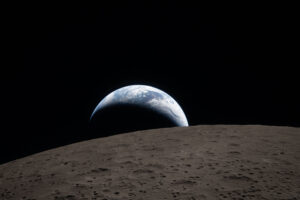
As NASA’s Artemis II astronauts circled the Moon in early April, they were not the only people looking for sudden flashes on the lunar surface. At the same time, volunteers working with the NASA-funded Impact Flash project were training their own telescopes on the Moon, recording brief bursts of light caused by meteoroids striking the surface and sending those observations back to scientists.
NASA says the overlap between crewed observations in space and telescope-based observations from Earth created a rare moment of shared lunar monitoring. The agency described the volunteer contributions as valuable because the locations and brightness of flashes seen from different instruments and from different places can help researchers narrow down what kind of impactors hit the Moon, where they came from, and what kind of craters they may have formed.
The result is a picture of lunar science that is both highly technical and unusually open. Instead of depending only on major observatories or spacecraft, the project is making use of distributed observations from people with suitable backyard or small observatory equipment. According to NASA, anyone with a telescope at least four inches in diameter and video capability can potentially contribute meaningful observations.
Why these flashes matter
Impact flashes are more than visual curiosities. They are direct evidence of the present-day bombardment of the Moon by small objects in space. Because the Moon has no thick atmosphere to burn up incoming debris, impacts can be observed at the surface as sudden points of light. NASA says the more observations the team receives, the better scientists can constrain the current impact rate on the Moon and track how that rate changes over time.
That matters for more than pure planetary science. A better understanding of how often objects strike the Moon, and with what apparent brightness and location, can improve knowledge about the environment future lunar missions will face. The Artemis program is pushing beyond flyby-style milestones toward a sustained human return, so even incremental improvements in understanding the lunar environment can have operational value.
The Artemis II mission has already ended, with the astronauts having splashed down back on Earth, and their direct observations of lunar flashes have stopped for now. But NASA’s message is that the Earth-based campaign should continue. The volunteer network is still gathering footage, and the agency is actively encouraging more participants to join.

From flashes to moonquakes
NASA says the project’s longer-term scientific ambitions go beyond measuring impact frequency. The Impact Flash team plans to connect observed impact events with future seismic measurements on the Moon. Ben Fernando, the project lead and a planetary scientist at Los Alamos National Laboratory, said the team intends to use impact flash observations to study tremors on the Moon, or moonquakes.
The idea is straightforward in principle. If scientists know when and where an impact occurred, and seismometers on the Moon later detect how the ground shook, they can compare the two records and learn more about how seismic waves move through the lunar interior. That, in turn, could help reveal what lies beneath the surface.
Fernando said planned seismometer deployments would make the flash observations more valuable, because they could help identify the sources of moonquakes detected in the future. In that sense, a volunteer video clip of a brief flash on the Moon may eventually contribute to a much bigger scientific question: what the Moon is like on the inside.
A distributed observing network
To collect data during Artemis II, the Impact Flash investigators worked with several other amateur astronomy communities and NASA-supported projects, including Kilo-nova Catchers, Exoplanet Watch, UNITE, the Night Sky Network, and Italy’s Lunar Impact Flashes project. That collaboration suggests NASA is treating the effort as more than a one-off public engagement exercise. It is building a network that can keep watching after major missions come and go.
NASA highlighted one volunteer submission from Joerg Tomczak, who sent in both an image of the Moon taken during Artemis II and a photo of the telescope used to capture it. In the lunar image, a bright point marked inside an orange circle shows an impact flash candidate. Examples like that are part of the agency’s effort to show potential contributors what useful data looks like in practice.
The broader significance is that lunar observation is becoming more participatory at the same time that exploration is becoming more ambitious. Artemis II may have delivered a short burst of attention, but NASA’s appeal makes clear that the agency sees ongoing value in persistent, distributed monitoring from Earth.

What NASA is asking volunteers to do next
For now, the request is simple: keep watching. NASA says the Impact Flash team needs continued observations, and it has provided instructions for making and uploading them through the project’s website. The quality and quantity of submissions both matter, because multiple views of the same event can help strengthen interpretation.
That makes this one of the more practical examples of citizen science in current space research. Participants are not just classifying images after the fact. They are helping generate the observations themselves, at times that can overlap with major crewed missions. In a field often defined by distant spacecraft and specialized instruments, the ability of volunteers to contribute directly to lunar impact studies stands out.
Artemis II’s astronauts are home. The Moon, however, is still being hit, still flashing, and still waiting for more observers to notice.
This article is based on reporting by science.nasa.gov. Read the original article.
Originally published on science.nasa.gov