A Leadership Change at a Critical U.S. Space Agency
President Donald Trump has nominated Roger Mason to lead the National Reconnaissance Office, according to SpaceNews. If confirmed by the Senate, Mason would replace Christopher Scolese, who has led the agency since August 2019. The nomination is significant not simply because of the personnel change, but because it arrives during a period of major structural change inside the U.S. government’s satellite intelligence architecture.
The NRO occupies a uniquely powerful position in national security. SpaceNews describes it as the agency that builds and operates the nation’s classified spy-satellite network, providing imagery and signals intelligence to military commanders and policymakers. With a budget believed to be in the tens of billions of dollars annually, its decisions shape both government procurement and the wider military-space industrial base.
That context makes the nomination worth watching well beyond Washington. The NRO is increasingly tied to commercial launch providers, commercial satellite technology, and the broader shift toward larger constellations in low Earth orbit. A leadership change at this stage could influence how aggressively those trends continue.
Mason’s Background Fits the Moment
SpaceNews reports that Mason is currently chief growth officer at V2X, a Reston, Virginia-based public company that provides logistics and technical services to the Pentagon and intelligence community. His background also includes senior executive positions at Parsons Corporation and Peraton, both of which have deep ties to national security and intelligence work.
That résumé suggests continuity with the NRO’s existing operating environment. Mason is not entering from outside the defense-industrial and intelligence ecosystem. He comes from companies that already work in exactly the sectors the agency depends on for delivery, integration, and technical execution.
For industry observers, that matters because the NRO increasingly sits at the meeting point between traditional classified programs and a fast-expanding commercial space base. A director with both intelligence and contractor experience may be well positioned to manage that overlap, especially when acquisition speed and deployment tempo have become central priorities.
The Agency Is Moving Faster and Leaning Harder on Commercial Providers
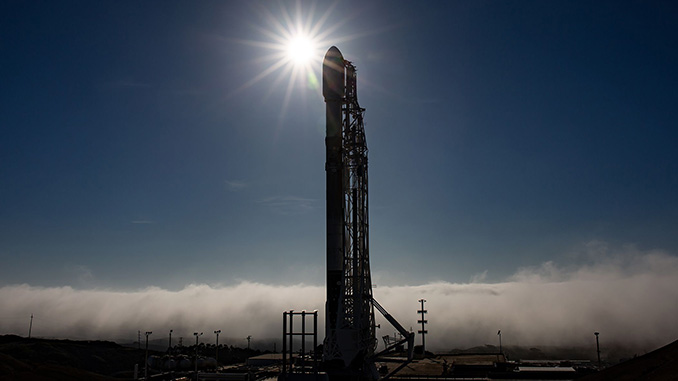
Under Scolese, the NRO has been relying more heavily on commercial launch and satellite technology in an effort to reduce costs and deploy capabilities more quickly, SpaceNews says. That strategy has been paired with a move toward building a large constellation of satellites in low Earth orbit, including a major contract with SpaceX.
The scale of the buildup is striking. The source reports that the NRO has launched more than 200 satellites in roughly the past two years. Even without access to the classified specifics of those systems, that number alone signals how quickly U.S. surveillance infrastructure is being reconfigured.
The shift carries several implications. First, it suggests the U.S. is pursuing resilience through distribution rather than concentrating capability in a smaller number of high-value assets. Second, it confirms that commercial launch and manufacturing are no longer peripheral to intelligence space programs. Third, it reinforces how closely the NRO and the U.S. Space Force are now operating alongside a widening commercial supplier base.
Why This Nomination Matters Beyond Personnel
Mason’s nomination arrives at a time when the NRO is no longer just a classified procurement office operating in the background. It has become a central actor in how the United States modernizes space-based surveillance. Decisions about launch cadence, industrial partnerships, constellation design, and acquisition strategy now carry strategic consequences across defense, space policy, and commercial industry.
If confirmed, Mason would inherit an agency already in the middle of that acceleration. The source text points to an organization that has expanded launch activity sharply, embraced commercial technology, and aligned itself with a more proliferated orbital architecture. The question is less whether change is happening than how Mason would manage its next phase.
There is also a broader policy signal embedded in the nomination. Choosing an executive with strong ties to defense and intelligence contracting indicates a preference for an operator grounded in implementation rather than an outsider brought in for reform. That does not by itself predict policy shifts, but it does suggest the administration sees the NRO’s current trajectory as strategically important enough to continue with experienced industry-aligned leadership.
What to Watch Next
- Whether the Senate confirms Mason and how quickly the transition proceeds.
- How the NRO continues balancing classified requirements with commercial procurement.
- Whether the agency maintains its rapid launch cadence and low-Earth-orbit expansion.
- How commercial providers, including major launch partners, fit into the next phase of U.S. surveillance architecture.
At minimum, the nomination reinforces one clear point: the future of U.S. intelligence space systems is being built through faster deployment, larger constellations, and deeper commercial integration. The next NRO director will shape how durable that model becomes.
This article is based on reporting by SpaceNews. Read the original article.
Originally published on spacenews.com