A second Rocket Lab mission for JAXA
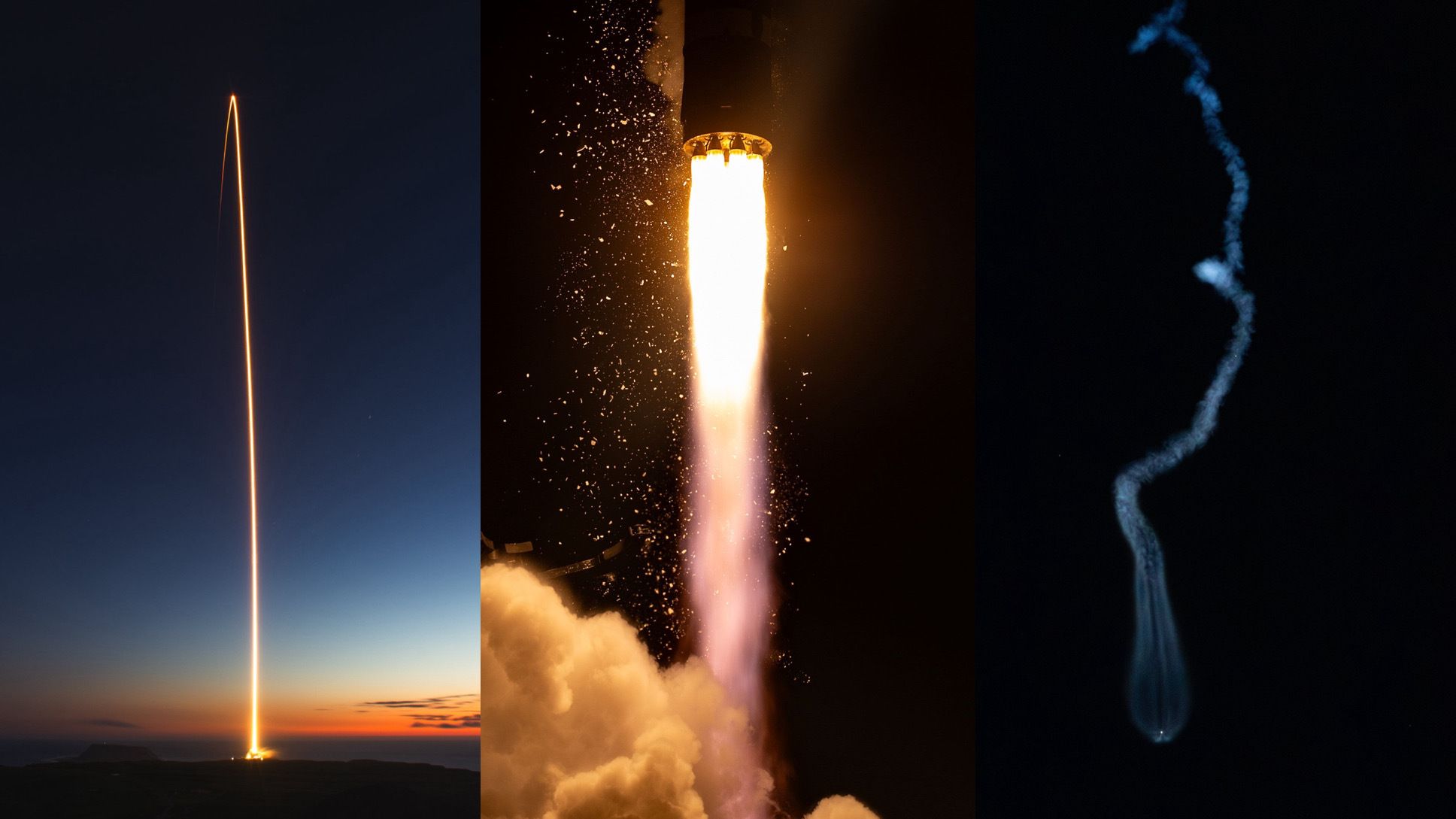
Rocket Lab has completed another dedicated launch for the Japan Aerospace Exploration Agency, sending eight cubeSats into a 540-kilometer sun-synchronous orbit on April 22. The mission, named “Kakushin Rising,” lifted off from Rocket Lab’s Launch Complex 1 in New Zealand, according to the supplied source material, and deployed its payloads nearly an hour later.
The flight adds to an increasingly important pattern in the small-launch market: national space agencies are turning to commercially available launch services to keep technology programs moving when domestic launch capacity is constrained. In this case, Rocket Lab’s Electron vehicle is serving as a replacement path for satellites that had originally been tied to Japan’s Epsilon rocket program.
The payloads are focused on technology demonstration
The eight spacecraft were part of JAXA’s Innovative Satellite Technology Demonstration-4 mission. According to the source text, they were developed by Japanese companies and universities to test a range of technologies in orbit. Those include a multispectral camera, sensors intended to detect electromagnetic precursors of earthquakes, and an antenna that unfolds to 25 times its stowed size using origami techniques.
That combination underscores a recurring strength of cubeSat missions. Small satellites can serve as relatively fast and cost-contained platforms for testing hardware that may later support larger programs or specialized applications. The missions are often less about immediate operational service and more about validating whether a concept can survive launch, deploy correctly, and function as intended in space.
For Japan’s space sector, these payloads also represent a pipeline for university and industry participation. CubeSat campaigns can widen the pool of organizations gaining direct flight heritage, a critical step in turning prototypes into credible commercial or institutional technologies.
Why JAXA turned to Electron
The source material says JAXA had originally planned to launch these eight cubeSats together with a larger technology demonstration satellite, RAISE-4, aboard an Epsilon rocket. That plan changed after Epsilon was grounded following a 2022 launch failure and subsequent issues during static-fire tests of the rocket’s solid-fuel motors.
As a result, JAXA signed a contract with Rocket Lab in October 2025 for two Electron missions: one for RAISE-4 and one for the eight cubeSats. RAISE-4 was successfully launched on Electron in December, and the latest mission completes the pair.
This is a practical example of how launch disruptions ripple through national programs. Satellites are often built to meet narrow windows for technology relevance, regulatory milestones, or institutional schedules. When a launcher becomes unavailable, agencies have to decide whether to wait for domestic capacity to recover or to buy launch services elsewhere. JAXA chose speed and certainty.
Commercial launch flexibility is becoming strategic
The launch came only weeks after another Electron mission that carried European Space Agency navigation technology demonstration satellites known as Celeste. The source text says ESA selected Electron because near-term European launch options were limited and because there was a May 2026 deadline to put reserved frequencies into use.
Taken together, the JAXA and ESA missions show how small launchers can become strategically relevant even when they are not the largest vehicles on the market. Their value lies in schedule responsiveness, orbital precision, and the ability to serve customers who cannot afford long delays. For technology demonstrators and time-sensitive payloads, that flexibility can matter more than sheer lift capacity.
Rocket Lab chief executive Peter Beck framed the back-to-back JAXA missions as evidence that Electron has become a preferred small launcher for national space agencies. The supplied source material supports that claim at least directionally: major agencies are indeed using the vehicle to solve real schedule and access problems.
Rocket Lab’s broader cadence
The source text notes that the JAXA mission took place just over 24 hours after a launch of HASTE, the suborbital variant of Electron, from Wallops Island in Virginia. Rocket Lab did not disclose the customer or outcome of that mission, identified only by the codename “Bubbles.” Even with limited detail, the sequence points to a company operating across both orbital and suborbital demand streams.
Launch cadence matters because reliability in the launch market is not just about whether a rocket reaches orbit. It is also about whether a provider can sustain a rhythm that customers can plan around. Agencies and satellite operators increasingly want launch companies that function more like dependable logistics partners than occasional mission specialists.
What this means for Japan’s space program
For JAXA, the mission is a reminder that space capability now depends on access to an international launch market as much as on domestic rockets. Japan still has strong industrial and scientific capabilities, but launcher setbacks can force temporary reliance on foreign providers. That is not necessarily a weakness if it keeps missions on track, though it may intensify pressure to restore domestic launch confidence.
In the near term, the more immediate outcome is positive. Eight Japanese technology payloads reached orbit, joining a prior Electron launch for RAISE-4 and preserving momentum for a demonstration program that might otherwise have faced a much longer delay. For Rocket Lab, it is another proof point that small launch can win business not just from startups, but from national agencies looking for certainty.
This article is based on reporting by SpaceNews. Read the original article.
Originally published on spacenews.com