A key habitability assumption is being re-examined
New research highlighted in the source material suggests that young Sun-like stars may be less punishing to nearby planets than many scientists had feared. The study focuses on X-ray evolution in solar-mass stars and points toward an earlier dimming and softening of their high-energy radiation, a result that could reshape how researchers think about atmospheric loss and the habitability prospects of worlds orbiting yellow dwarfs.
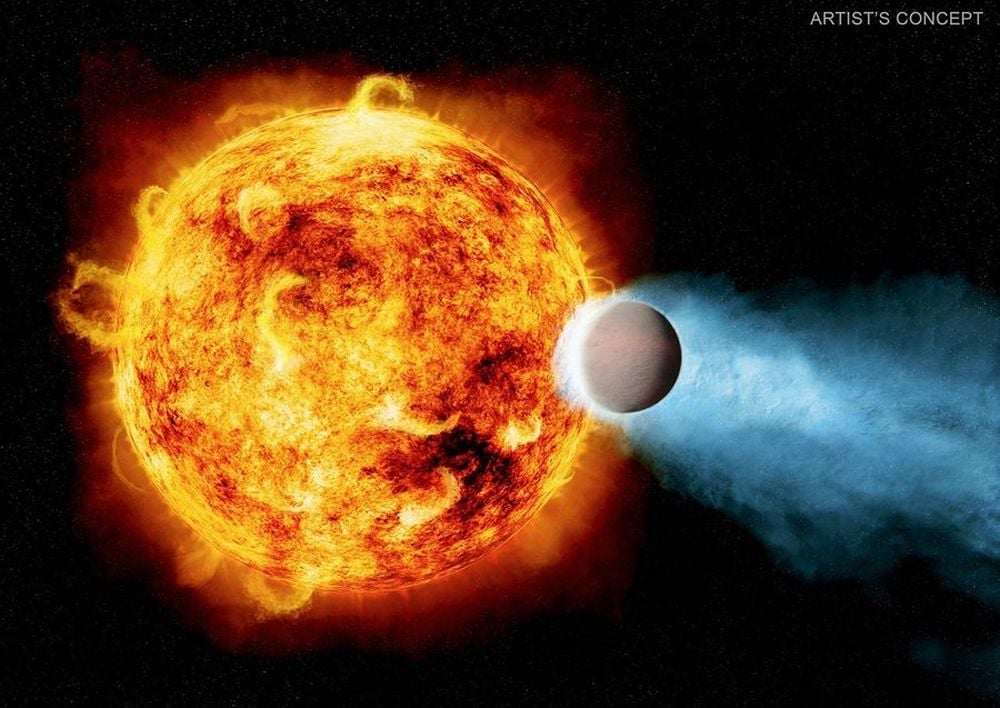
The issue matters because stellar behavior is one of the most powerful external forces acting on a planet’s atmosphere. Young stars can emit intense radiation, particularly in X-rays and ultraviolet wavelengths. Over time, that high-energy output can erode atmospheres, especially for planets in vulnerable orbits. Without an atmosphere, the odds of a planet supporting life as we understand it drop sharply.
This is one reason Sun-like stars occupy such an important place in exoplanet science. Missions such as ESA’s Plato are targeting them, and the proposed Habitable Worlds Observatory is also aimed at terrestrial planets orbiting similar stars. Solar-type stars live long, comparatively stable lives, and their habitable zones are observationally attractive. But if their youth is exceptionally violent in radiative terms, then some of that promise becomes more complicated.
What the new study suggests
The research, published in The Astrophysical Journal and led by Konstantin Getman of Pennsylvania State University, tracks how X-ray luminosity and spectral hardness evolve during roughly the first billion years of solar-mass stars. According to the source text, the result points to “early dimming and coronal softening,” implying that the harshest phase of X-ray output may ease sooner than expected.
That finding does not mean young Sun-like stars are benign. The study still treats high-energy emission as a critical driver of atmospheric evolution. But it does suggest that the long-term atmospheric damage inflicted on orbiting planets may need to be recalibrated if stellar X-ray output declines and softens earlier in the star’s development.
In practical terms, softer and less intense X-ray emission could reduce the cumulative stress on planetary atmospheres. For worlds that are otherwise in potentially favorable orbits, that may improve the chance that enough atmosphere survives to support stable surface conditions over longer timescales.

Why the result matters for exoplanet priorities
One of the most important consequences of this work is strategic. Exoplanet researchers are increasingly investing time and resources in Sun-like stars precisely because they resemble the host star of the only habitable world known so far. But such programs depend on an implicit wager: that solar analogs are promising enough targets to justify focused attention.
If young yellow dwarfs were overwhelmingly destructive to nearby atmospheres, some of that emphasis might prove misplaced. The new result, as summarized in the source material, pushes in the opposite direction. It suggests that the standard picture may have been too pessimistic, and that planets around Sun-like stars could retain more atmospheric potential than previously assumed.
That does not settle the habitability question. Planetary magnetic fields, atmospheric composition, orbital history, and the timing of stellar activity all still matter. But it changes the boundary conditions. A star that quiets earlier in high-energy terms presents a different evolutionary environment than one that stays harsh for longer.
Why stellar history remains central to habitability science
The study is also a reminder that habitability is not just about finding the right distance from a star. A planet in the nominal habitable zone can still lose the basic ingredients needed for life if the host star’s early radiation history is severe enough. That makes stellar astrophysics inseparable from exoplanet characterization.
Understanding how stars evolve in X-rays and ultraviolet radiation is therefore not a side question. It is foundational. Researchers need to know not just what a star is like today, but what kind of environment it created for its planets during the vulnerable early stages of atmospheric development.
The source material frames this work as part of that broader effort, and the implications are meaningful. If young Sun-like stars really do dim and soften sooner than expected, some planets orbiting them may have had a better chance of keeping their atmospheres intact. That does not guarantee habitability, but it strengthens the case for continuing to look closely at solar analog systems rather than discounting them as overly hostile.
In a field where many major questions remain open, that is a valuable shift. It narrows uncertainty around one of the most important filters between a merely Earth-sized world and a genuinely life-friendly one: whether the star let the planet keep its air.
Why this story matters
- The study suggests young Sun-like stars may become less X-ray intense earlier than previously thought.
- That could reduce the extent of atmospheric stripping on nearby planets and alter habitability estimates.
- The result directly affects how scientists prioritize Sun-like stars in future exoplanet missions.
This article is based on reporting by Universe Today. Read the original article.

Originally published on universetoday.com