A Celebration 250 Miles Above Earth
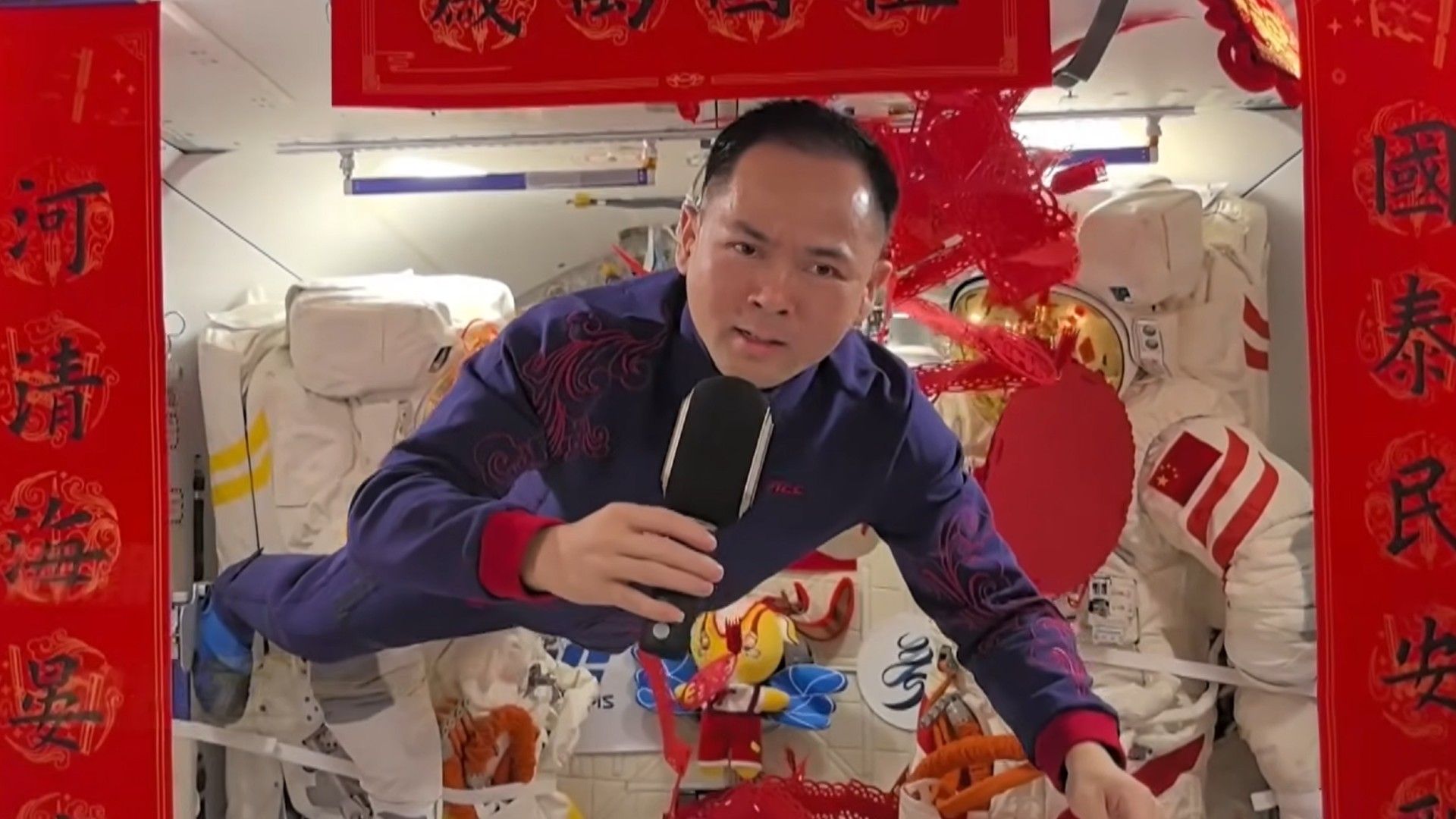
While billions of people across Asia and around the world celebrated the Lunar New Year on February 17, 2026, three Chinese astronauts marked the arrival of the Year of the Horse in the most extraordinary setting imaginable: aboard the Tiangong Space Station, hurtling around the Earth at approximately 17,000 miles per hour. The Shenzhou 21 crew rang in the holiday with a remarkable combination of ancient tradition and cutting-edge technology, producing a music video, hosting a zero-gravity feast, and practicing calligraphy in the microgravity environment of their orbital home.
The celebration came more than 100 days into the crew's mission, having launched from the Jiuquan Satellite Launch Center on October 31, 2025. For commander Zhang Lu, flight engineer Wu Fei, and mission specialist Zhang Hongzhang, the Lunar New Year festivities represented a meaningful connection to the cultural traditions continuing on the ground far below them.
The Music Video
The centerpiece of the celebration was a music video performed and filmed aboard the station. Commander Zhang Lu provided the vocals for a patriotic song featuring the refrain "let the five-star red flag fly high in space." The video was produced as a montage, interweaving footage of the crew's orbital performance with dramatic clips of recent Chinese rocket launches, spacecraft docking maneuvers at Tiangong, spacewalks conducted outside the station, and science experiments carried out in the orbital laboratory.
The production quality of the video reflects China's growing sophistication in using its human spaceflight program as a vehicle for public engagement and national pride. Unlike the early days of Chinese crewed spaceflight, when communications from orbit were limited to brief audio transmissions, the Tiangong station is equipped with high-bandwidth communications systems that enable the crew to produce and transmit polished multimedia content back to Earth in near real-time.
The musical performance in microgravity presented its own unique challenges. Without the pull of gravity, the simple act of standing in place to sing requires foot restraints or handholds to prevent drifting. Musical instruments, if used, must be secured against floating away. Even the microphone behaves differently in zero gravity, as the convective air currents that carry sound waves on Earth are absent in the space station's free-fall environment.

Traditional Celebrations in an Extraordinary Setting
Beyond the music video, the Shenzhou 21 crew engaged in several traditional Lunar New Year customs adapted for life in orbit. The crew practiced calligraphy, writing auspicious characters and phrases using brushes and ink in the microgravity environment, a task that requires considerably more skill than on Earth, as both the brush and the ink behave unpredictably without gravity.
A special feast was prepared using the station's food supplies, incorporating traditional holiday dishes adapted for space consumption. Chinese space food has evolved significantly over the past decade, with menus now including dozens of dishes that approximate the flavors of traditional cuisine despite the constraints of space food preparation and packaging.
- Commander Zhang Lu sang the lead vocals for the music video, which included footage of Chinese rocket launches and spacewalks
- The crew has been aboard Tiangong for over 100 days, having launched on October 31, 2025
- Flight engineer Wu Fei's New Year message invoked "the vigor of a galloping steed" for the Year of the Horse
- The celebration included traditional calligraphy and a special holiday feast in microgravity
- Tiangong's high-bandwidth communications enabled near-real-time multimedia production and transmission
The Shenzhou 21 Mission
The Shenzhou 21 crew was selected with a notable distinction: the mission includes one of China's youngest-ever astronauts, reflecting the space agency's effort to cultivate a new generation of taikonauts who will carry the program forward through its increasingly ambitious plans. The crew was revealed ahead of launch in a ceremony that generated significant public attention within China.
Flight engineer Wu Fei captured the spirit of the New Year celebration in a message beamed down to Earth, saying, "The Year of the Horse calls for the vigor of a galloping steed. Let us keep striving for our dreams and working for happiness." The message resonated with a Chinese public that has embraced the country's space program as a source of national achievement and cultural pride.
The mission is part of China's sustained program of six-month crew rotations aboard Tiangong, which has been continuously occupied since 2022. The station, while smaller than the International Space Station, represents a fully operational orbital laboratory where Chinese scientists conduct research in physics, biology, materials science, and other disciplines that benefit from the microgravity environment.
Space Stations as Cultural Platforms
The Shenzhou 21 crew's Lunar New Year celebration continues a tradition that has evolved across all major space programs. Astronauts aboard the International Space Station have long marked holidays from their respective cultures, from Christmas and Hanukkah to Diwali and Ramadan. These celebrations serve a dual purpose: maintaining crew morale during long-duration missions and connecting the human experience of spaceflight to the cultural traditions that give meaning to life on the ground.
For China's space program specifically, these cultural moments represent an important dimension of what is sometimes called "space diplomacy," the use of human spaceflight to project national values and achievements to both domestic and international audiences. The music video produced by the Shenzhou 21 crew, with its patriotic themes and professional production quality, is as much a public communications product as it is a personal celebration.
The broader context of the celebration is China's rapidly expanding space ambitions. The country has announced plans to land astronauts on the moon by 2030, develop a reusable launch vehicle program, and potentially expand the Tiangong station to accommodate international partners. Each successful crew rotation, and each cultural event shared from orbit, builds the institutional experience and public support that these ambitious plans require.
Looking Ahead
The Shenzhou 21 crew is expected to complete their mission in April 2026, when they will be replaced by the Shenzhou 22 crew in the standard rotation that has kept Tiangong continuously occupied. Their Lunar New Year celebration will be remembered not just as a festive moment in orbit but as another milestone in China's steady progression from space newcomer to one of the world's leading spacefaring nations. As the Year of the Horse begins, the crew's message from orbit carries an aspirational weight that extends far beyond the holiday itself.
This article is based on reporting by Space.com. Read the original article.

Originally published on space.com