The Artemis Accords are moving from symbolism toward operations
The Artemis Accords coalition has expanded to 67 signatory nations, and the latest workshop in Lima, Peru, suggests the initiative is increasingly focused on the practical realities of operating around the Moon rather than only broad diplomatic alignment. According to the supplied NASA source text, six countries joined ahead of the meeting: Latvia, Jordan, Morocco, Malta, Ireland, and Paraguay. Their addition helped frame the fourth annual Artemis Accords workshop not just as a ceremonial gathering, but as a sign of widening participation in the rules and coordination mechanisms that could shape future lunar activity.
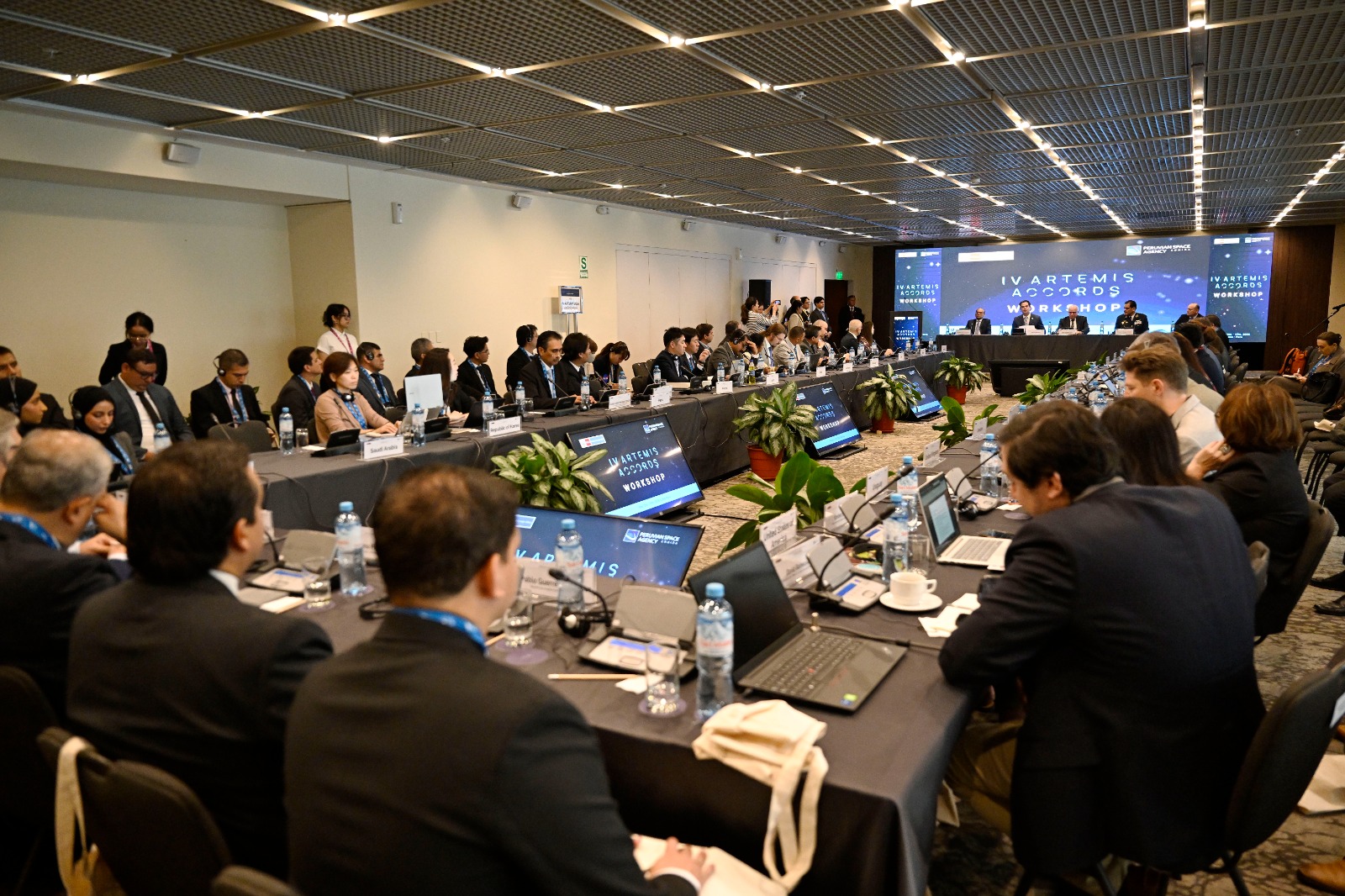
The workshop brought together representatives from NASA, the U.S. Department of State, and counterparts from 30 countries. Peru hosted the event, making it the first time the annual meeting has been held in South America. That regional shift matters because the Accords have always sought legitimacy through breadth. Expanding participation beyond traditional space powers strengthens the claim that the norms under discussion are intended to be global in character rather than club rules set by a small group of established players.
Why the timing matters
The source text says the Accords community reviewed planned lunar landing and orbiting missions from all signatories in attendance, with more than a dozen lunar landing missions expected over the next 18 months. That makes the meeting notable not only for its signatory count but also for its timing. A norms framework has limited meaning if no one is preparing to operate under it. A crowded mission calendar changes that. Once multiple governments and organizations are aiming for the lunar surface and nearby space on overlapping timelines, concepts such as non-interference, interoperability, debris mitigation, and scientific data release move from abstract principle to operational necessity.
This is where the Accords are trying to prove relevance. The workshop reportedly included technical discussions and a tabletop exercise focused on operating in complex lunar environments. That kind of exercise matters because the Moon is no longer being treated only as a destination for occasional prestige missions. It is increasingly being approached as an environment where traffic, resource use, communications, and safety practices may need some degree of shared expectation.

From broad principles to practical coordination
The Accords were originally framed around safe and responsible exploration of the Moon, Mars, and beyond. In practice, the near-term challenge is lunar coordination. If more than a dozen landing attempts are indeed expected within a year and a half, then mission planners face a range of concrete issues: how to avoid harmful interference between missions, how to exchange information, how to manage orbital debris concerns, and how to handle scientific openness in a way that supports both national goals and broader cooperation.
The supplied source text identifies those themes directly. Participants discussed non-interference, interoperability, release of scientific data, orbital debris, and mitigation. Those are not rhetorical talking points. They are the kinds of issues that can determine whether increased lunar activity becomes orderly, competitive, or chaotic.
Interoperability is especially important. A multinational lunar environment becomes far more workable if systems can communicate, procedures are understandable across programs, and basic expectations are aligned. Without that, each new mission adds complexity faster than the governance structure can absorb it.
South America’s role and broader coalition building
Peru’s role as host gave the meeting an additional political dimension. The source text quotes Peruvian Space Agency director Roberto Melgar Sheen saying one objective was to increase regional participation and noting that all South American signatory countries took part, most of them in person. That is meaningful because space diplomacy can gain traction when regional blocs see themselves reflected in agenda-setting, not merely invited to endorse outcomes crafted elsewhere.
The six latest signings also show how the Accords continue to widen through medium and smaller states, not only through countries already synonymous with space launch capability. That is consistent with the Accords’ broader purpose. Even nations without independent crewed launch programs can shape how exploration norms develop, contribute science or technology, support infrastructure, and influence diplomatic legitimacy.
What the growth does and does not mean
A rising signatory count does not by itself guarantee effective governance. Signatures are easier than implementation, and space cooperation frameworks often look stronger on paper than under operational stress. The Accords will ultimately be judged by whether they help prevent disputes, improve transparency, and support safe mission execution once lunar traffic becomes denser.
Still, the workshop described in the source text shows progress beyond symbolic endorsement. Reviewing real missions, conducting tabletop exercises, and focusing on specific issues linked to upcoming landings indicates the coalition is trying to turn diplomatic momentum into practical coordination. That is a necessary step if lunar exploration is shifting from isolated national efforts toward sustained multinational activity.
The strategic significance
The growth of the Artemis Accords also reflects a broader strategic competition over who helps define the working rules of future space activity. Norms often solidify around the actors who show up early, invest consistently, and build coalitions around operational needs. By expanding participation and tying it to near-term mission planning, NASA and partner governments are trying to ensure that those norms are shaped in an environment tied to active exploration rather than retrospective debate.
The latest workshop therefore matters less as a diplomatic photo opportunity than as evidence that lunar governance is entering a more practical phase. With 67 signatories and a busy mission calendar ahead, the key question is no longer whether countries are interested in setting expectations for behavior beyond Earth. It is whether those expectations can keep pace with the return of sustained activity around the Moon.
This article is based on reporting by NASA. Read the original article.

Originally published on nasa.gov