Antarctic ice points to an ongoing shower of stellar debris
Earth appears to be collecting traces of stardust from an ancient stellar explosion, not in a dramatic burst but as a thin, persistent dusting recorded in Antarctic ice. The key marker is iron-60, a radioactive isotope that is not produced naturally on Earth and must originate in massive stars before being dispersed by supernova explosions.
According to the supplied source text, iron-60 has a half-life of 2.6 million years. That matters because any iron-60 present when the Solar System formed 4.5 billion years ago would have decayed away long ago. If scientists find iron-60 on Earth today, it has to have arrived later from outside our planet.
Researchers have known for years that the Solar System was hit by iron-60 from nearby supernovae on at least two occasions millions of years ago, with evidence preserved in deep-sea sediments and lunar rocks. The newer puzzle came from a much more recent signal: iron-60 detected in Antarctic surface snow less than twenty years old. There had been no nearby supernova to explain such fresh material.
The Local Interstellar Cloud offers an answer
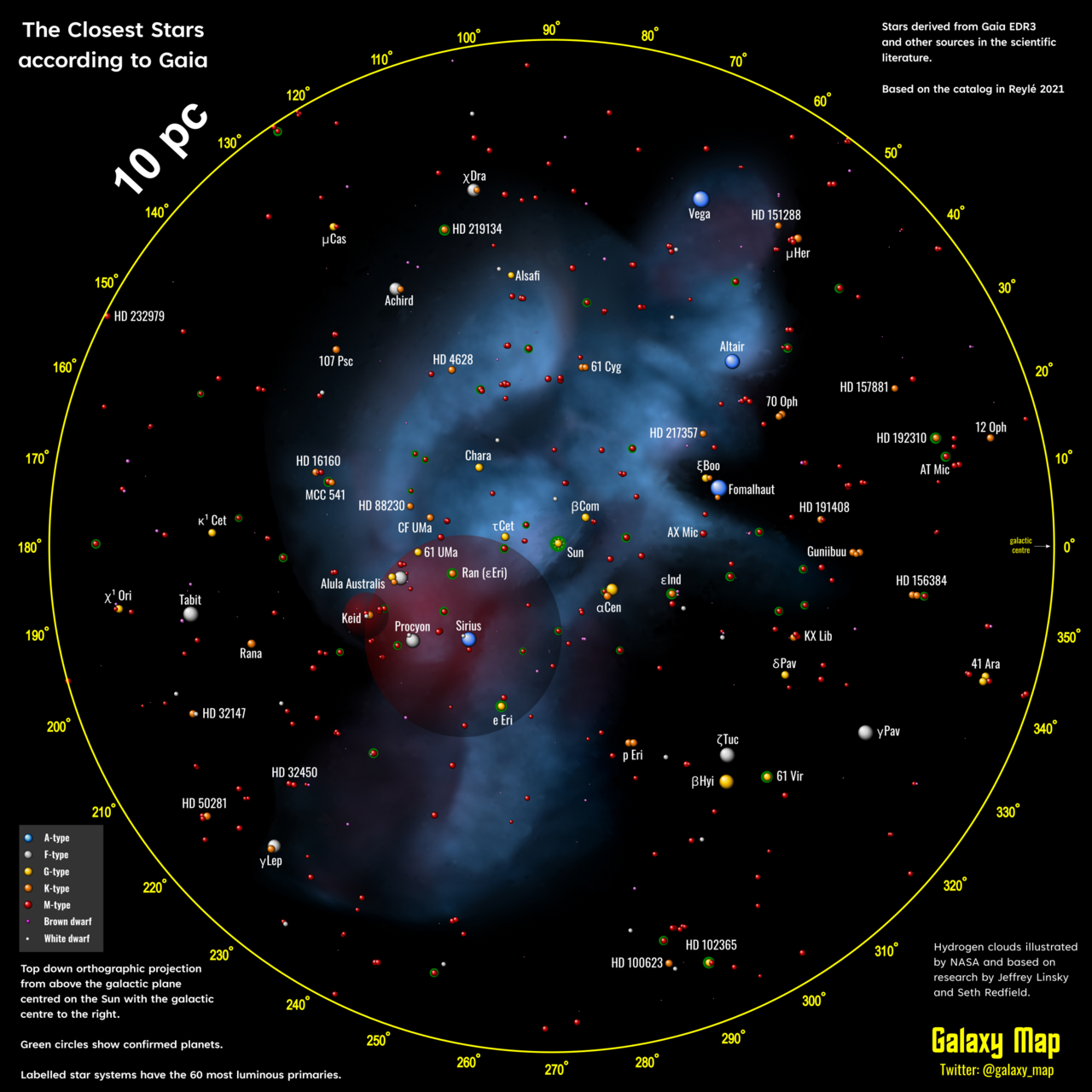
The source text says scientists suspected the Local Interstellar Cloud might solve that puzzle. This vast region of gas and dust surrounds our part of the Milky Way, and the Solar System is currently moving through it. If the cloud retained iron-60 from a long-past supernova, it could act as a reservoir, gradually releasing tiny amounts of that material as Earth passes through the dusty environment.
An international team led by Dr. Dominik Koll and Prof. Anton Wallner at HZDR in Dresden analyzed Antarctic ice cores from the EPICA drilling project. Those samples covered ice deposited roughly 40,000 to 80,000 years ago, a period described in the source text as corresponding to the time when the Solar System first entered the cloud.
The result was not just a detection of iron-60, but a changing pattern. The source text says less iron-60 reached Earth between 40,000 and 80,000 years ago than in more recent samples. That suggests the Solar System was moving through a less dense region of the cloud before drifting into a thicker region later on.

Why the variation is so important
The most important part of the finding may be the variation itself. If the iron-60 reaching Earth today were merely the lingering residue of much older supernova events, scientists would not expect such a quick and distinct change over this timescale. The source text says the signal changes too rapidly for that alternative explanation. In other words, the cloud is not just a passive backdrop. It is the likely immediate source of the material now reaching Earth.
That makes the study more than a neat detection of exotic atoms. It turns the Solar System’s current galactic environment into an active factor in what reaches our planet. Earth is not merely carrying a frozen record of ancient stellar explosions. It is still interacting with the debris those explosions left behind.
This is a subtle but significant shift in interpretation. Instead of treating iron-60 as only a geological archive of distant events, researchers can also use it to map how the Solar System moves through interstellar structure.
A search for almost nothing
The work described in the source text is remarkable for its scale and difficulty. The team reportedly moved about 300 kilograms of Antarctic ice from Bremerhaven to Dresden, processed the material chemically, and reduced it to just a few hundred milligrams of dust. From that residue, they then had to isolate atoms of iron-60.
The source text compares the search to finding a needle in 50,000 football stadiums filled to the roof with hay. That is a vivid way to describe the analytical challenge, but it also points to why results like this matter. Detecting a vanishingly small extraterrestrial signal in terrestrial ice requires painstaking control of contamination, precise separation methods, and instrumentation sensitive enough to distinguish one isotope from overwhelming background material.
Studies like this often reshape scientific understanding not because they produce spectacular images, but because they recover a clean signal where almost none should be visible. In this case, the signal is telling researchers something about the region of space the Solar System currently occupies.

What this means for our picture of the Solar System
The finding strengthens the idea that the Solar System is not moving through empty space. It is passing through a structured local environment with its own history, density changes, and preserved debris from ancient astrophysical events. The Local Interstellar Cloud is therefore not just a map label for astronomers. It may be an active archive of nearby stellar history, one that continues to leave a measurable imprint on Earth.
That does not mean the dust is dangerous or dramatic. The signal described in the source text is extremely faint. But scientifically it is powerful, because it connects planetary geology, polar ice records, astrophysics, and the Solar System’s galactic motion into a single story.
It also opens a path for future work. If iron-60 levels vary as Earth moves through different parts of the cloud, then longer records and more samples may help reconstruct the structure of the local interstellar environment with greater precision. Scientists could eventually compare ice, seafloor, and lunar records to build a clearer timeline of how interstellar material has arrived at Earth across different eras.
Stardust as a live process, not just an ancient memory
The broader appeal of the discovery is conceptual as much as technical. “We are made of stardust” is a familiar phrase, but this research adds a present-tense dimension to it. The source text suggests Earth is not only built from ancient stellar material in the distant past. It is still being dusted, however lightly, by the remains of exploded stars stored in the cloud our Solar System now traverses.
That makes the universe feel less remote. The supernova that created this iron-60 is long gone, but its products are still moving through space, still being sampled in Antarctic ice, and still allowing scientists to read the recent path of our Solar System through the Milky Way. In that sense, the research is not simply about what happened to a star long ago. It is about where we are now.
This article is based on reporting by Universe Today. Read the original article.
Originally published on universetoday.com