Introduction: A DNA Repair Protein with an Unexpected Role
In a surprising twist that bridges DNA repair and immunology, researchers have uncovered a novel function for RAD51, a protein long known for its role in homologous recombination. The new study, published in the August 2026 issue of Science (Volume 393, Issue 6813), demonstrates that RAD51 stabilizes neutrophil extracellular traps (NETs) to compartmentalize inflammation. This discovery not only expands our understanding of how the immune system manages inflammatory responses but also suggests potential therapeutic targets for conditions marked by excessive inflammation.
The Double-Edged Sword of Neutrophil Extracellular Traps
Neutrophils are the most abundant white blood cells and are often the first responders to infection or tissue injury. One of their key defense mechanisms is the release of neutrophil extracellular traps, or NETs. These are web-like structures composed of DNA, histones, and antimicrobial proteins that physically trap and neutralize pathogens. While NETs are effective at containing infections, they are also highly pro-inflammatory. If left unchecked, they can damage surrounding tissues and contribute to autoimmune diseases, vasculitis, and chronic inflammatory conditions.
The formation and degradation of NETs are tightly regulated processes. Excessive NET formation, or impaired clearance, has been linked to a range of pathologies, from sepsis to atherosclerosis. However, the molecular mechanisms that control NET stability and turnover are not fully understood. This new study identifies RAD51 as a critical player in this process, adding a layer of complexity to our understanding of how NETs are managed.

A Surprising Role for a DNA Repair Protein
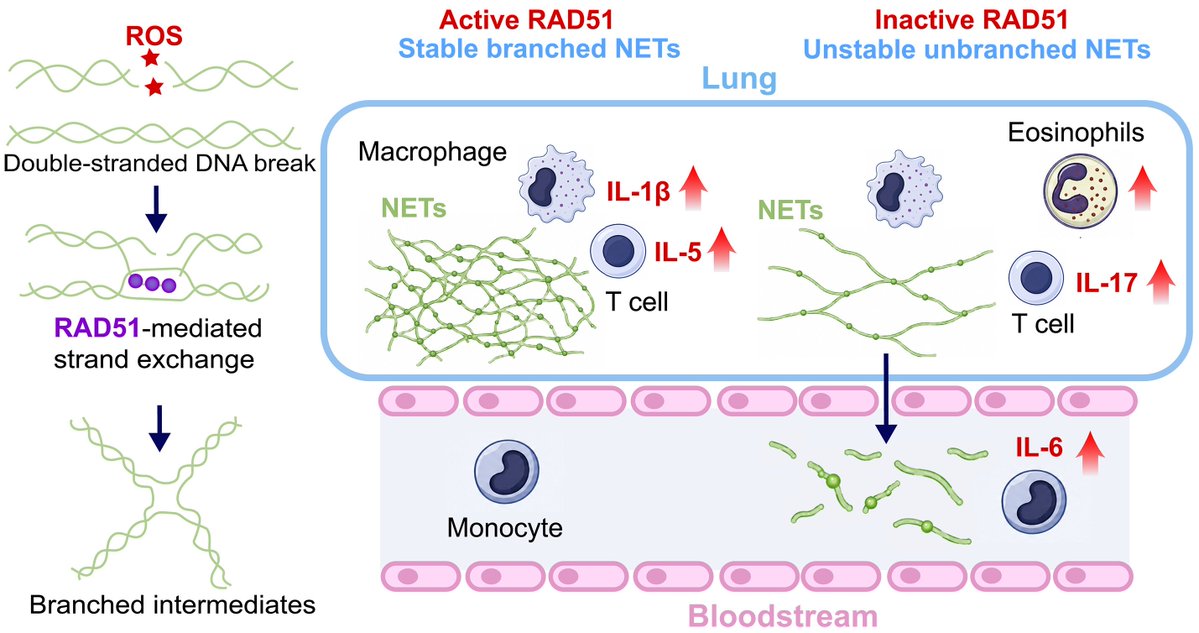
RAD51 is a central enzyme in homologous recombination, a pathway that repairs double-strand breaks in DNA. It facilitates strand exchange between homologous DNA molecules, ensuring accurate repair and genomic stability. Given this well-established function, the discovery that RAD51 also interacts with NETs is unexpected. The study shows that RAD51 binds to the DNA backbone of NETs, stabilizing the structure and preventing its premature degradation.
The researchers found that when RAD51 is depleted or inhibited, NETs become more fragile and disintegrate more rapidly. This accelerated breakdown leads to the release of trapped antigens and proteolytic enzymes, spreading inflammation to surrounding areas. In contrast, when RAD51 is present, NETs remain intact for longer periods, effectively confining the inflammatory response to the site of infection or injury.
Compartmentalizing Inflammation: A Protective Mechanism
The concept of compartmentalization is central to this study. By stabilizing NETs, RAD51 helps create a physical and biochemical barrier that isolates inflammatory mediators. This containment reduces collateral damage to healthy tissues and allows the immune system to clear pathogens without triggering systemic inflammation. The study suggests that RAD51-mediated NET stabilization is a deliberate, evolutionarily conserved strategy to balance effective immunity with tissue protection.
This finding also sheds light on why disruptions in NET regulation can lead to disease. If RAD51 function is impaired, NETs may break down too quickly, losing their antimicrobial capacity and unleashing inflammatory contents. Conversely, excessive RAD51 activity might lead to overly persistent NETs, which could contribute to chronic inflammation or fibrosis. The precise balance is therefore critical for immune homeostasis.

Implications for Inflammatory Disease and Therapy
The identification of RAD51 as a stabilizer of NETs opens new avenues for therapeutic intervention. Conditions characterized by dysregulated NET formation, such as lupus, rheumatoid arthritis, and acute respiratory distress syndrome (ARDS), could potentially be modulated by targeting RAD51. Drugs that enhance or inhibit RAD51 activity might be used to fine-tune NET stability and, consequently, the inflammatory response.
For example, in diseases where NETs are excessive and harmful, inhibiting RAD51 could accelerate their clearance, reducing tissue damage. Conversely, in infections where robust NET formation is needed, enhancing RAD51 activity might help maintain the traps and improve pathogen containment. However, the study notes that careful consideration is required, as systemic modulation of RAD51 could also affect its canonical role in DNA repair, potentially leading to genomic instability or cancer risk.
The research also has implications for understanding how tumors evade the immune system. Tumor-associated neutrophils often release NETs, which can promote metastasis and suppress anti-tumor immunity. By stabilizing NETs, RAD51 might contribute to the pro-tumorigenic environment. Inhibiting RAD51 in the tumor microenvironment could therefore be a novel strategy to enhance the efficacy of cancer immunotherapy.
Key Findings and Future Directions
- RAD51 binds and stabilizes NETs: The protein physically interacts with NET DNA, preventing rapid degradation.
- Compartmentalization is protective: Stabilized NETs contain inflammatory molecules, reducing collateral tissue damage.
- Loss of RAD51 accelerates NET breakdown: Depletion leads to faster release of trapped antigens and proteases, spreading inflammation.
- Potential therapeutic target: Modulating RAD51 activity could offer new treatments for autoimmune, inflammatory, and oncologic diseases.
Looking ahead, researchers plan to investigate the precise domains of RAD51 that mediate NET binding and how post-translational modifications regulate this function. Another key question is whether other DNA repair proteins participate in NET stabilization, suggesting a broader connection between genome maintenance and immune defense. The study also calls for in vivo experiments to validate the clinical relevance of RAD51-mediated NET stabilization in animal models of inflammation.

Conclusion
The discovery that RAD51 stabilizes neutrophil extracellular traps to compartmentalize inflammation represents a paradigm shift in our understanding of both DNA repair proteins and immune regulation. It highlights the remarkable multifunctionality of proteins and underscores the intricate cross-talk between cellular processes that were once considered separate. As we continue to unravel these connections, the potential for novel therapeutic strategies grows, promising better management of inflammatory diseases and innovative approaches to cancer treatment. The findings are a testament to the power of basic research in uncovering unexpected biological truths with far-reaching clinical implications.
This article is based on reporting by Science (AAAS). Read the original article.
Originally published on science.org