A Buried Crater Gets a New Birthday
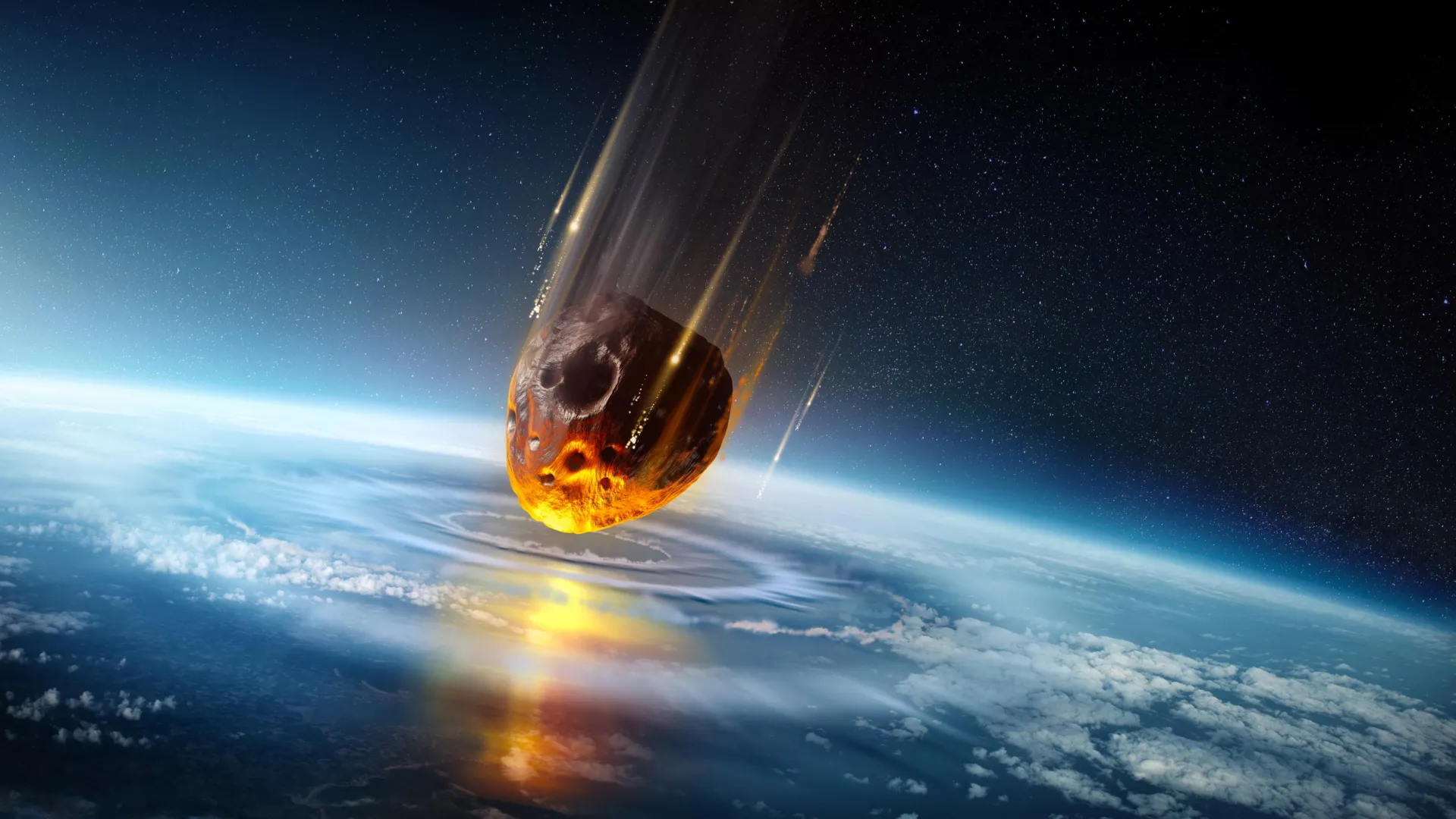
An impact structure hidden deep beneath the town of Ames, Oklahoma, has been quietly rewritten in the geologic record. According to new research from The University of Texas at Austin, the crater is roughly 100 million years younger than generations of scientists believed. Instead of forming during a well-known pulse of ancient impacts, the Ames meteorite struck roughly 370 million years ago, during the Late Devonian period.
The revision matters well beyond Oklahoma. The Ames structure had long been treated as part of a cluster of North American impacts that researchers use to reconstruct what the early solar system was doing to Earth. Moving one of those craters out of that group reshapes the picture, and it also places the Ames strike surprisingly close in time to one of the most devastating extinction events in the planet's history.
A Crater Miles Wide, Hidden Under Sediment
The Ames impact structure sprawls for miles underground. Sediment has long since buried the crater, so there is no obvious bowl-shaped scar on the surface for a passerby to notice. That concealment has not made the site unimportant — quite the opposite.
Economically, the structure is a significant producer of oil and gas, which means drillers and geologists have paid attention to it for decades. Scientifically, it functions as a natural laboratory: the rocks beneath Ames preserve a record of a violent event and the long, slow processes that followed it. Understanding exactly when that event happened is foundational to interpreting everything else about the site.

The Case for an Ordovician Impact
For years, the Ames crater was assigned to a family of large meteor impacts scattered across North America, all appearing to date to roughly 467.5 million years ago. That interval is known as the Ordovician Meteor Event. The sheer number of impact structures clustering around the same age has prompted a striking hypothesis: that Earth may once have been encircled by a Saturn-like ring of asteroid debris during the Middle Ordovician, with material raining down over an extended span.
Fossils That Pointed the Wrong Way
The original age estimate for Ames rested on biological evidence rather than on the rock directly. Researchers had recovered teeth from a conodont — an ancient, eel-like creature — preserved within the impacted rock. Those fossils belonged to organisms that lived during the older Ordovician period, so the crater was assumed to share their age.
Lead author Elizabeth Catlos, an associate professor in UT's Department of Earth and Planetary Sciences, offered a simpler explanation for the mismatch. The conodont teeth were most likely already millions of years old by the time the asteroid arrived, meaning the fossils were reworked material caught up in the impact rather than a timestamp for it.
Zircon Crystals Deliver a Clearer Signal
To get a direct date, the team turned to zircon crystals extracted from granite that the impact had altered. Zircon is a durable mineral that traps radioactive elements and holds onto them across immense stretches of time, which makes it a reliable mineral clock for geologists. When the researchers analyzed those crystals, the answer was consistent and unmistakable.
"No matter what technique we used, it was coming back to this younger signal," Catlos said. That younger signal places the Ames impact in the Late Devonian, roughly 370 million years ago — nearly 100 million years after the Ordovician episode it had been lumped into. The findings were published in July in the journal Meteoritics & Planetary Science.
Why One Revised Date Ripples Outward
A single crater moving on the timeline has consequences for broader theories. If Ames no longer belongs to the Ordovician cluster, then the evidence supporting a debris ring around Earth during that period becomes slightly thinner, and the tally of impacts assigned to that window needs re-examination.
- The Ames structure is no longer tied to the Ordovician Meteor Event.
- Its revised age is roughly 370 million years, in the Late Devonian.
- The change stems from zircon dating of impact-altered granite rather than from fossils.
- The result suggests fossil evidence alone can misdate an impact when the fossils are reworked.
The work also raises a methodological point that extends far beyond Oklahoma. Where impact craters have been dated primarily through the fossils trapped inside them, those ages may need a second look. Mineral-based dating can tell a different story, as it did here.
A Strike Near a Devonian Mass Extinction
The most provocative element of the new timeline is what sits next to it. The Late Devonian was a time of severe biological crisis, and a major mass extinction during that era devastated marine life. The Ames impact now falls closely in time with that upheaval, which invites obvious questions about whether the two events were connected.
The researchers present the timing as a notable coincidence rather than a proven cause. Still, the alignment is the kind of detail that pushes scientists to look harder at how extraterrestrial impacts and extinction episodes may have intersected in deep time. A crater that was once considered a footnote to the Ordovician now sits alongside one of the deadliest chapters in the history of life.

Oil, Gas and a Sharper Geologic Map
There is a practical dimension as well. Because the Ames structure is a productive source of oil and gas, an accurate age helps geologists understand how the buried rocks formed, how they were fractured by the impact, and how fluids have moved through them since. Misplacing the structure by 100 million years distorts that framework.
Correcting the date gives industry and academic researchers a firmer foundation for interpreting the subsurface. It also illustrates how a site can be simultaneously a resource, a scientific puzzle and a window into planetary history.
What Comes Next
The UT Austin team's conclusion is straightforward: the Ames impact did not happen during the Ordovician bombardment, and the conodont teeth that suggested otherwise were older passengers in younger rock. The crater beneath a small Oklahoma town now belongs to the Late Devonian — a placement that nudges the crater's story closer to a mass extinction and nudges one piece of evidence away from the idea of a ring of debris orbiting ancient Earth.
For geologists, the takeaway is a reminder that the dating of ancient cataclysms often hinges on which material gets trusted. Fossils can be transported and reused; zircons lock in the moment of the event. At Ames, the crystals had the final word.
This article is based on reporting by Science Daily. Read the original article.
Originally published on sciencedaily.com


