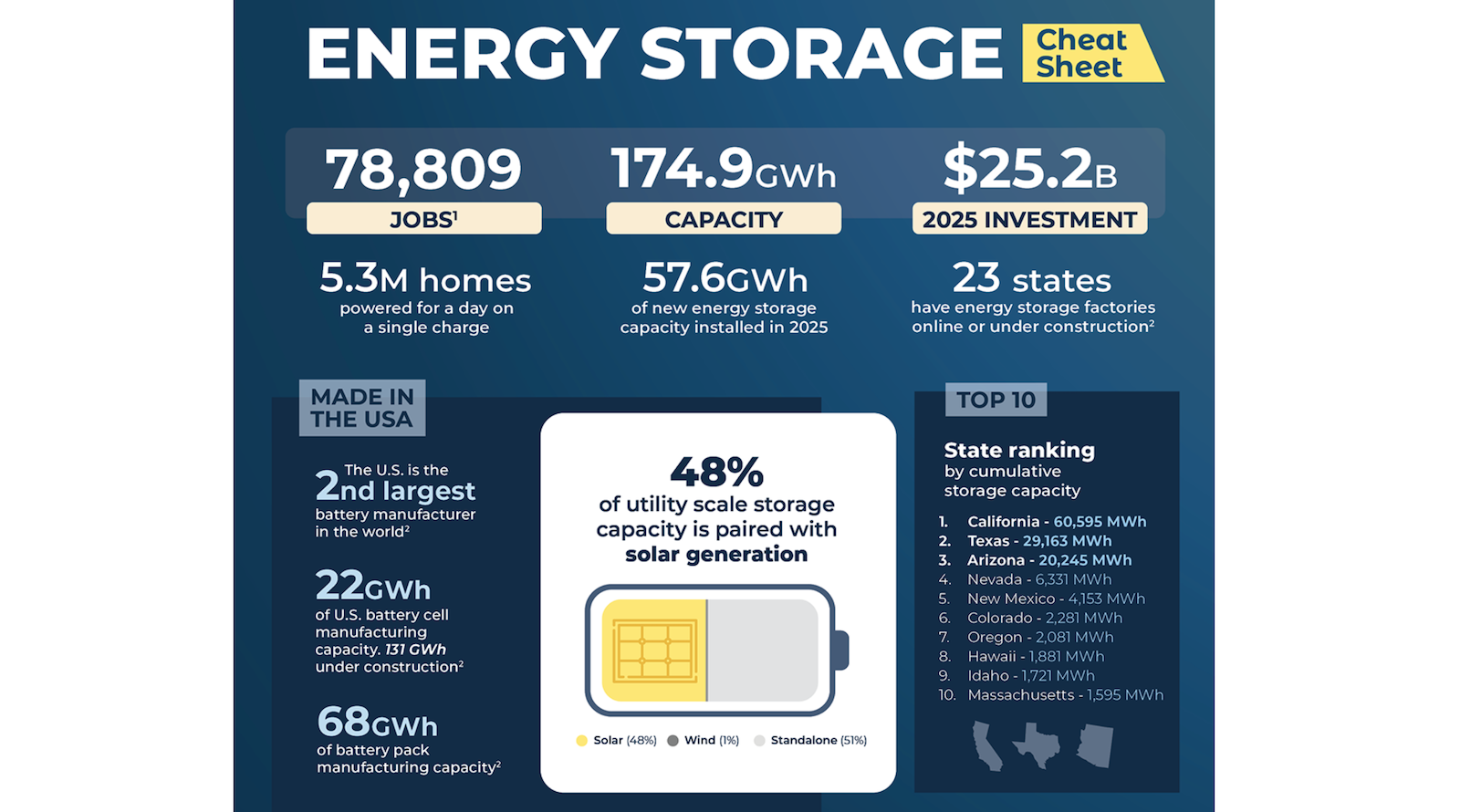
Battery storage ने US मध्ये आतापर्यंतची सर्वात मजबूत पहिली तिमाही नोंदवली
Solar Energy Industries Association आणि Benchmark Mineral Intelligence यांनी प्रकाशित केलेल्या U.S. Energy Storage Market Outlook Q2 2026 नुसार, US energy storage market ने 2026 च्या पहिल्या तिमाहीत 9.7 gigawatt-hours नवीन capacity स्थापित केली. अहवाल याला sector च्या इतिहासातील सर्वात मजबूत पहिली तिमाही म्हणतो आणि installations year over year 32% वाढल्या असल्याचे सांगतो.
हा आकडा स्वतःमध्ये मोठा आहे, पण त्याहून महत्त्वाचे म्हणजे तो power system मध्ये storage च्या भूमिकेबद्दल काय सांगतो. Batteries आता फक्त backup assets किंवा renewable projects ला जोडलेले add-ons म्हणून पाहिले जात नाहीत. दिलेल्या material मध्ये industry groups storage ला power price volatility, grid reliability गरजा, आणि data centers सारख्या मोठ्या loads कडून वाढणारी electricity demand यांचा मुख्य उपाय म्हणून मांडतात.
Forecast का वाढला
Updated outlook आता US मध्ये 2030 पर्यंत 610 GWh पेक्षा अधिक energy storage install होईल असा अंदाज व्यक्त करतो, जो आधीच्या projections पेक्षा जास्त आहे. source हा upward revision market आणि geopolitical pressure यांच्या मिश्रणाशी जोडतो. Investors, developers, आणि grid operators disrupted global gas आणि gas turbine supplies, तसेच त्यातून आलेल्या price volatility ला प्रतिसाद देत आहेत. अशा वातावरणात solar आणि storage अधिक आकर्षक ठरतात, कारण त्या fuel-price swings पासून कमी प्रभावित होतात आणि increasingly domestic स्तरावर तयार होत आहेत.
Storage बद्दल बोलण्याच्या पद्धतीत हा एक लक्षणीय बदल आहे. आता युक्तिवाद फक्त decarbonization चा नाही. तो external shocks पासून insulation चाही आहे. Battery power system मधले सर्व risk दूर करत नाही, पण exposure profile अशा प्रकारे बदलते की utilities, corporate buyers, आणि policymakers increasingly त्याला महत्त्व देतात.
ही framing हेही स्पष्ट करते की batteries utility planning च्या बाहेरच्या sectors चे लक्ष का वेधून घेत आहेत. अहवाल सांगतो की Google आणि Meta सारख्या कंपन्यांनी यंदा tens of thousands of megawatt-hours energy storage खरेदीचे करार जाहीर केले आहेत. यावरून मोठ्या technology firms storage ला uptime, cost management, आणि विस्तारत चाललेल्या digital infrastructure साठी power access शी जोडलेला strategic operational asset मानत आहेत.

Storage AI buildout कथेतला भाग बनत आहे
दिलेल्या material मधील सर्वात मजबूत signal पैकी एक म्हणजे batteries आणि AI infrastructure यांच्यातील स्पष्ट संबंध. Benchmark Mineral Intelligence मधील energy lead म्हणतात की battery energy storage systems साठी supportive policy AI आणि data center rollout सक्षम करण्यासाठी आणि cost impacts कमी करण्यासाठी महत्त्वाची असेल. हा linkage महत्त्वाचा आहे, कारण तो storage ला clean-energy subsector मधून industrial planning च्या मूलभूत घटकात रूपांतरित करतो.
Data centers वाढत असताना, grid ला अधिक concentrated demand absorb करताना service स्थिर ठेवावी लागते. Storage energy वेळेनुसार shift करण्यास, peaks manage करण्यास, आणि generation आणि demand जुळत नसताना reliability support करण्यास मदत करू शकते. प्रत्यक्षात, batteries US पुरेसे electrical infrastructure उभे करू शकेल का, या चर्चेच्या केंद्राजवळ येत आहेत, जेणेकरून नवीन compute-heavy industries ना support करता येईल.
याचा अर्थ storage एकट्याने समस्या सोडवते असा नाही. याचा अर्थ sector ला अधिक स्पष्ट strategic role मिळाला आहे. जेव्हा power planners, hyperscalers, आणि manufacturers सर्व जण वेगवेगळ्या पण overlapping कारणांमुळे एकाच प्रकारचे infrastructure हवे म्हणतात, तेव्हा deployment वेगाने वाढू शकते.
Policy अजूनही सर्वात मोठी uncertainty
मजबूत quarter असूनही, अहवाल इशारा देतो की Washington मधील permitting bottlenecks प्रगती मंदावू शकतात. SEIA म्हणते की 467 solar आणि storage projects permits ची वाट पाहत आहेत आणि delays किंवा cancellations च्या धोक्यात आहेत. हीच outlook मधील मुख्य tension आहे: demand मजबूत होत आहे, economic case वाढत आहे, पण project delivery अजूनही policy आणि administrative friction मुळे अडू शकते.
हा इशारा abstract नाही. power demand वाढत असताना projects अडले तर electric bills वाढू शकतात आणि reliability planning कठीण होऊ शकते. दिलेल्या text मध्ये policy risk ला व्यापक आंतरराष्ट्रीय स्पर्धेच्या शर्यतीचा भाग म्हणूनही मांडले आहे, ज्यात delays US ला AI आणि advanced energy deployment शी संबंधित sectors मध्ये China च्या आणखी मागे ढकलू शकतात असा दावा आहे.
या framing मधील प्रत्येक मुद्द्याशी सहमत असणे आवश्यक नाही, पण operational risk खरा आहे. मोठ्या infrastructure pipelines uncertainty प्रति संवेदनशील असतात. Batteries अनेक इतर grid assets पेक्षा modular असल्या तरी, त्यांना approvals, interconnection, procurement, आणि financing discipline लागते. हे layers पुढे न गेल्यास, मजबूत market signal लवकरच कमकुवत होऊ शकतो.

ही तिमाही milestone आहे, समाप्ती नाही
पहिल्या तिमाहीतील record महत्त्वाचा आहे, कारण दबाव असूनही storage demand टिकाऊ आहे हे तो सिद्ध करतो. अहवालात clean energy ला लक्ष्य करणाऱ्या federal actions असूनही sector वाढला. emissions reduction पलीकडे energy security, industrial resilience, आणि digital-economy expansion या दिशेने batteries चा उपयोग वाढत असताना देखील तो वाढला.
आता पुढचा प्रश्न असा आहे की policy environment market ला पुढे compound करू देईल का. जर permitting सोपे झाले आणि procurement pipelines सक्रिय राहिले, तर 2030 चा higher forecast conservative ठरू शकतो. जर bottlenecks वाढले, तर US ला हे कळू शकते की storage ला critical infrastructure म्हणून मान्यता देणे, economy आता ज्या प्रमाणात अपेक्षा करत आहे त्या प्रमाणात ते उभे करण्यापेक्षा सोपे आहे.
हा लेख CleanTechnica च्या reporting वर आधारित आहे. मूळ लेख वाचा.
Originally published on cleantechnica.com




