A Major Incident Declared Beside a Strategic Airfield
Police in the United Kingdom declared a "major incident" and ordered evacuations in the countryside surrounding RAF Fairford on Sept. 27 after armed officers arrested five men on suspicion of offenses under the Explosives Act, according to the Gloucestershire Constabulary. The detentions took place in the Whelford area, a village in Gloucestershire that sits immediately beside the airfield, and set off a coordinated response involving local police, emergency services and British Army bomb disposal specialists.
The force stressed that the situation was believed to be contained even as the operation widened through the day, with a police cordon established around part of the village and several properties cleared of their occupants as a precaution. The incident places a fresh security spotlight on one of the most operationally significant American airfields on British soil.
How the Incident Unfolded
According to Assistant Chief Constable Richard Ocone of Gloucestershire Constabulary, the sequence began at roughly 11:25 a.m. local time, when police received a call relating to three suspicious vehicles traveling toward RAF Fairford. Armed officers responded to that report and subsequently detained five men in the Whelford area on suspicion of committing offenses under the Explosives Act.
The vehicles themselves quickly became the center of the investigation. The constabulary said the Army's specialist explosive ordnance disposal team was examining a number of vehicles at the scene. That examination was still underway as the force issued its public statements, and police did not immediately characterize what, if anything, had been recovered from the vehicles.
The geography of the case is notable. Whelford sits directly adjacent to the airfield perimeter, meaning the reported approach path of the vehicles brought them toward the installation itself rather than merely into its general vicinity.

Evacuations and the Emergency Response
As the ordnance specialists worked, authorities moved to clear civilians from the immediate area. Gloucestershire Constabulary announced that a number of properties were being evacuated in the Whelford area following the declaration of a major incident, and that local residents were being relocated to a nearby leisure center.
Police described the measures as precautionary rather than indicative of an ongoing threat. "A cordon is currently in place, but we'd like to reassure people that we believe this incident is contained," the force stated, adding that it was "working closely with our partners and are enacting the well-rehearsed plans we have in place."
That language reflects the layered security architecture that governs joint-use facilities in the United Kingdom, where civilian police forces, national counterterrorism structures and military authorities routinely rehearse responses to threats against installations hosting foreign forces.
Why RAF Fairford Matters So Much
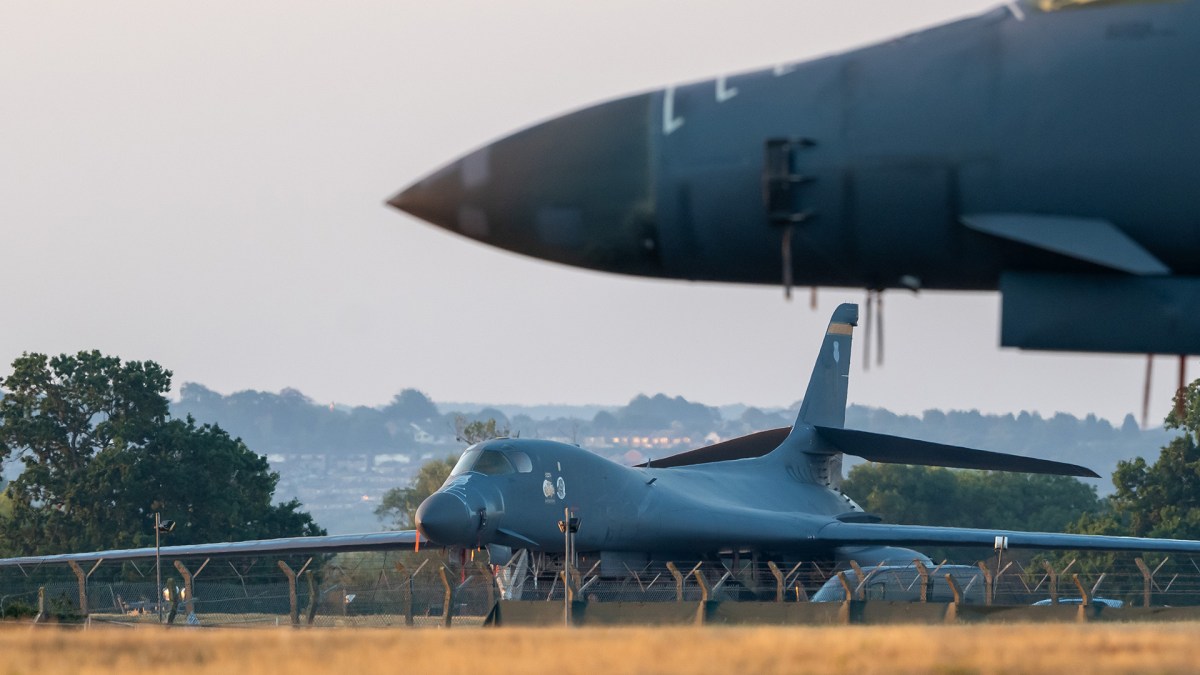
RAF Fairford occupies an unusual position in the transatlantic military relationship. It is a major hub for U.S. military aircraft in the United Kingdom and a regular host of strategic assets, including bombers and U-2 spy planes. It also functions as a transit stop for other aircraft, including fighters being ferried to and from the United States.
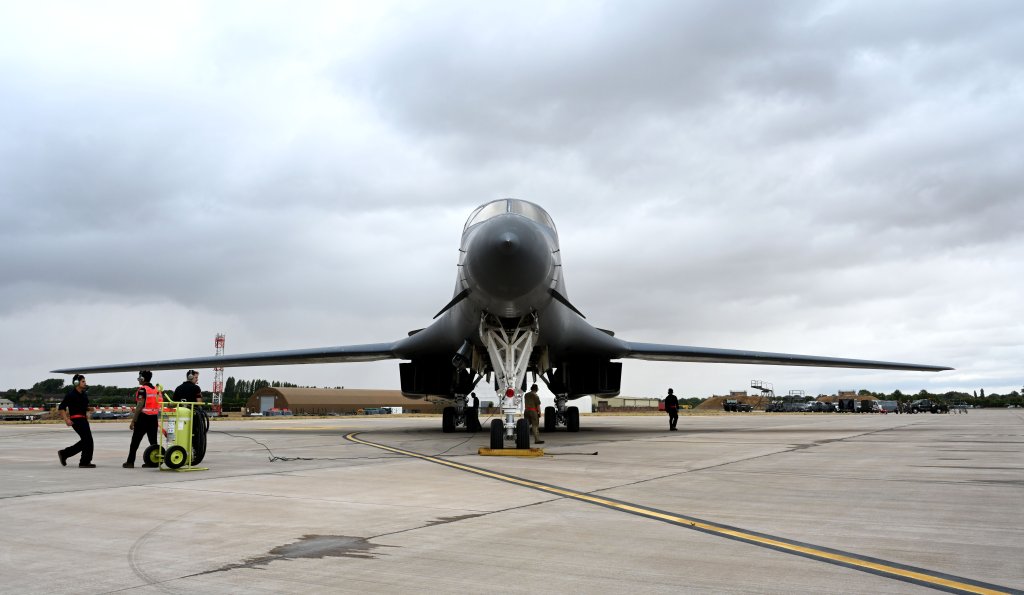
Its operational profile has grown more prominent still. Bomber strikes launched from Fairford were a central aspect of major U.S. combat operations against Iran earlier this year, according to reporting on the base's recent activity. That history gives the installation a strategic weight disproportionate to its size and helps explain why any suspicious movement toward its gates would draw an armed and immediate response.
Bombers, Spy Planes and Transit Traffic
The mix of aircraft that cycle through Fairford is part of what makes it sensitive. Heavy bombers represent some of the most consequential strike platforms in the U.S. inventory, while the U-2 fleet performs high-altitude intelligence, surveillance and reconnaissance missions. Fighters passing through on transfer flights add a steady stream of transient traffic. A facility that regularly concentrates that kind of capability presents a security problem that extends well beyond the perimeter fence.
A Hub Tied to High-Profile Operations
Because Fairford hosted the launch of major combat operations earlier in the year, its public profile has risen sharply. Installations connected to prominent strike campaigns tend to attract elevated attention, and authorities in host nations generally treat threats or apparent threats against them with maximum seriousness, particularly when explosives offenses are alleged.
What Is Still Unknown
Significant gaps remain in the public record. Police have not said whether the men will be charged, and an arrest on suspicion under the Explosives Act is not the same as a conviction or even a formal allegation of a completed plot. Authorities have not described a suspected motive, nor have they indicated whether the detained men are believed to be connected to any organization.
There is also no confirmation of what the explosive ordnance disposal team found, if anything, during its examination of the vehicles. Police have not said how many properties were evacuated, how long residents might remain displaced, or whether the cordon will be extended or lifted.
Federal and military officials on the U.S. side have not issued detailed public statements in the immediate aftermath, and there has been no indication of disruption to flight operations at the airfield.
A Reminder of the Threat Surface
Incidents of this kind underscore the security burden that comes with hosting strategic aircraft abroad. U.S. bases in the United Kingdom operate within a framework of close cooperation between American military authorities and British civilian law enforcement, and the speed with which armed officers, evacuations and military bomb disposal assets were deployed near Fairford suggests those arrangements functioned as designed.
The declaration of a major incident is a procedural threshold that unlocks additional resources and coordination across agencies. It signals that authorities judged the situation serious enough to warrant extraordinary measures, even as they simultaneously sought to reassure the public that the threat was contained.

What to Watch Next
- The outcome of the explosive ordnance disposal examination of the vehicles and any items recovered.
- Whether prosecutors bring charges under the Explosives Act and what conduct the men are alleged to have engaged in.
- Further statements from Gloucestershire Constabulary, including updates on the cordon and when evacuated residents can return.
- Any comment from U.S. military or diplomatic officials on the security posture at RAF Fairford.
- Whether operations or aircraft movements at the base are affected, which has not been reported so far.
For now, the immediate picture is one of a fast-moving police operation, a contained scene and an investigation that has only just begun to produce answers. The coming days are likely to determine whether the arrests near Whelford amount to a narrowly averted threat against a strategically vital airfield or something more limited — a question only the evidence gathered from those three vehicles can settle.
This article is based on reporting by twz.com. Read the original article.
Originally published on twz.com