Norway has signed onto France’s evolving deterrence posture
Norway has become the ninth European country to align itself with France’s emerging nuclear protection framework, a move that reflects rising anxiety about Russia and growing uncertainty over the long-term reliability of the United States as Europe’s ultimate security guarantor.
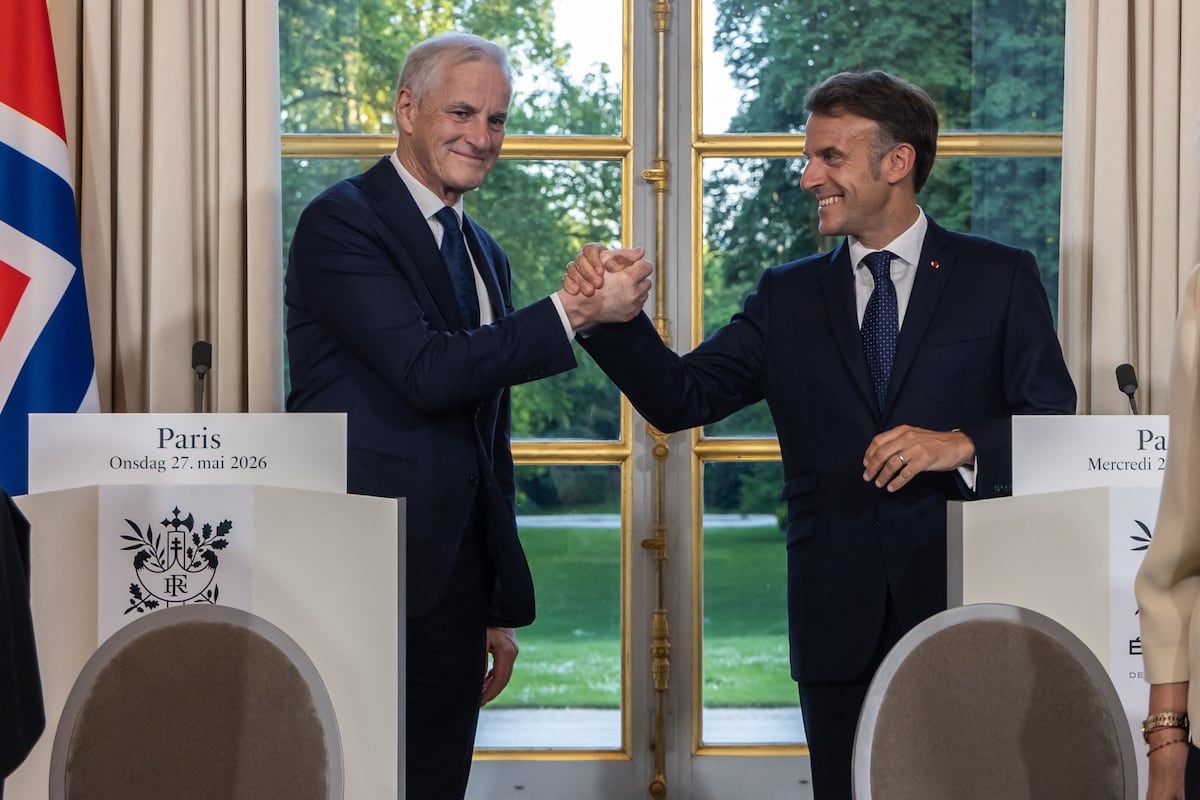
The announcement followed a visit by Norwegian Prime Minister Jonas Gahr Stoere to Paris, where representatives of other participating European countries were also present. The framework is part of what France has described as “forward deterrence,” an important shift in how Paris is defining the role of its nuclear arsenal in European security.
A major shift in French nuclear doctrine
French President Emmanuel Macron publicly outlined the new doctrine in March while standing in front of a nuclear submarine, underscoring both the symbolism and the seriousness of the move. The concept, as described in the supplied source text, is that existential threats to European allies could be linked to a French nuclear response even if the United States were to disengage.
That is a significant departure from the older understanding of French nuclear forces as primarily national instruments. Under the new framing, France would in effect act as a protective power for Europe, while keeping all decision-making authority and weapons control in Paris.
The arrangement is therefore not a shared nuclear command structure. It does not dilute French sovereignty over its deterrent. Instead, it extends political reassurance outward while maintaining centralized control. That balance may be one reason the concept has attracted interest from multiple European governments that want additional security options without opening a debate over hosting or jointly controlling nuclear weapons.
Norway’s role remains limited but symbolically important
Stoere said Norway will not host nuclear weapons in peacetime. That caveat matters, because it signals that participation in the French framework does not automatically imply basing commitments or a NATO-style nuclear sharing model. For Oslo, the step appears to be about strategic alignment and consultation more than immediate operational change.
Even so, Norway’s decision carries weight. The country borders Russia in the Arctic and has long been deeply embedded in NATO’s northern flank. Its entry into the French orbit suggests that concern about future US commitment is no longer confined to central Europe. It is now influencing thinking in the High North as well.
The decision also adds credibility to Macron’s campaign to position France as a more central military and political anchor inside Europe. In a moment when transatlantic assumptions are under more scrutiny, even limited buy-in from additional states can help turn an abstract doctrine into a more tangible strategic project.
What the framework means in practice is still unsettled
The source text is clear that the practical meaning of this new deterrence architecture remains undefined. Norway is only beginning the process of working through what participation entails, while other countries are already considering more concrete possibilities.
Poland, for example, is discussing a possible role for the forward deployment of French nuclear-capable Rafale aircraft. Germany, according to the excerpt, is expected to participate in French nuclear exercises as soon as September in an observer role. Those developments suggest the framework may evolve through exercises, planning arrangements and visible demonstrations of readiness rather than through immediate treaty-like commitments.
That ambiguity cuts both ways. On one hand, it allows countries to join without taking on maximal obligations at the outset. On the other, deterrence depends partly on clarity. If adversaries are unsure how political promises translate into military action, reassurance may remain incomplete.
Still, the trend itself is becoming harder to dismiss. France is recasting its nuclear posture in explicitly European terms, and a growing number of states are signaling they want in. Norway’s decision does not settle what “forward deterrence” will become, but it does show that the idea is moving from rhetoric toward a broader, if still loosely defined, security framework.
This article is based on reporting by Defense News. Read the original article.
Originally published on defensenews.com