Japan Defends Its Expanding Security Role
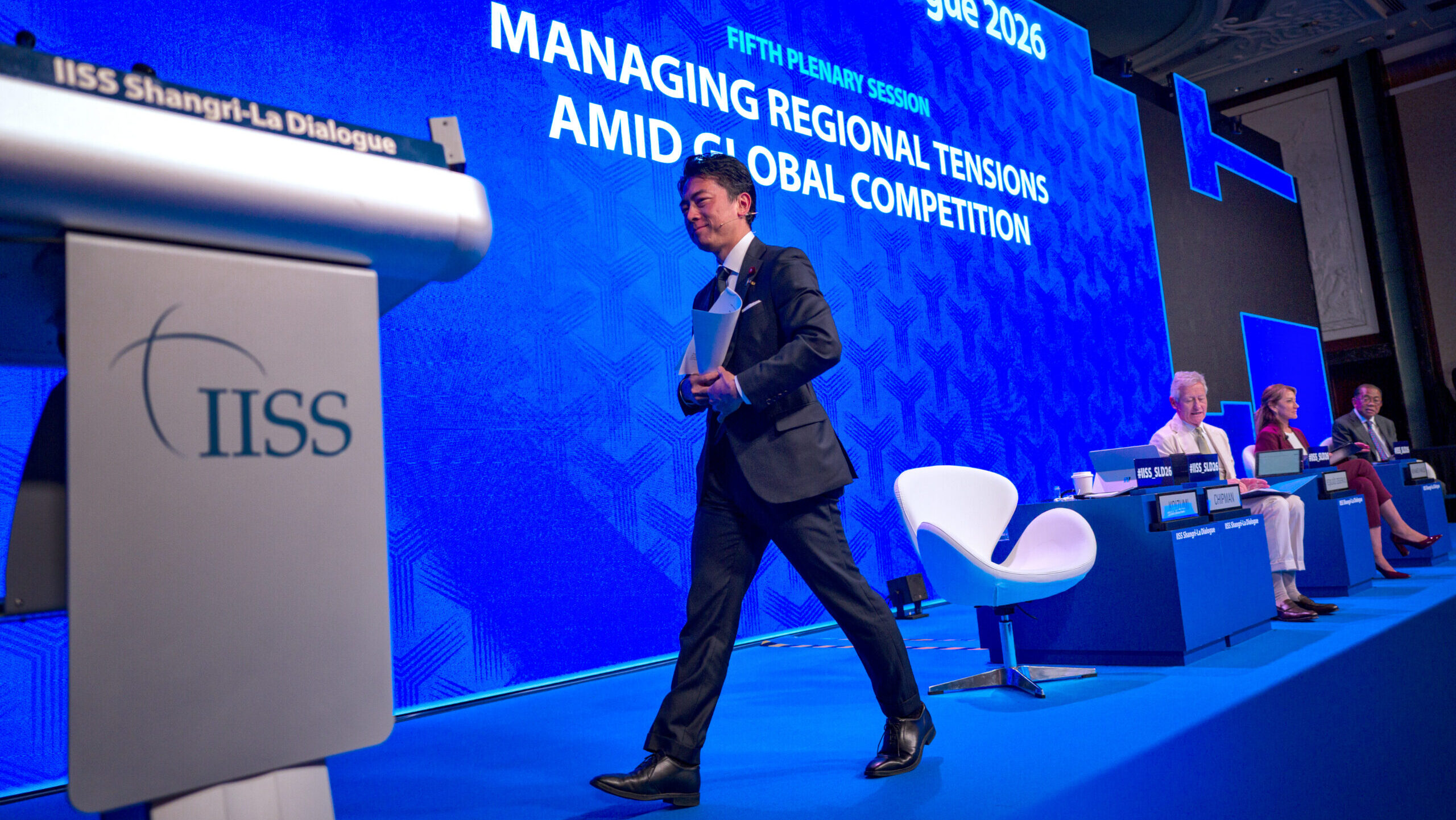
Japan’s defense minister used the Shangri-La Dialogue in Singapore to push back against Chinese accusations of “new militarism,” arguing that Tokyo’s larger defense budget and broader regional posture are transparent measures aimed at stability rather than expansion. The intervention matters because it puts Japan’s changing security policy directly into the region’s most public strategic debate.
According to the report from Breaking Defense, Defense Minister Shinjiro Koizumi argued that the charge was inconsistent with Japan’s actual capabilities and postwar conduct. He noted that Japan does not possess nuclear weapons or strategic bombers like countries with much larger arsenals, an apparent reference to China, and said Tokyo has consistently adhered to international law and the United Nations charter since World War II.
The dispute follows criticism from Beijing earlier this year after Japan loosened its arms-export policies. China’s foreign ministry had described elements inside the Japanese government as advancing neo-militarism and an expansionist defense line. Koizumi’s response in Singapore was to frame Japan’s current course not as a break with regional order but as support for partners seeking to strengthen their own defenses.
Arms exports as deterrence policy
That framing is important because Japan is trying to normalize a policy area that was once tightly constrained. Koizumi defended closer defense cooperation and export flexibility as a way to improve deterrence and response capability across the region. He said the purpose was to help countries choose for themselves how to defend themselves and contribute to regional stability.
The report lists several examples that show how far this policy conversation has moved. Koizumi pointed to frigates for Australia and potentially New Zealand, as well as radar systems and patrol vessels for the Philippines. He did not answer a question about whether Japan would sell arms to Taiwan, leaving one of the most sensitive regional scenarios unresolved in public.
Even so, the speech indicates that Japan is increasingly willing to present arms transfers not as exceptional cases but as legitimate tools of security cooperation. That is a significant political shift for a country whose modern defense posture has long been defined by legal restraint, historical sensitivity, and close alliance management with the United States.
Dialogue still central to Tokyo’s message
Koizumi also tried to balance the harder edge of deterrence with an explicit appeal to dialogue. He said communication remains central to regional security and expressed regret that he was unable to meet Chinese Defense Minister Dong Jun at this year’s summit. Dong skipped the Shangri-La Dialogue for a second straight year, with China sending a lower-level delegation instead.
That absence matters almost as much as the speech itself. The Shangri-La forum often functions as a place where strategic rivals can test messages publicly while preserving room for quieter bilateral engagement. When senior representation drops, the rhetorical confrontation can become clearer than the diplomatic off-ramp. Koizumi’s comments suggested that Tokyo wants to keep those channels open even as military competition in the Indo-Pacific hardens.
His reference to a previous “frank and fruitful” discussion with his Chinese counterpart in Malaysia last November reinforces that point. Japan appears to be signaling two things at once: it intends to keep building defense ties and capability, and it still wants to define those moves within a framework of communication rather than pure bloc confrontation.
What Tokyo is trying to normalize
The larger significance of the speech lies in normalization. Japan is trying to make higher defense spending, a more visible regional footprint, and selective arms exports look like durable, mainstream features of its strategy. Beijing, by contrast, is trying to cast those same developments as destabilizing and historically suspect.
The credibility of Tokyo’s position will be judged partly by transparency, partly by restraint, and partly by where these policies lead next. Supporting patrol vessels or radar systems for partners is one thing; moving into more politically explosive transfers would raise the stakes considerably. For now, Koizumi’s remarks suggest Japan wants to move steadily but avoid presenting its shift as a sudden militarized break.
That makes this less a one-off exchange of diplomatic rhetoric than a marker of where regional politics are headed. Japan is no longer arguing only that it must defend itself. It is increasingly arguing that it can help shape the defensive capacity of the wider Indo-Pacific, and that doing so should be seen as stabilizing. Whether neighbors accept that case will help define the region’s next security chapter.
This article is based on reporting by Breaking Defense. Read the original article.
Originally published on breakingdefense.com