A historic deployment with regional consequences
Japan’s first-ever missile firing from Philippine territory during Exercise Balikatan 2026 was more than a training milestone. It showed how quickly security ties between Tokyo and Manila are evolving as both governments confront rising pressure from China in nearby waters.
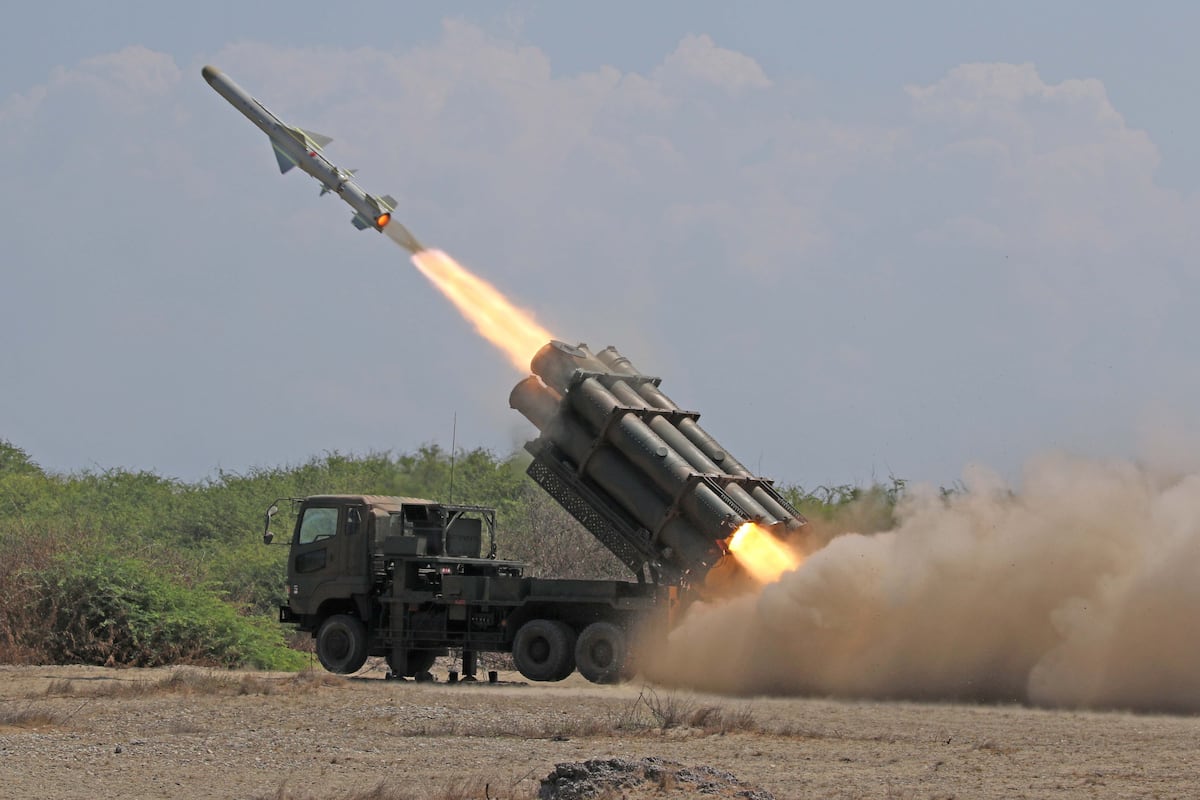
The event took place near Laoag in northwest Luzon, where the Japan Ground Self-Defense Force launched Type 88 surface-to-ship missiles from sand dunes as part of a maritime strike exercise. According to the reported details, one missile struck and sank a decommissioned Philippine naval vessel 47 miles away after a six-minute flight.
The deployment was notable not only because Japanese missiles were fired from the Philippines, but because it marked the first time Japanese combat troops had deployed on Philippine soil since the end of World War II. The exercise was enabled by a reciprocal access agreement ratified by Manila and Tokyo on September 11, 2025, and involved roughly 1,400 Japanese soldiers.
Why the geography matters
The significance of the exercise rests on location as much as hardware. The report frames Japan, Taiwan, and the Philippines as critical pieces of the so-called First Island Chain, a line of territory central to Indo-Pacific military planning. Anti-ship missile batteries positioned north and south of Taiwan could influence who moves through maritime chokepoints in a crisis.
That makes the Balikatan firing more than symbolism. In a conflict scenario involving Taiwan, allied forces would be racing to control access routes through surrounding straits. The Japanese Type 88 deployment demonstrated how land-based anti-ship systems might be used to contest an opposing fleet’s movement through those corridors.
The exercise also underlined how regional militaries are increasingly training for distributed maritime denial. Alongside the two Japanese missiles, the event included a U.S. Army HIMARS-launched GMLRS rocket, while a U.S. Marine Corps NMESIS system and a Philippine Navy C-Star missile attack were simulated.

Growing Japan-Philippines alignment
The exercise reflected a wider political shift. Philippine Defense Secretary Gilberto Teodoro Jr. and Japanese Defense Minister Shinjiro Koizumi attended the missile firing a day after meeting in Manila. One of the topics on the agenda was Japan’s newly relaxed policy on exports of lethal military equipment.
That matters because the Philippines is already considering second-hand Japanese equipment, including Beechcraft King Air aircraft, according to the report. The missile event therefore sits inside a broader pattern: more interoperability, more legal access, and potentially more defense trade between the two countries.
For Tokyo, the exercise also illustrated a changing security role. Rather than remaining constrained to homeland defense optics, Japan is now visibly projecting operational capability alongside partners in the immediate vicinity of one of Asia’s most sensitive flashpoints.
What the exercise says about the alliance network
The United States remained central to the event. The Hawaii-based 3rd Marine Littoral Regiment oversaw command and control of the maritime strike exercise, reinforcing the extent to which Japan-Philippines cooperation is being built inside a wider allied framework rather than as a standalone bilateral effort.
That arrangement is strategically efficient. Japan contributes anti-ship capability, the Philippines provides geography and access, and the United States supplies command integration and broader deterrence credibility. Together, that creates a more resilient regional posture than any one country could field alone.
Balikatan 2026 did not change the military balance overnight. But it did clarify direction. Allied planning in the western Pacific is becoming more operational, more geographically distributed, and more comfortable with previously sensitive deployments. The first Japanese missile shot from Philippine soil is best understood as a marker of that shift.
This article is based on reporting by Defense News. Read the original article.
Originally published on defensenews.com