The X-65 has reached a visible construction milestone
DARPA’s experimental X-65 aircraft has moved into a new phase of development, with Aurora Flight Sciences now integrating the drone’s wings as the program pushes toward a first flight targeted for next year. The aircraft is unusual not because of its size or mission payload, but because of how it is meant to fly: instead of relying primarily on conventional moving control surfaces, it is designed to maneuver using bursts of air.
That concept, known as active flow control, sits at the center of DARPA’s Control of Revolutionary Aircraft with Novel Effectors program, or CRANE. The idea is to redirect or manipulate airflow across the aircraft in ways that can replace or reduce traditional mechanisms such as ailerons, elevators and rudders. If it works at useful scale and reliability, the payoff could extend well beyond one demonstrator. It could influence how future military aircraft are shaped, how they manage signature reduction, and how engineers balance aerodynamic performance with mechanical complexity.
Aurora Flight Sciences, a Boeing subsidiary, said the newly arrived triangular wings were built at its West Virginia facility and are now being integrated in Virginia. According to the company, the wing structure is intended to support active flow control testing across multiple sweeps, making the latest hardware delivery more than a cosmetic milestone. It is a sign that the program is transitioning from concept validation and subscale work toward full-airframe assembly.
Why air-jet control matters
Aircraft have used movable surfaces for well over a century because they work. But those surfaces also create tradeoffs. Hinges, gaps, actuators and protruding edges can add weight, increase maintenance demands and, in some designs, complicate efforts to reduce radar visibility. An aircraft that can generate control authority through carefully managed airflow rather than large mechanical deflections could open up different design choices.
That is the strategic interest behind CRANE. Active flow control has long been attractive in theory, yet hard to operationalize across a real aircraft. Laboratory tests, wind-tunnel studies and localized demonstrations have shown promise, but proving that the concept can support stable, repeatable maneuvering on a full-scale flying vehicle is a much harder step. The X-65 is intended to test exactly that boundary.
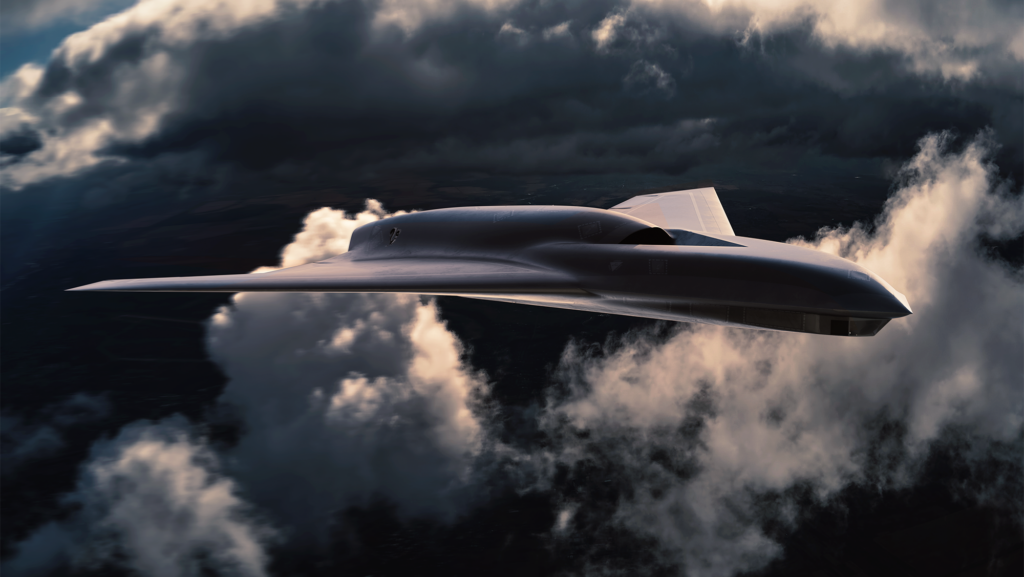
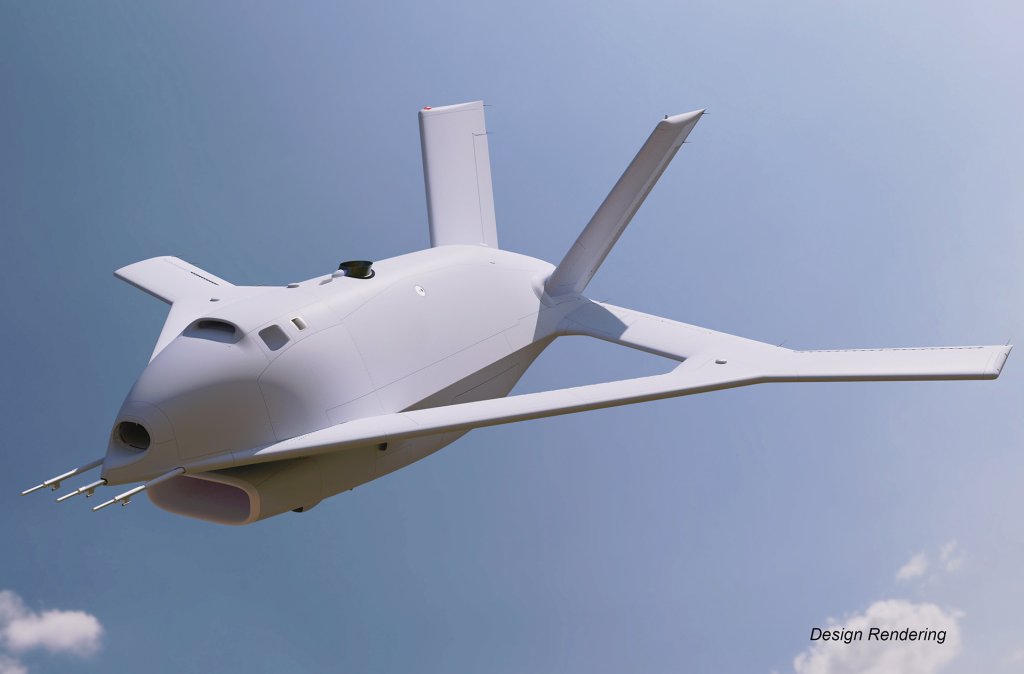
The aircraft’s shape reflects the experimental nature of the effort. The X-65 uses a co-planar joined-wing planform, with two sets of wings on each side merging at the tips to create a triangular outline. Small tip extensions bring the wingspan to about 30 feet. The design also includes twin vertical tails, a chin air intake beneath the forward fuselage and a single exhaust. Together, those elements give the aircraft a distinctly unconventional profile suited to aerodynamic experimentation rather than production-line familiarity.
A long-running program with delays and cost growth
CRANE began in 2020, and Aurora was later selected to continue alone with the development of its design. The company moved into the latest program phase in 2024. The new wing integration milestone shows momentum, but it also arrives after years of delay and rising costs, a reminder that advanced aerospace demonstrators rarely follow their original schedule.
Those complications do not make the program unimportant. In many cases they are part of the point. DARPA programs are designed to pursue higher-risk technical bets than conventional procurement pathways usually tolerate. Some fail outright. Others prove a concept without ever entering service. The measure of success is not always whether a specific aircraft becomes operational. It is often whether the underlying technology changes what future aircraft builders consider possible.
Aurora has already completed wind-tunnel testing of subscale models and digital modeling work in earlier program phases. The company also announced progress on the central fuselage in late 2025. With wings now arriving for integration, the full-scale demonstrator appears to be moving from abstract rendering to hardware reality.
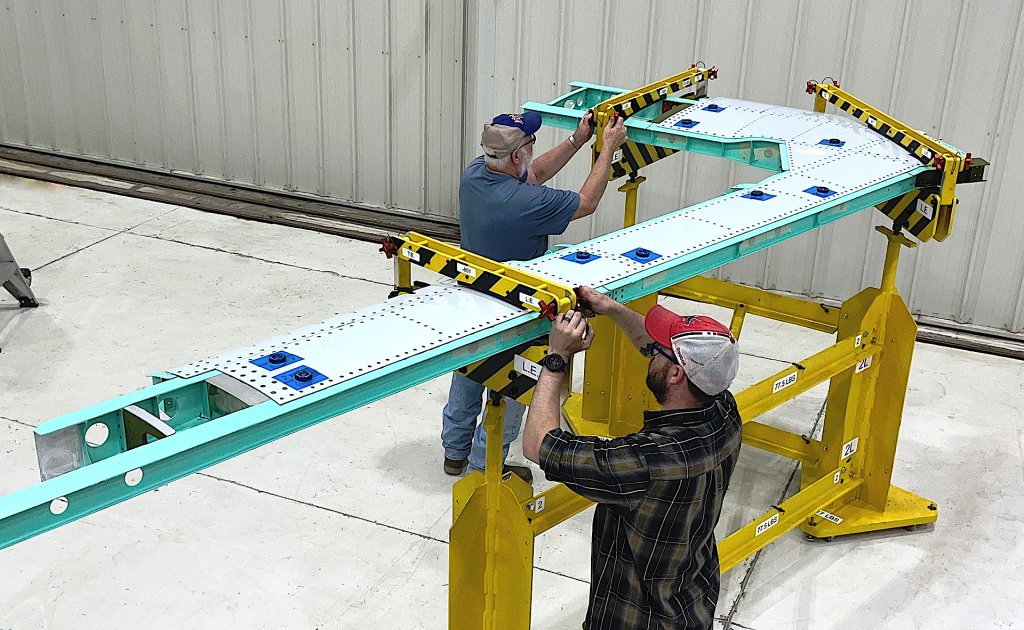
That matters because active flow control is easiest to discuss at a conceptual level and hardest to prove in the air. A real test vehicle can answer practical questions that simulations and smaller experiments cannot fully settle: how responsive the control method is, how it behaves across changing flight conditions, how much redundancy is required, and whether the system can deliver consistent performance without adding unacceptable complexity elsewhere in the aircraft.
The implications extend beyond one drone
If the X-65 meets its goals, the impact could reach both military and civilian aviation. On the defense side, designers could gain more freedom to pursue airframes optimized for low observability or specialized mission performance without depending on the same set of external moving surfaces. On the civil side, any technology that simplifies aerodynamic control or reduces mechanical burden could eventually find a place in future efficiency-driven designs, though that path would likely be much longer and more regulated.
For now, the significance is nearer term and narrower: an experimental aircraft that has spent years in development is finally taking on the hardware needed to test its central claim. After delays and cost growth, that alone is a notable shift. The next meaningful threshold will be first flight. Only then will the program begin answering whether bursts of air can do enough of the work that conventional aircraft have historically left to flaps, rudders and other movable surfaces.
Until that test happens, the X-65 remains a high-concept demonstrator with clear promise and unproven operational value. But the arrival of its wings marks a transition from aspiration to system integration, and that is when ambitious aerospace research starts becoming accountable to the physics it is trying to change.
- Aurora Flight Sciences has begun integrating wings onto DARPA’s X-65 experimental drone.
- The X-65 is designed to maneuver using bursts of air through active flow control rather than relying only on traditional control surfaces.
- The aircraft is being developed under DARPA’s CRANE program, which started in 2020 and entered a later phase in 2024.
- A first flight is currently targeted for 2027 after program delays and cost growth.
This article is based on reporting by twz.com. Read the original article.

Originally published on twz.com