Austria moves to rethink conscription after Ukraine war reshapes Europe’s security outlook
Austria’s coalition government says it wants to extend compulsory military service from six months to nine, marking one of the clearest signs yet that even long-neutral European states are revisiting old defense assumptions after Russia’s war against Ukraine.
The proposal, announced by government leaders after a cabinet meeting, would lengthen basic military service for Austrian boys and men who are typically called up around their 18th birthday. It would also add a stronger reservist structure, requiring follow-up exercises within 10 years of initial service. Officials paired the plan with incentives meant to make service more attractive, including holiday days and a near doubling of monthly pay to 1,000 euros.
The message from Vienna is that the country’s traditional defense posture no longer matches the environment around it. Austria has spent decades relying on armed forces that often functioned more as a civil support institution than as a military prepared for major external attack. Soldiers have frequently assisted emergency responders during floods and wildfires, and have supported border patrol operations aimed at intercepting illegal immigration. That model is now under pressure.
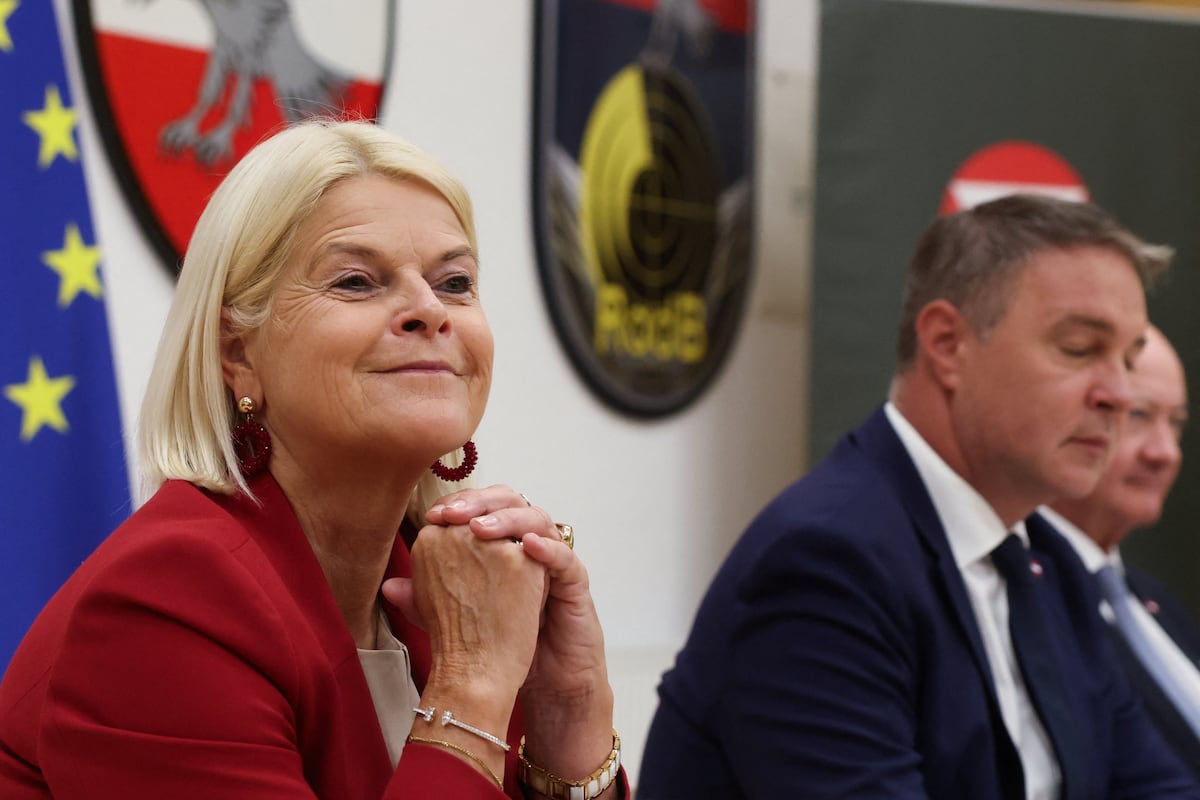
Chancellor Christian Stocker said the security conditions facing Austria had changed fundamentally in recent years and especially in recent months and weeks. In his framing, the assumption of durable peace in Europe ended no later than Russia’s invasion of Ukraine. Standing alongside the leaders of the other ruling parties at a military barracks outside Salzburg, he also pointed to newer forms of pressure, including hybrid attacks and cyberwarfare, as reasons Austria must expand its own capacity for self-reliance and civil protection.
The announcement reflects a broader European pattern. Countries across the continent have been reassessing readiness, stockpiles, mobilization systems, and reserve capacity. Austria is not a NATO member, but geography alone makes the shift hard to ignore. The country is surrounded by eight neighbors, and all but Switzerland and Liechtenstein belong to the alliance. Austria borders Germany and the Czech Republic to the north, Italy and Slovenia to the south, and Slovakia and Hungary to the east. In practical terms, it sits inside a region where military planning, deterrence debates, and infrastructure resilience are now moving higher on national agendas.
A force built for emergencies is being asked to prepare for harder scenarios
The government’s case is not only about the possibility of conventional war. Officials explicitly referenced hybrid threats and cyberwarfare, both of which have become standard parts of European security planning. Those risks put pressure on states to field not just active-duty personnel, but also a credible reserve that can be called on after initial service ends.
That is where the reservist component of the plan becomes especially important. A longer initial service period gives the military more time to train conscripts. Requiring follow-up exercises over a decade suggests Austria wants a force that remains usable beyond a short induction period. It is an attempt to turn compulsory service into a longer national readiness pipeline rather than a brief rite of passage.
The backdrop is uncomfortable for Austrian policymakers. Authorities have said for years that the country’s military would struggle to defend the homeland against a serious outside attack. The latest proposal amounts to an acknowledgment that equipment upgrades alone are not enough. Personnel structure, training duration, and reserve obligations matter as much as procurement when governments try to rebuild deterrence and resilience.
Austria’s conscription system already includes an alternative track. Instead of military service, eligible young men can choose a nine-month civilian service placement, commonly at organizations such as ambulance services or retirement homes. The government said it plans to make it possible to extend that civil service by two months on a voluntary basis. That detail matters politically as well as operationally: any attempt to toughen national service rules can trigger debate over fairness between military and civilian obligations.
The politics may prove as difficult as the policy
For now, the proposal is not law. The coalition needs legislation backed by a two-thirds majority in parliament to make the changes. That means it will need support from outside the government, either from the Greens or from the far-right Freedom Party. According to the report, those talks have not yet started.
That parliamentary hurdle will shape the real test ahead. Extending service sounds straightforward in headline form, but it raises practical and political questions: how quickly the armed forces can absorb longer training cycles, how much the expanded pay package will cost, how employers and families will respond, and whether opposition parties will demand broader reforms in exchange for their votes.
The government is trying to preempt one line of criticism by improving compensation. Raising monthly pay to 1,000 euros and offering additional holiday days suggests ministers understand that compulsory service is harder to defend if it looks outdated, underpaid, or disconnected from modern labor realities. The planned benefits are less a bonus than a recognition that a longer service term carries greater economic and social friction.
Still, the core argument from Vienna is strategic rather than symbolic. Neutrality, in the government’s telling, does not remove the need for stronger national capabilities. If anything, it may sharpen the requirement to be more self-reliant. That logic helps explain why Austria is not merely proposing a modest administrative tweak, but a package that combines longer service, reserve obligations, and higher pay.
Whether the plan passes will depend on coalition-building in parliament. But the announcement itself is already notable. It shows how deeply the war in Ukraine has altered defense planning beyond NATO’s front line and beyond states usually associated with hard-power politics. Austria is signaling that the old division between peacetime domestic support forces and wartime military readiness is no longer sufficient.
If the legislation succeeds, Austria will move toward a model that asks more of its citizens in the name of security while also trying to build a more durable reserve force. If it stalls, the debate will still have made one point clear: in central Europe, even countries with longstanding traditions of neutrality are no longer treating military preparedness as a secondary issue.
This article is based on reporting by Defense News. Read the original article.
Originally published on defensenews.com