Fresh contract awards push a delayed B-52 upgrade forward
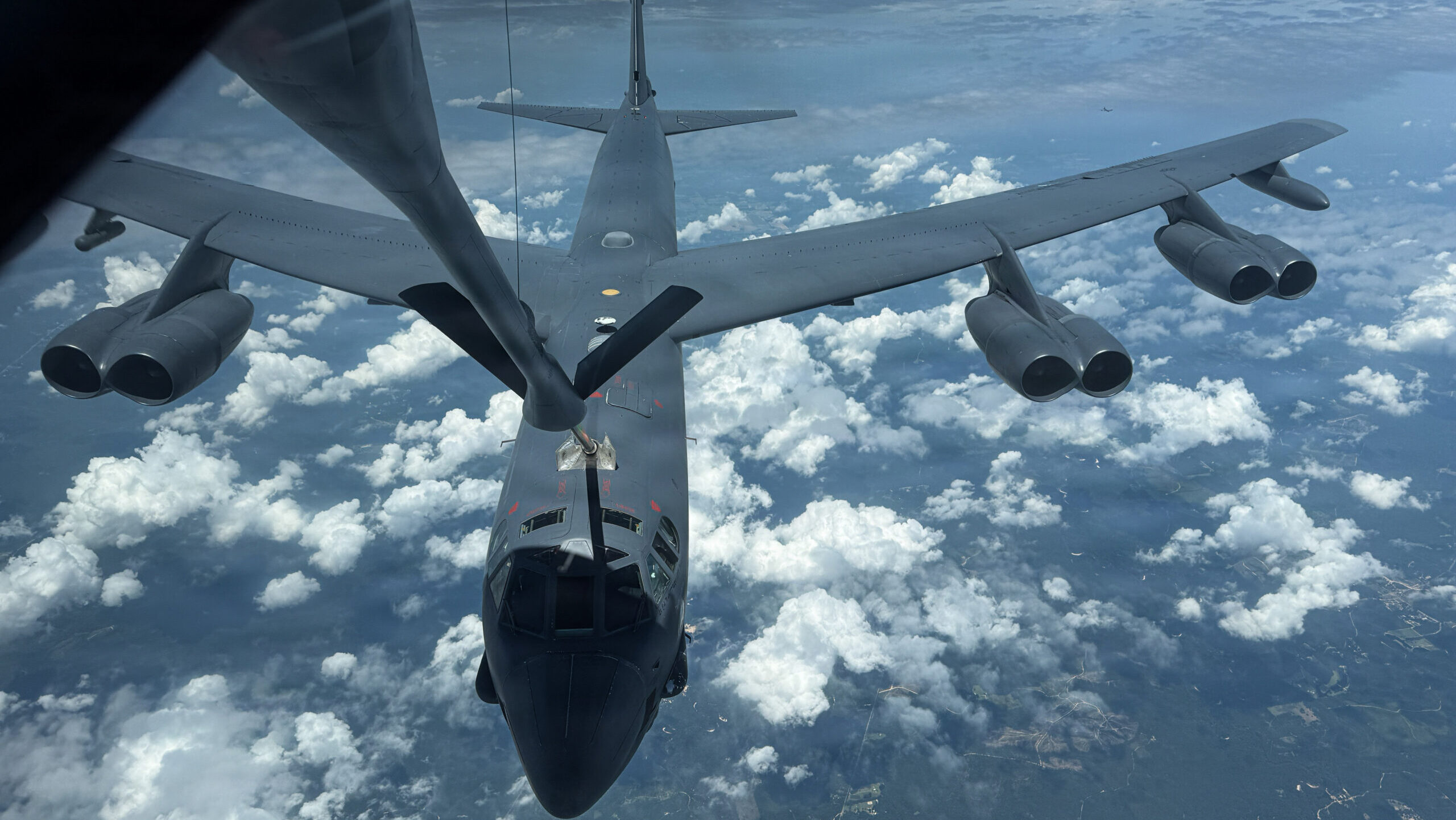
The U.S. Air Force has awarded two contracts worth a combined $766 million to support radar modernization for the B-52 Stratofortress, adding new funding to one of the bomber fleet’s most important and most scrutinized upgrade efforts. According to a Defense Department notice cited by Breaking Defense, the larger award went to RTX subsidiary Raytheon for production and sustainment of replacement radars, while a second award went to Boeing for bomb rack modernization kits tied to the same program.
The split reflects the structure of the modernization effort. Raytheon received an indefinite delivery/indefinite quantity contract with a ceiling of $603 million for the new radar work. Boeing, the B-52 prime contractor, received a separate contract with a maximum value of nearly $163 million for kits that the Defense Department said will support the Radar Modernization Program.
On paper, the announcement is straightforward: the Air Force is spending to replace aging hardware on an aircraft it intends to operate deep into the future. In context, though, the awards show the service pressing ahead with a program that has already encountered major schedule slips, budget growth, and formal scrutiny over whether it is still delivering acceptable value.
A bomber built for another era is being prepared for the next one
The B-52 is one of the oldest combat aircraft still central to U.S. military planning. Breaking Defense described the radar overhaul as one of 13 broader upgrades intended to keep the Eisenhower-era bomber flying through the middle of the century. Together, those modernization efforts are expected to total about $21 billion.
That scale explains why each contract action matters. The B-52 remains a critical long-range strike platform, but sustaining it over decades requires replacing systems that were designed for a very different operating environment. Radar is not a minor subsystem in that equation. It affects navigation, targeting, mission execution, and the aircraft’s ability to remain relevant in a force structure shaped by new sensors, new weapons, and higher operational expectations.
The new Raytheon AN/APQ-188 radar is slated to replace the older AN/APQ-166 sensor now used on the bomber. Breaking Defense reported that Raytheon and Boeing both referred comment requests to the Air Force, leaving the contract notice itself as the clearest immediate public confirmation of the program’s direction.
Why the Air Force is still investing despite rising costs
The radar program has not had an easy path. Breaking Defense reported that the Radar Modernization Program’s budget has grown by 30 percent to more than $2.9 billion, a jump large enough to trigger a Nunn-McCurdy breach, a formal threshold used to flag major defense acquisition cost overruns. The report also said the Air Force now expects the radar modernization effort to become operational in the third quarter of fiscal 2030, roughly three-and-a-half years later than originally planned.
That combination of delay and cost growth would usually invite questions about whether a program’s scope, acquisition strategy, or performance expectations need to change. In this case, the answer appears to be yes. Breaking Defense, citing a recent Government Accountability Office report, said the Air Force has implemented some cost-control measures and also removed unspecified performance requirements in order to field the radar faster.
That tradeoff is central to understanding the significance of the new contracts. The Air Force is not simply buying a better radar on the original plan. It is trying to stabilize a troubled modernization line while preserving enough capability to keep the B-52 viable. The GAO’s assessment, as quoted by Breaking Defense, was blunt: after contract award, the Air Force would receive less capability while paying more for the program.
Program structure shows how the service is managing risk
The contract split between Raytheon and Boeing also hints at how the Air Force is trying to manage execution risk. Breaking Defense said GAO found that the service planned to buy radars directly from RTX to help smooth out depot work. That is an important operational detail because sustaining an old fleet often means integration and maintenance complexity can become as consequential as the hardware itself.
By procuring radars directly and separately funding Boeing’s supporting modifications, the Air Force appears to be carving the program into pieces it believes are easier to control. Whether that improves delivery timelines will only become clear over time, but the strategy suggests the service is not treating the radar replacement as a routine avionics refresh.
It is instead managing the upgrade as part of a broader campaign to extend the usefulness of a legacy bomber whose survivability and mission relevance depend increasingly on modernization rather than original design strengths. That puts unusual weight on subsystem decisions. A radar delay is no longer just a radar delay; it affects the credibility of the entire effort to keep the aircraft operational for decades more.
The bigger signal behind the spending
These contracts do more than add funding to a procurement ledger. They reaffirm that, despite criticism and rising cost, the Air Force remains committed to upgrading the B-52 rather than treating it as a sunset platform. That is a strategic choice as much as a budget one.
The service could not justify continued heavy investment unless it believed the bomber would retain a meaningful role in future operations. The broader $21 billion modernization picture described by Breaking Defense makes that clear. Radar replacement, engine work, and other upgrades are all part of an attempt to turn an aging airframe into a platform still worth deploying in an increasingly contested battlespace.
That does not erase the program’s problems. A 30 percent budget increase, a Nunn-McCurdy breach, delayed operational timelines, and reduced requirements are all signs of acquisition strain. But the new awards show that the Air Force has moved past the question of whether to continue and into the harder phase of trying to deliver on revised terms.
For industry, the immediate beneficiaries are RTX and Boeing. For the Pentagon, the real measure will be whether these contracts translate into predictable execution after years of turbulence. And for the B-52 itself, the message is unmistakable: the bomber’s future still depends on modernization, and the Air Force is still willing to pay for it.
This article is based on reporting by Breaking Defense. Read the original article.
Originally published on breakingdefense.com