Air Force Creates Massive F-15 Contract Vehicle
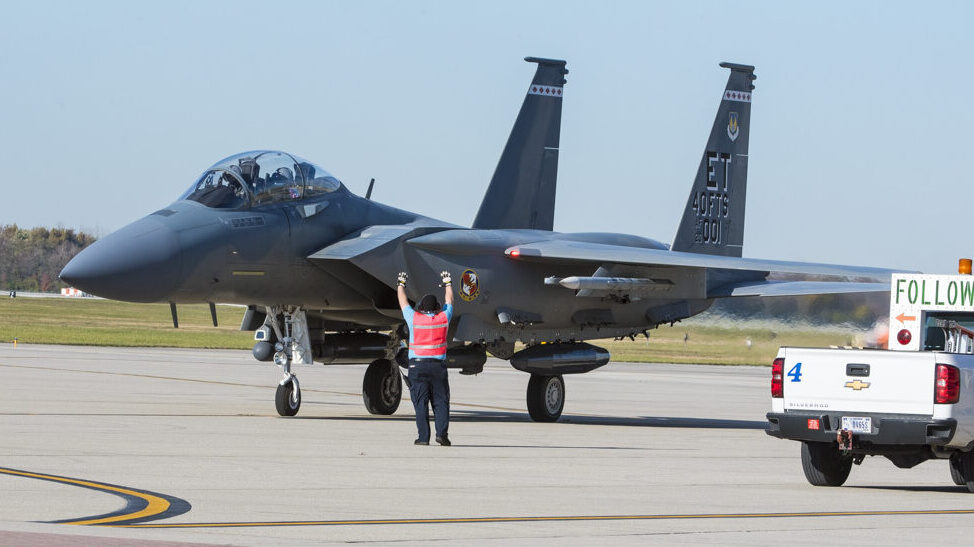
The U.S. Air Force has awarded Boeing a sweeping contract vehicle for the F-15 fighter family with a ceiling value of up to $131.2 billion, a figure large enough to stand out even in the Pentagon’s world of long-duration acquisition programs. According to the supplied source text, the award, called “F-15 Eagle Crest,” covers aircraft production, upgrades, sustainment, and related work for both the U.S. military and international customers through August 2037.
The number is striking, but the details matter. This is an indefinite-delivery, indefinite-quantity contract, or IDIQ, which means the ceiling represents the maximum capacity available under the contract structure rather than a guaranteed commitment to spend the full amount. The Air Force said the vehicle is intended to support future F-15 agreements and accelerate the delivery of capability by streamlining how it executes requirements for domestic and Foreign Military Sales partners.
That distinction is important because large ceiling values can be misunderstood as near-term procurement promises. In this case, the contract gives the Air Force a broad mechanism for moving faster on future orders and related work without having to build separate contracting pathways each time. From Boeing’s perspective, it secures a long runway for one of its most important tactical aircraft programs. From the government’s perspective, it creates procurement flexibility around a platform that remains central to both U.S. and allied airpower planning.
What the Contract Covers
The source text says Eagle Crest includes aircraft production, upgrades, and sustainment. That means the contract is not simply about building new jets. It is also about keeping existing aircraft viable, modernizing systems, and supporting a fleet that spans both U.S. service requirements and overseas customers. Sustainment often receives less public attention than procurement, but for mature fighter programs it can represent a major share of long-term cost and operational value.
The contract was sole-sourced to Boeing, which reflects the reality that Boeing is the prime contractor for the F-15 line. The Air Force told Breaking Defense that consolidating these efforts under a single vehicle would help the service move faster and reduce administrative burden. In plain terms, the service is betting that centralized contracting will make it easier to place future work orders as operational needs evolve.
The timeline also signals seriousness. Work is expected to run until August 2037, giving the Air Force and Boeing more than a decade of contracting headroom. That length suggests the service expects sustained demand for the F-15 family even as it pursues newer concepts and aircraft.
Why the Size Matters
Defense analyst Casey Nicastro, quoted in the supplied source, described the award as one of the bigger contracts recently issued by the Department of Defense. The comparison is useful because it places Eagle Crest in context. Nicastro noted that a $151 billion IDIQ contract was awarded last year for the Golden Dome initiative, but that vehicle included more than 1,000 separate awards. A more direct historical comparison came from the Air Force’s August 2020 F-16 contract to Lockheed Martin, which had a ceiling of up to $62 billion for Foreign Military Sales aircraft. Even with the structural caveats that apply to all IDIQ vehicles, Eagle Crest comes in at more than double that level.
That scale carries a message beyond accounting. It suggests the Air Force sees continuing strategic value in the F-15 ecosystem at a time when defense planning is increasingly focused on next-generation systems such as collaborative combat aircraft and the F-47. Nicastro said the new contract appears to indicate that aircraft like the F-15EX will still play a significant role in the future of air combat, even as the service moves toward adopting newer systems.
That is a consequential read. The F-15 is not a legacy platform being kept alive only out of inertia. Under this framework, it remains a large, adaptable, and exportable system with room for continuing upgrades. In a force structure that is becoming more distributed and more technologically layered, the Air Force appears to be preserving the F-15 as a durable component rather than a temporary bridge.
Industrial Base and Allied Demand
The contract also points to the continued importance of foreign military sales in sustaining U.S. aerospace production lines. Because Eagle Crest is designed to support international customers as well as the Pentagon, it ties Boeing’s F-15 future to a broader network of allied procurement and upgrade programs. For Washington, that matters because exportable aircraft serve both industrial and geopolitical goals. They help maintain production capacity, support jobs and suppliers, and reinforce military interoperability with partner nations.
For Boeing, the award is a major stabilizer. The company has faced intense scrutiny across commercial and defense businesses, and a long-term fighter contract vehicle of this scale provides rare visibility. Even if the full ceiling is never approached, the existence of the contract gives Boeing a powerful position in competing for future F-15-related work over the next decade.
For suppliers, the implications could be substantial as well. Large fighter programs depend on deep subcontracting chains for structures, avionics, propulsion support, maintenance, and upgrades. A long-duration contract vehicle does not guarantee volumes, but it does improve planning certainty across the industrial base.
An Older Platform With a Future Role
The deeper significance of Eagle Crest is strategic. The Air Force is building toward a future that includes next-generation aircraft and autonomous systems, but it is doing so without abandoning a proven fighter family. The contract suggests a dual-track approach: pursue future systems aggressively while preserving and modernizing platforms that can deliver capacity, payload, and alliance value now.
That may prove especially important if next-generation programs face schedule pressure, affordability constraints, or shifting operational requirements. In that environment, modernized F-15 variants and support packages offer a hedge. They are familiar to operators, attractive to some international buyers, and compatible with a steady stream of incremental improvements.
The $131.2 billion figure will dominate headlines, but the underlying story is about procurement architecture and force planning. Eagle Crest gives the Air Force a flexible way to buy time, capability, and industrial continuity around the F-15 family through 2037. Whether the full ceiling is ever used, the award makes one point clear: the F-15 remains a serious part of the U.S. and allied air combat picture for years to come.
This article is based on reporting by Breaking Defense. Read the original article.
Originally published on breakingdefense.com