Air Force moves Collaborative Combat Aircraft into production
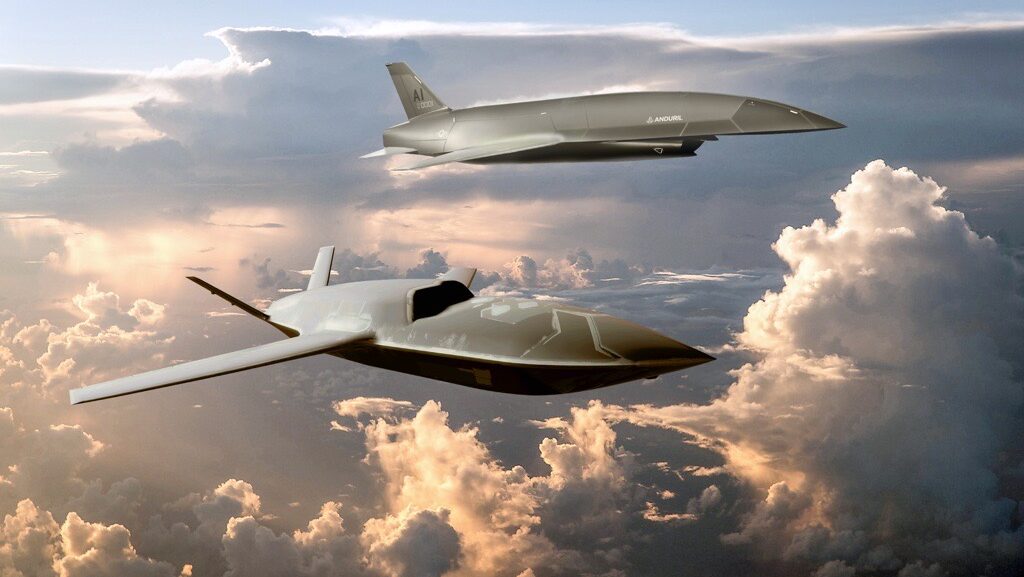
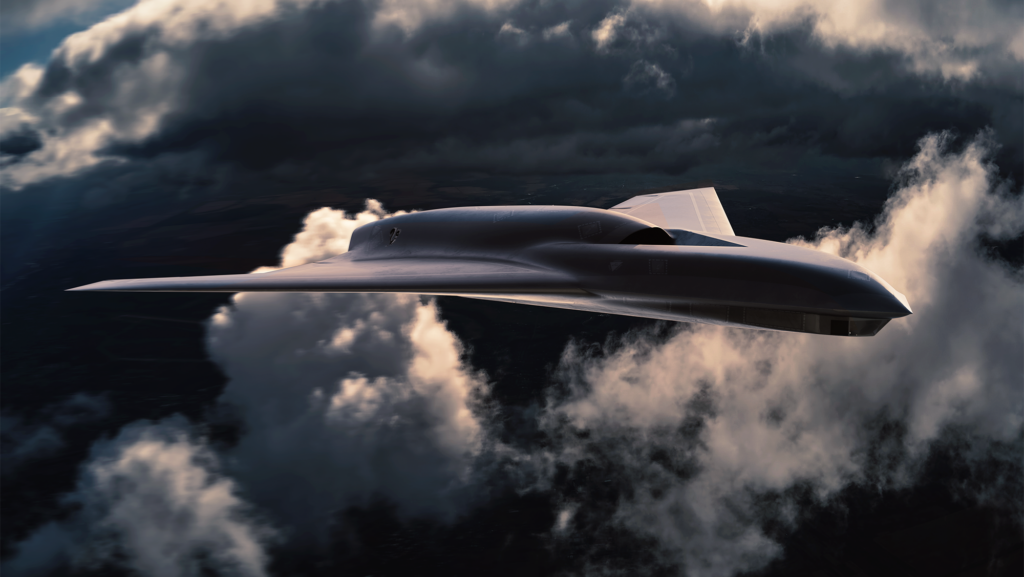
The U.S. Air Force has selected Anduril and General Atomics to build the service’s first Collaborative Combat Aircraft, marking a significant step in the Pentagon’s effort to field lower-cost uncrewed aircraft that can operate alongside fighter jets. The decision pushes one of the military’s most closely watched next-generation aviation programs from concept and prototyping toward production planning.
According to the Air Force announcement described by Breaking Defense, the two companies will build the first hardware for the CCA effort, while a separate competition remains underway over which company will provide the autonomy software that allows the aircraft to function as loyal wingmen. That software race now includes Anduril, Shield AI and Collins Aerospace, the RTX subsidiary.
The choice of two hardware suppliers rather than one reflects both the urgency and uncertainty surrounding the program. The Air Force wants to move quickly, but it also wants competitive pressure on price, capability and manufacturing execution as the program matures. Keeping multiple players in the mix gives the service room to refine requirements without locking itself too early into a single design path.
What the CCA program is meant to do
Collaborative Combat Aircraft are designed to fly in concert with crewed fighters, extending their reach and adding capacity without requiring a pilot in every airframe. In practical terms, that could mean carrying sensors, jamming enemy systems, relaying communications, or adding weapons capacity in contested airspace where losing an aircraft may be acceptable if it protects higher-value crewed platforms.
The Air Force has framed the concept as part of a broader shift toward distributed combat power. Instead of relying only on small fleets of expensive, exquisite aircraft, the service is trying to assemble a more flexible force mix in which piloted and uncrewed systems work together. That logic has become increasingly important as adversaries improve air defenses and long-range strike capabilities.
The CCA concept also speaks to a budget reality. Modern fighters are extremely capable, but they are also expensive to buy, upgrade and sustain. An aircraft that can perform selected missions at a fraction of the cost could help the service generate more mass without multiplying its personnel footprint at the same rate.
Cost remains central, even as details stay hidden
The Air Force is withholding key program specifics, including the total contract value and the number of aircraft each company will provide in the first of three planned production lots. Even so, officials offered a useful benchmark: the longstanding target of roughly one-third the cost of an F-35 is being met.
Using the cited Lot 17 F-35A price of about $82.5 million, that target implies a unit cost below $30 million for the CCA effort. That does not make the aircraft cheap in absolute terms, but it does place them in a different category from front-line crewed fighters. The Air Force appears to be betting that an uncrewed aircraft at that price point can alter force structure decisions in a meaningful way.
The service is also signaling commitment through its budget planning. Breaking Defense reported that the Air Force is requesting roughly $1.4 billion in fiscal 2027 for CCA development, alongside nearly $1 billion for procurement. Those figures indicate that the program is no longer an exploratory side project. It is becoming a real acquisition line that planners expect to scale.
Software may be just as important as the airframe
While the selection of Anduril and General Atomics for hardware drew the most attention, the autonomy competition may prove just as consequential. The Air Force said Anduril, Shield AI and Collins Aerospace will continue to compete to determine who provides the autonomy system.
That distinction matters because the value of a loyal wingman depends heavily on how independently and reliably it can operate under combat conditions. The aircraft must be able to follow mission intent, adapt to changing environments, and work with crewed platforms without imposing unmanageable cognitive burden on human pilots and mission commanders.
In other words, the CCA effort is not just an airframe competition. It is also a test of whether the defense industry can deliver autonomy software robust enough for operational military use at scale. If the software proves brittle, too expensive, or too hard to integrate, the concept risks stalling even if the aircraft themselves are ready.
The inclusion of multiple autonomy vendors suggests the Air Force wants to preserve flexibility here as well. It may also reflect recognition that the software stack could evolve faster than the airframe, especially as autonomy methods improve and military operators gain a clearer sense of what they actually need from uncrewed teammates.
A milestone, but not the end of the hard questions
Col. Timothy Helfrich, the portfolio acquisition executive for Fighters & Advanced Aircraft, described the award as a major step forward for future Air Force capability. That assessment is reasonable. The program has now crossed from promise into concrete industrial commitments.
Still, several important questions remain unresolved. The Air Force has not publicly detailed how many aircraft it ultimately wants, how it will assign missions among different CCA types, or how quickly it can transition from early lots into larger-scale fielding. It also has not answered how these aircraft will integrate with existing fighters, command-and-control systems and maintenance pipelines in day-to-day operations.
There is also the issue of survivability and expectations. If CCAs are intended to be affordable enough to risk, the service will still need to define what level of loss is acceptable and under what conditions. That is a doctrinal question as much as a technical one, and it will shape everything from design tradeoffs to procurement quantities.
What is clear now is that the Air Force has chosen its initial industrial team for one of its most important modernization bets. By selecting Anduril and General Atomics for the first drone wingmen and continuing a parallel autonomy contest, the service is trying to accelerate capability while keeping competition alive. If that balance holds, the CCA program could become a template for how the Pentagon buys and fields the next generation of military autonomy.
This article is based on reporting by Breaking Defense. Read the original article.
Originally published on breakingdefense.com