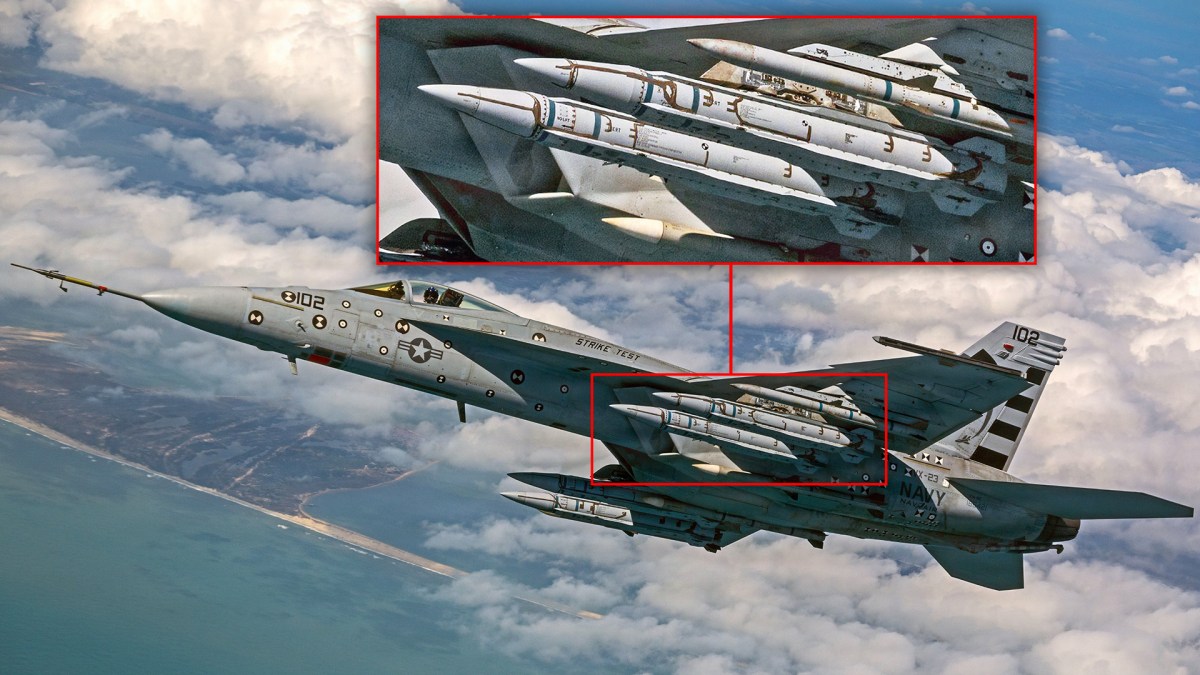
The U.S. Navy has lifted the veil on a new air-to-air weapon designed to push the boundaries of engagement range. Dubbed the AIM-424 "Malice," the very long-range air-to-air missile emerged from the shadows during the Tailhook Association's annual convention in Reno, Nevada, marking a significant addition to the Navy's future air combat arsenal.
The service released imagery showing the missile in its early operational configurations. One photograph, taken last April, depicts an F/A-18E/F Super Hornet assigned to Air Test and Evaluation Squadron 23 (VX-23) loaded with four of the weapons. Another image illustrates the missile tucked inside the weapons bay of an F-35C Lightning II, confirming its compatibility with the carrier-based variant of the Joint Strike Fighter. The disclosure was first reported by Aviation Week's Brian Everstine and Steve Trimble.
A Surprise Reveal at Tailhook
The Tailhook convention, a gathering of naval aviation professionals, has historically been a venue for major announcements. This weekend's event proved no exception as the Navy unveiled the existence of the AIM-424 Long Range Air-to-Air Missile (LRAAM). The weapon, already deep in testing, is intended to arm the F/A-18E/F Super Hornet, the F-35C, and the upcoming F/A-XX next-generation fighter. The timing of the release suggests the program has reached a level of maturity that allows for public acknowledgment.
Design and Performance
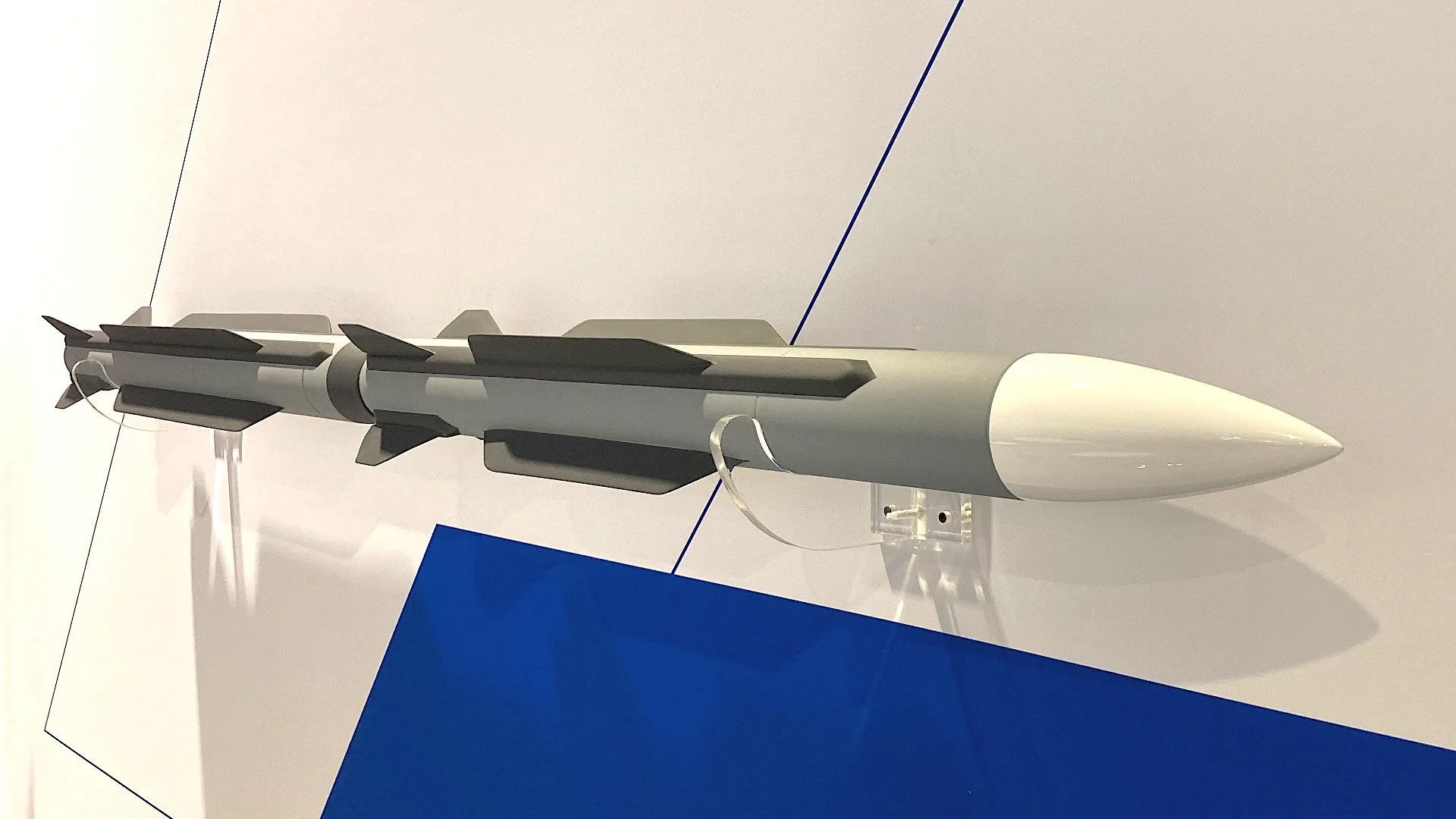
Details about the Malice's design and performance remain limited, but the imagery and initial reporting offer some insight. The missile appears considerably larger than the venerable AIM-120 AMRAAM and the newer AIM-260 Joint Advanced Tactical Missile, which follows the general mold-line of the AMRAAM. This size differential points to a significantly extended reach. According to Aviation Week, the AIM-424 employs a two-stage configuration, a design choice that promises extreme range and very high speed.
The integration of a second stage suggests a propulsion architecture similar to that used in surface-to-air missiles, adapted for aerial combat. The two-stage approach allows for a powerful initial boost followed by a sustain phase, potentially enabling the missile to engage targets at distances far beyond current weapons. The exact range remains classified, but the "very long-range" designation and the two-stage design imply capabilities that could redefine aerial engagement envelopes.
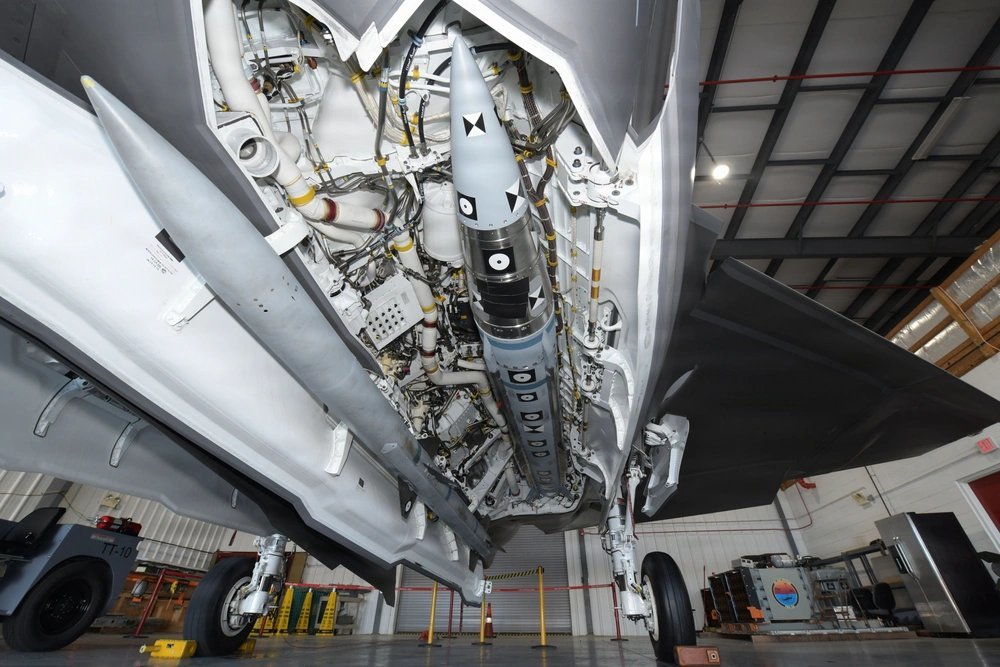
One open question is where the Malice fits in relation to the AIM-174B "Gunslinger," a weapon adapted from the Navy's SM-6 surface-to-air missile. The AIM-174B, which has already appeared on Super Hornets, offers extreme range but is not optimized for internal carriage. The AIM-424, by contrast, has been shown in an F-35C weapons bay, indicating a design that balances range with the constraints of stealthy carriage. Whether the two weapons serve complementary or overlapping roles remains to be seen.
The Race for Extreme Range
The emergence of the AIM-424 comes as the Pentagon places renewed emphasis on multi-stage air-to-air missiles. For years, defense planners have explored the concept of staging to achieve ranges that would have been unthinkable just a decade ago. The stated goal is to develop extreme-range air-to-air weapons that can reach out to the 1,000-mile mark in the coming years. This figure is seen as critical for surviving future enemy anti-access and area-denial capabilities and for capitalizing on the long-distance kill chains that are expected to dominate future combat.
Long-range missiles are not just about engaging enemy aircraft from a safe distance; they are about enabling distributed operations. With sensor networks and data links, a missile launched from one platform can be guided by another, allowing for engagement of targets well beyond the launch aircraft's radar horizon. The AIM-424 appears designed to operate in such an ecosystem, where range and speed are paramount.

Addressing the Gap with China
The urgency behind programs like the AIM-424 is driven largely by the perceived missile gap with China. The People's Liberation Army has been fielding increasingly capable long-range air-to-air missiles, including the PL-15 and PL-17, and the Pentagon has made closing that gap a top priority. The goal is not just to match China's capabilities but to leap significantly ahead. The disclosure of the Malice, along with other classified programs, reflects an effort to accelerate the development and fielding of advanced munitions.
The Navy's interest in extreme-range weapons is also tied to the unique operating environment of the Pacific theater. Distances are vast, and the ability to engage adversary aircraft before they can launch their own weapons is a decisive advantage. The AIM-424, with its two-stage design and long reach, is a direct response to this operational imperative.
Testing and Integration
The released images show the AIM-424 at an advanced stage of development. The Super Hornet carrying four missiles is a clear indication that the weapon has progressed beyond early fit checks. Similarly, the image of the missile inside an F-35C's weapons bay suggests that integration work is well underway. The Navy's test community, including VX-23 at Naval Air Station Patuxent River, is likely conducting envelope expansion and performance validation.
The inclusion of the F/A-XX in the list of intended carriers highlights the missile's long-term relevance. The next-generation naval fighter, currently in development, will be designed to carry weapons like the AIM-424 from the outset. This ensures that the Malice will remain a cornerstone of carrier air wing capability for decades to come.

What's Next
As with most classified weapons programs, the Navy is likely to reveal additional details over time. The public acknowledgment of the AIM-424 is a signal to both allies and adversaries that the United States is investing heavily in air superiority. With testing already deep and integration progressing, the Malice could reach initial operational capability within a few years. For now, the missile remains a harbinger of a new era in air warfare, where range and speed are the ultimate currency.
The AIM-424 Malice is more than just another missile; it is a statement of intent. In an era of great-power competition, the ability to strike first and from afar is paramount. The Navy's newest air-to-air weapon, still emerging from the shadows, is poised to deliver on that promise.
This article is based on reporting by twz.com. Read the original article.
Originally published on twz.com