US battery storage growth accelerates after a record first quarter
The US energy storage market opened 2026 with its strongest first quarter on record, adding 3.3 gigawatts and 8.4 gigawatt-hours of capacity, according to figures cited by Utility Dive from Wood Mackenzie and the American Clean Power Association. That is notable not only because first quarters are typically slower for deployments, but because all three major market segments, utility-scale, residential and commercial or community or industrial, posted seasonal records.
The new figures add weight to a broader view now taking shape across the US power sector: battery storage is moving from a promising supporting technology to a central piece of how the grid will handle rising demand, new solar capacity and increasingly stressed power systems. Industry analysts cited in the report see cumulative installed US storage capacity reaching 200 gigawatts and 655 gigawatt-hours by 2031, roughly four times current levels.
Why the first-quarter record matters
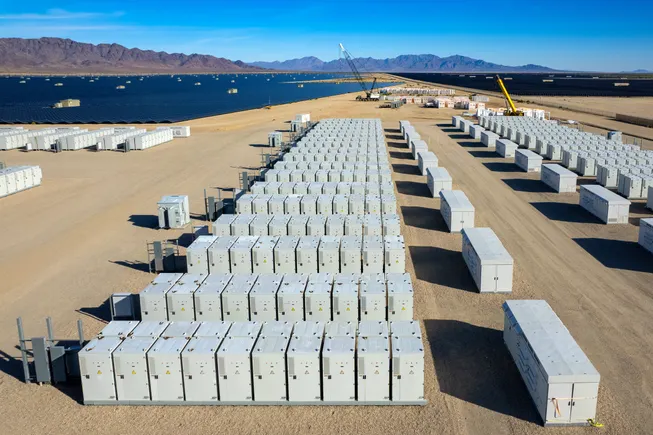
On its face, a quarterly installation record is an industry milestone. In practice, it signals something larger. Energy storage is no longer confined to pilot projects or isolated grid-support applications. It is scaling across multiple market types at once, from large front-of-the-meter projects that support utilities and wholesale markets to batteries installed alongside rooftop solar and behind the meter at commercial sites.
That breadth matters because the US electricity system is under pressure from several directions. The source material points to rising electricity consumption, growth in large-load customers, expansion in commercial and industrial demand and above-average summer temperatures that are expected to push power needs higher. Storage helps address all of those pressures by shifting energy across time, supporting reliability and allowing more renewable generation to be used when and where it is needed.
The first-quarter result is also important because it came despite a period that is usually seasonally soft. Record deployment in a slower part of the year suggests the market’s expansion is being driven by structural demand rather than a single short-term rush.
Policy certainty and load growth are doing real work
Two themes in the report stand out: policy clarity and large-load demand. According to Utility Dive’s summary, analysts expect favorable tax policy to support installations in the years ahead. That kind of stability matters in capital-intensive infrastructure markets. Developers, utilities and manufacturers all make longer-horizon decisions based on whether incentives appear durable enough to justify new factories, procurement plans and project pipelines.
The report also highlights growing demand for colocated and behind-the-meter storage from large-load customers. That reflects an increasingly practical reality across the US economy. As more electricity is consumed by commercial facilities, industry and transport, customers want greater control over reliability, cost exposure and the timing of energy use. Batteries offer one of the clearest ways to do that.
Storage can reduce peak demand, support resilience and help customers integrate onsite generation. For grid operators, it can also smooth variability and reduce strain during high-demand periods. Those functions are becoming more valuable as electricity demand rises.
Storage is expanding alongside solar
The growth story is not happening in isolation. Utility Dive cites Energy Information Administration expectations that renewables will meet almost all of the increase in US electricity demand this year. Within that mix, solar generation could rise 19 percent and wind 10 percent. Storage and solar are increasingly linked because batteries make solar more flexible, shifting daytime output into higher-value evening periods and helping manage intermittency.
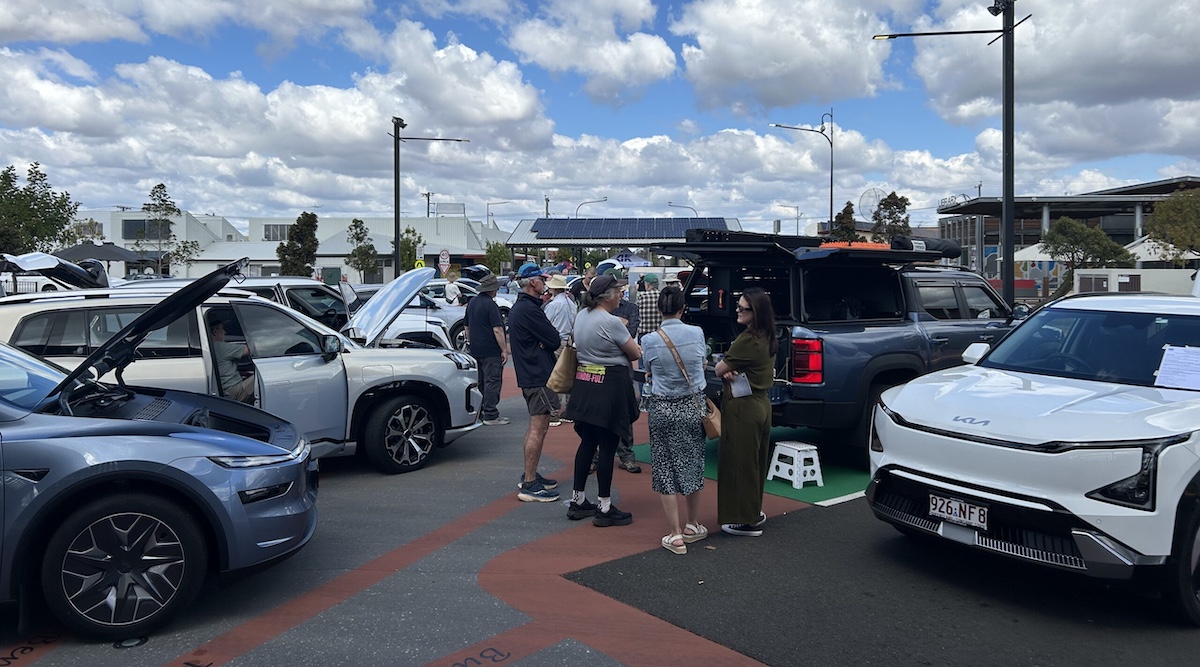
The source text notes that solar and storage together accounted for 91 percent of nameplate generating capacity added in the first quarter of 2026. It also says nearly half of new residential solar systems during the same period were paired with batteries. That pairing trend is significant. It shows storage is no longer just a utility or grid-operator tool. It is becoming a standard design choice across customer classes.
As battery systems become more common, they change the economics and operational profile of renewable power. Solar without storage remains valuable, but solar with storage is much more dispatchable. That makes it easier for developers to meet grid needs, for homeowners to improve backup capability and for businesses to manage demand charges and outage risk.

A larger role in grid planning
The longer-term forecast in the report suggests that battery storage is becoming integral to grid planning rather than supplementary to it. Reaching 200 gigawatts and 655 gigawatt-hours by 2031 would mark a major shift in the physical makeup of the US power system. It would mean batteries are increasingly expected to absorb midday renewable supply, discharge into evening peaks and support reliability during periods of system stress.
The EIA outlook cited in the article reinforces that view by projecting that US energy storage capacity will double by the end of 2027. That is an unusually fast rate of infrastructure growth for a grid resource, especially one that only recently moved into large-scale deployment. The implication is that planners and investors now view storage as one of the fastest deployable answers to growing load, transmission constraints and the need for more flexible capacity.
There are still important questions the source material does not resolve, including supply chain resilience, project interconnection timelines and how different states structure incentives and market access. But the core direction is clear. Storage is being pulled forward by economics, policy and system need at the same time.
What this means for the US power sector
The strongest signal in the first-quarter numbers is that storage growth is broad-based and increasingly durable. A market that posts records in utility-scale, residential and commercial segments simultaneously is not growing on a single policy niche. It is maturing across the entire electricity ecosystem.
That matters for reliability, decarbonization and industrial competitiveness. Rising electricity demand, especially from large customers, requires resources that can be deployed relatively quickly and integrated with modern generation portfolios. Batteries fit that need unusually well. They do not replace all other forms of capacity, but they are becoming one of the most flexible tools available for managing how power is produced, shifted and consumed.
If the current outlook holds, the first quarter of 2026 may be remembered less as a standalone record than as a marker of a new phase. The US storage market appears to be moving beyond early acceleration into sustained scale-up, with batteries increasingly embedded in both grid strategy and end-user energy decisions. That makes this quarter’s numbers more than a data point. They are evidence that energy storage is becoming foundational infrastructure.
This article is based on reporting by Utility Dive. Read the original article.

Originally published on utilitydive.com