Latin America’s EV market crossed a threshold that recently looked out of reach
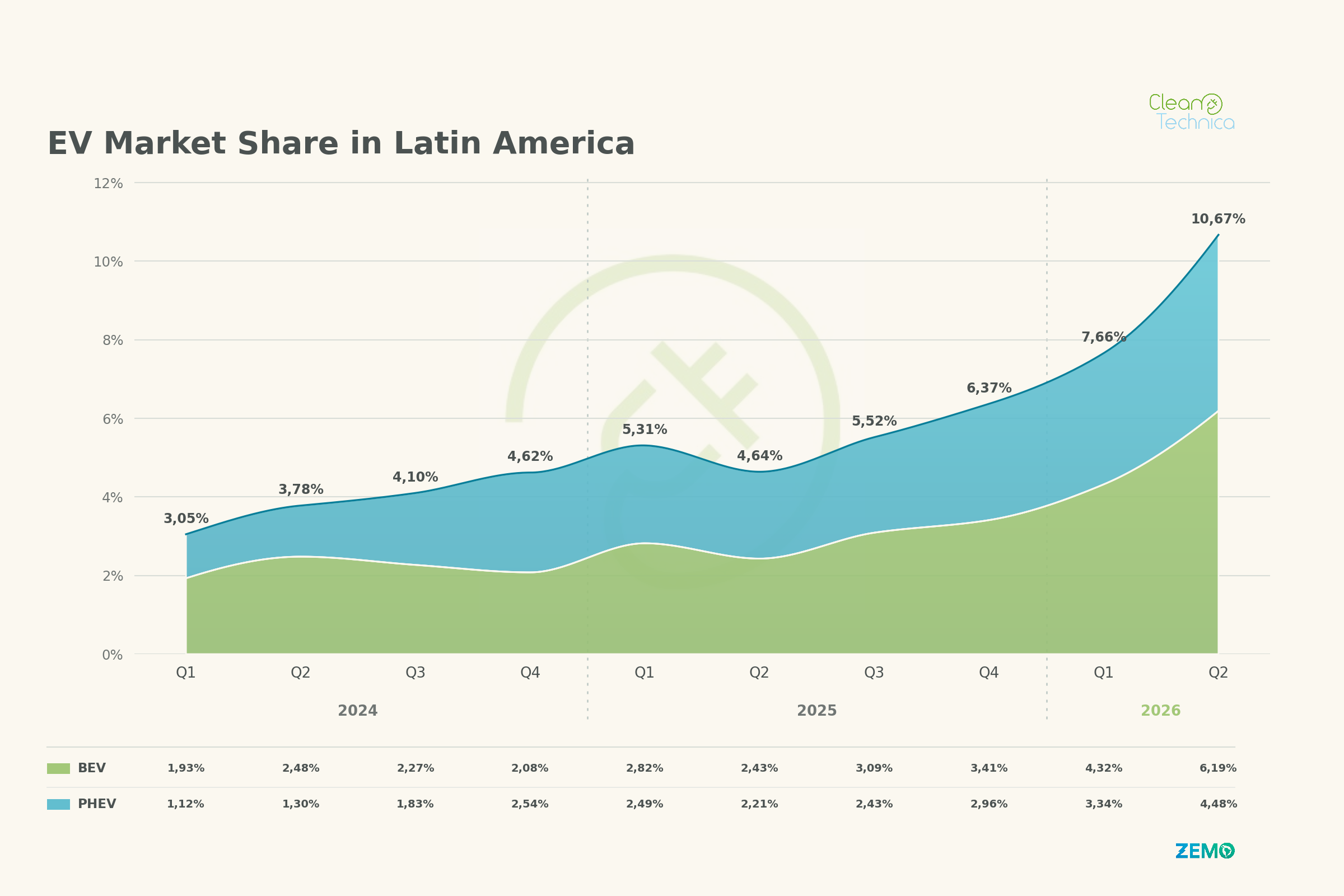
Electric vehicle adoption in Latin America accelerated sharply in the second quarter of 2026, pushing the region past a milestone that had appeared likely to take longer to reach. According to the quarterly regional sales report cited by CleanTechnica, EVs accounted for 10.7% of total vehicle sales in Q2, up from 7.7% in the prior quarter and 4.6% a year earlier.
That shift matters because it suggests the region is moving from early adoption into a more consequential phase of market change. The report says quarterly EV sales came close to 190,000 units, a new all-time high. The previous record, set in the first quarter, was just under 120,000 units. For a market that only months earlier was being discussed in terms of a possible 10% share by the end of the year, reaching 10.7% in Q2 marks a faster-than-expected change in trajectory.
The scale of the growth is one of the headline signals. The report says EV sales rose 137% year over year in the second quarter. Within that, battery-electric vehicles outpaced plug-in hybrids and extended-range models, growing 162% against 109% for the latter group. That is a notable distinction because it indicates the region’s expansion is not being carried only by transitional plug-in technologies. Instead, battery-electric models are taking a larger role in the mix.
Battery electrics are gaining the upper hand
One of the clearest takeaways from the quarter is the balance between fully electric and plug-in hybrid sales. CleanTechnica’s summary says 58% of regional plug-in sales were pure battery-electric vehicles, while 42% were plug-in hybrids or extended-range electric cars. That split points to a market increasingly centered on fully electric drivetrains rather than treating them as a niche option.
The report also says battery-electric vehicles alone reached 6.2% market share in the quarter, helping lift the overall EV figure to 10.7%. For the first time, quarterly BEV sales also surpassed 100,000 units in the region. Crossing six figures in a single quarter is important not just as a symbolic mark, but because it suggests automakers, charging providers, and policymakers are beginning to operate in a market with a larger installed base and a steadier demand signal.

That could have practical consequences well beyond headline sales. Once battery-electric volumes rise, the economics of charging infrastructure, servicing, and inventory planning begin to improve. The report does not make long-term forecasts, but the Q2 data imply a market that is becoming easier for manufacturers and adjacent industries to serve at scale.
Affordability and fuel prices appear to be doing the work
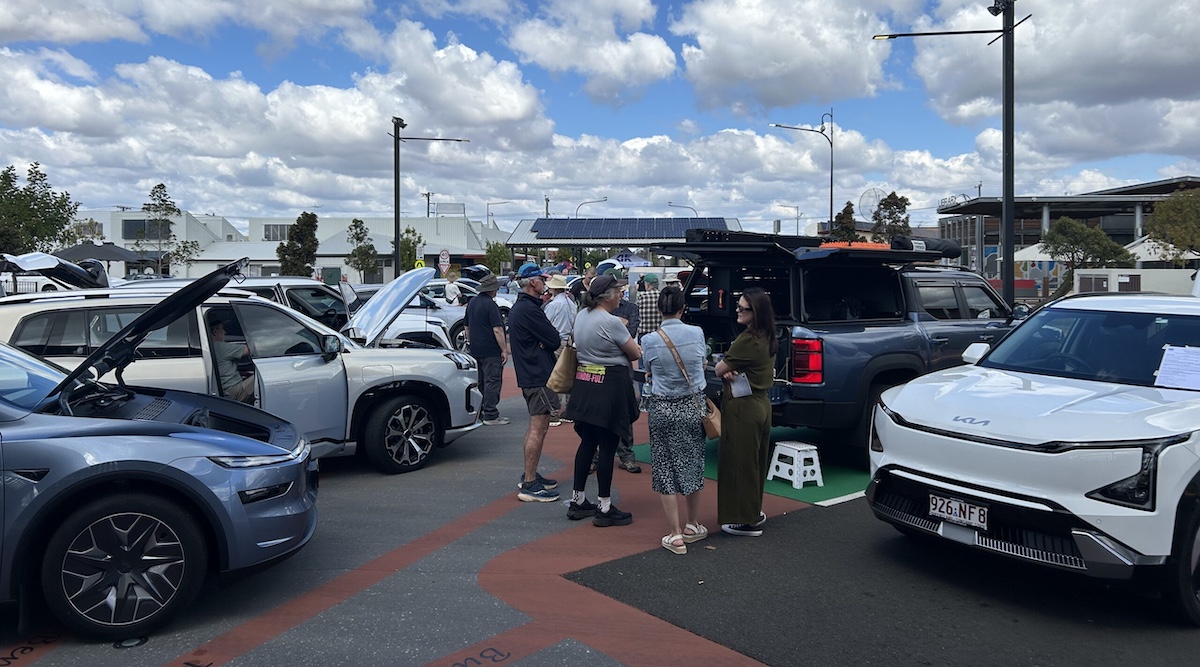
The factors behind the jump are described in straightforward terms in the source report: more affordable EV options and higher fuel prices. Those two pressures can reinforce each other. If lower-cost electric models become more available at the same time gasoline and diesel costs remain elevated, total cost of ownership becomes easier for consumers to justify even before incentives or environmental considerations enter the picture.
That combination is particularly relevant in price-sensitive markets. Latin America has often been discussed as a region where EV adoption would depend on affordability more than on premium early-adopter demand. The Q2 results support that view. They suggest that once pricing improves enough, consumers can respond quickly, especially when conventional fuel costs create added pressure.
The report also says those underlying conditions are likely to remain in place through the third quarter. That does not guarantee another jump of the same size, but it does strengthen the case that Q2 was not just a one-off statistical spike. If affordable models continue to enter the market and fuel prices stay high, the region could hold near current share levels or push higher.
The most consequential figure may be what happened to combustion vehicles
Perhaps the most structurally important data point in the quarter is not simply that EVs grew. It is that combustion powertrains declined year over year even while the broader market showed slight growth. CleanTechnica says total vehicle sales increased by nearly 50,000 units in Q2, but EV sales increased by about 110,000 units. As a result, internal-combustion vehicles and conventional hybrids fell by more than 60,000 units.
That is a different kind of market story. In earlier stages of electrification, EVs can grow while the rest of the market grows too, allowing combustion vehicles to remain stable in absolute terms. What happened in Q2 points instead to substitution. In other words, EVs are not only benefiting from market expansion; they are beginning to displace incumbent powertrains in absolute volume.
That does not mean the transition is complete or evenly distributed. The report notes that some markets remain more focused on plug-in hybrids. Latin America is also not a single uniform market, and national conditions vary widely. But the regional data nonetheless indicate a meaningful change: electrification is starting to bite into legacy sales.

A regional milestone, but not the finish line
The 10% mark is significant because it often functions as a threshold between early experimentation and broader mainstream momentum. Still, the second quarter result should be read as a milestone rather than an endpoint. The region will need sustained model availability, charging build-out, and supportive economics for the shift to deepen.
Even so, the Q2 figures make one point hard to ignore. Latin America’s EV market is no longer advancing only in small increments. It has produced a quarter in which sales set a record, battery electrics widened their lead over other plug-in types, and combustion vehicles lost ground in absolute terms. Taken together, those developments suggest that what once looked like a distant transition is turning into a live market transformation.
If the same conditions persist into the second half of 2026, the debate may soon move beyond whether Latin America can reach a 10% annual EV share. The more relevant question could become how quickly the region builds on it.
This article is based on reporting by CleanTechnica. Read the original article.
Originally published on cleantechnica.com