Residential energy fleets are being positioned as a grid resource at utility scale
Three major home energy providers are making a broader claim for distributed energy's role in the U.S. power system: that millions of consumer devices already installed in homes can be aggregated into a resource large enough to matter for utilities, congested grids, and the data center buildout. Sunrun, Tesla and Renew Home said they can jointly offer 16.8 gigawatts of distributed capacity drawn from roughly 12 million devices across 9 million U.S. homes.
The companies framed the offering as a response to a growing "speed to power" problem. Utilities and hyperscalers are racing to secure electricity for new data centers, but transmission buildouts and large centralized generation projects often take years to complete. By contrast, distributed resources are already in place in many of the most constrained markets. The companies argue that fleets of batteries, solar systems and connected thermostats can unlock additional headroom on the grid much faster than conventional infrastructure timelines allow.
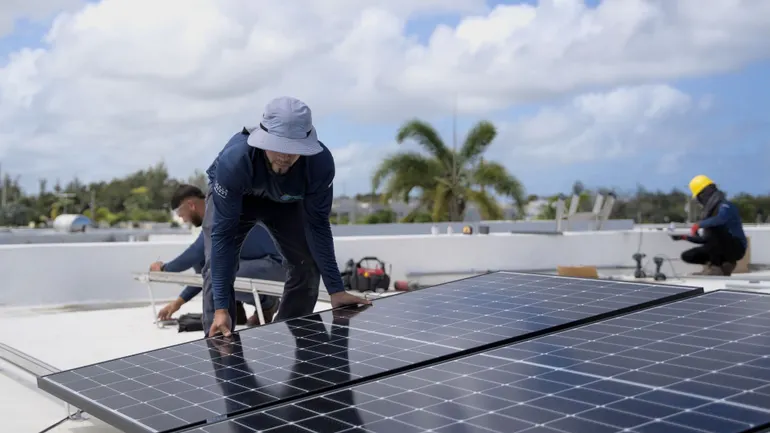
The proposal combines different types of household assets into one capacity portfolio. Sunrun and Tesla together manage 7.8 gigawatts of installed battery capacity through their residential solar-and-storage customer bases. Renew Home adds about 9 gigawatts of HVAC capacity based on the one-hour peak load shifting potential of more than 8 million smart thermostats and related devices under management. Put together, the companies say, the portfolio can act as a dispatchable or controllable system resource rather than a loose collection of retail gadgets.
Why this matters now
The timing reflects a structural shift in U.S. electricity demand. Data center growth, electrification, and regional grid congestion are forcing utilities and large power users to look for resources that can be brought online quickly. In that environment, distributed energy has moved from a long-discussed theoretical concept toward a more operational proposition. The core argument is straightforward: if enough homes can reduce or shift load at the right time, and enough home batteries can export or avoid demand during peaks, the effect can resemble a virtual power plant at meaningful scale.
Executives quoted in the source material emphasized that this is not only a utility story but also a consumer one. Payments for participation in grid services or capacity programs are being presented as a way to channel value back to households, especially middle-class homeowners who have already invested in rooftop solar, batteries, or connected devices. That consumer compensation is central to the pitch. Without it, the model risks looking like a grid support strategy that relies on private household assets without adequately sharing the upside.
Market concentration gives the claim more weight
What makes the announcement notable is not just the 16.8 gigawatt headline but where the companies say those resources are located. Sunrun and Tesla's installed base is concentrated in major data center and high-demand states including Texas, California and Virginia. Those are precisely the markets where grid capacity constraints and interconnection delays can have outsized economic effects.
In Texas, the companies said they have 1.3 gigawatts of HVAC capacity and 440 megawatts of battery capacity. In California, they cited nearly 1.1 gigawatts of HVAC capacity and 3.6 gigawatts of battery capacity. In Virginia, home to one of the world's largest concentrations of commercial computing infrastructure, they reported 37 megawatts of batteries and 276 megawatts of HVAC capacity today, with an expectation that combined capacity there could reach 500 megawatts by 2030.
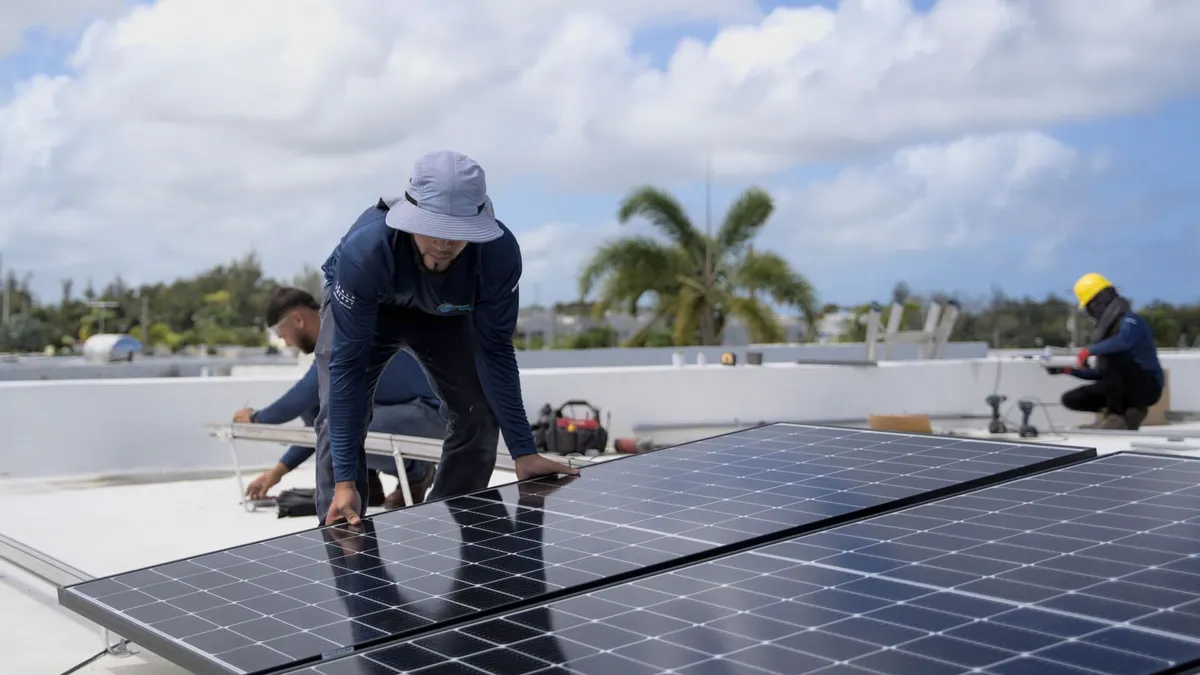
These numbers matter because distributed energy's value is highly location-specific. A flexible megawatt is far more useful if it sits inside a congested load pocket or near a fast-growing cluster of demand than if it is spread across areas with little network stress. By pointing to states where hyperscalers and utilities are already competing for power, the companies are trying to show that residential assets can serve as a practical bridge rather than an abstract future possibility.
From rooftop systems to capacity-as-a-solution
The announcement also signals a business model shift. Residential solar, storage and smart-home platforms have often been marketed primarily around resilience, bill savings, or backup power. Here, the emphasis is on selling aggregated capacity into a grid problem. That changes the framing from individual customer value to system value.
The phrase "capacity-as-a-solution" captures that repositioning. Instead of waiting for new centralized plants or transmission upgrades, utilities and large commercial buyers could potentially contract for a portfolio of distributed flexibility that already exists. In practice, that might mean orchestrating thermostat setbacks during peak hours, discharging home batteries into local demand events, or pairing rooftop solar output with storage to smooth grid stress. The technical challenge is not whether any one device can do this, but whether millions of devices can be coordinated reliably enough to meet utility-grade performance expectations.
That is the unresolved question beneath the headline. Distributed energy advocates have long argued that residential assets can provide dependable capacity, but real-world execution depends on software, customer participation, regulatory design and local grid rules. The fact that programs such as Puerto Rico's distributed power plant efforts were cited in the source report underscores the importance of operational evidence. Grid operators and utilities are more likely to take these offers seriously when they are backed by performance data from live programs rather than by modelled potential alone.
A larger role for households in grid planning
If this model scales, it could alter how grid planners think about residential demand. Homes would no longer be treated mainly as passive endpoints consuming electricity according to weather and behavior. Instead, they would become active grid nodes with controllable load, storage and, in many cases, generation. That would blur the traditional boundary between utility infrastructure and consumer equipment.
For the power sector, the appeal is speed. For households, the appeal is monetization and backup resilience. For hyperscalers chasing electricity access, the appeal is incremental capacity in markets where every additional megawatt matters. Whether those interests can be aligned consistently will depend on contract structures and regulation, but the direction is clear: distributed energy is being pitched not as a niche clean-tech add-on, but as infrastructure.
The significance of the Sunrun-Tesla-Renew Home claim is therefore less about a single agreement and more about the maturation of the category. Residential batteries and smart thermostats are no longer being described only as customer products. They are being assembled into a supply-side resource for an increasingly strained grid. If utilities accept that premise at scale, home energy systems could become part of mainstream capacity planning in the same conversation as peaker plants, transmission upgrades and large-scale storage.
This article is based on reporting by Utility Dive. Read the original article.
Originally published on utilitydive.com