California moves toward court fight over offshore wind lease cancellations
California is preparing to sue the Trump administration over federal agreements that would unwind offshore wind leases, escalating a dispute that goes well beyond one project area off the state’s coast. The legal challenge centers on Interior Department-backed deals to buy back leases from developers, including a Morro Bay-area project that state officials say was expected to support both long-term electricity supply and broader climate planning.
Attorney General Rob Bonta said in a June 23 letter that the state plans to bring claims against the U.S. Department of the Interior and other parties over the federal handling of lease terminations. According to the supplied source material, California argues that the buyout of the Golden State Wind lease violates the Outer Continental Shelf Lands Act and harms the state’s legal interest in the orderly development of offshore wind resources.
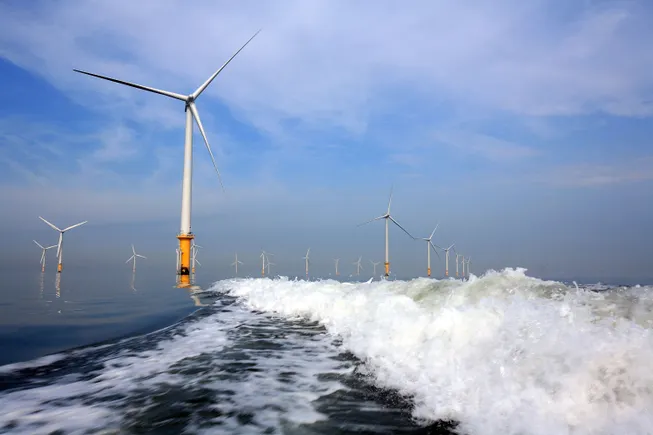
The coming lawsuit puts a sharper edge on a growing conflict between states pursuing aggressive clean energy targets and a federal government willing to reverse or cash out major renewable energy commitments. In California’s case, the stakes are especially high because offshore wind has been treated as one of the few scalable options that could eventually add large volumes of carbon-free electricity without competing for scarce inland land and water resources.
What California says is at risk
The state’s position is not simply that a lease changed hands or a contract was revised. Its core argument, as described in the candidate text, is that the cancellations are causing ongoing harm to California’s climate and economic plans. Bonta said the state has invested more than $100 million to support the development of wind energy and that offshore wind is expected to play a role in California’s broader strategy for decarbonizing its grid.
That matters because California’s power system is already navigating several overlapping pressures: rapid electrification, volatile summer demand, the need for firm clean capacity, and the challenge of replacing fossil generation while maintaining reliability. Offshore wind had been viewed as a potential contributor because of the strong and consistent winds off the California coast. Unlike solar, which peaks in the middle of the day, offshore wind could offer production characteristics that complement other renewable resources.
The state also tied the dispute directly to economics. In Bonta’s public remarks, the lease cancellation was framed as harmful not only to climate goals but also to the state economy. That reflects the way policymakers have marketed offshore wind in California: not just as a source of electricity, but as the basis for a larger industrial build-out involving ports, supply chains, construction work, transmission, and manufacturing.
The leases at the center of the dispute
The immediate flashpoint includes the Golden State Wind lease, identified in the source text as OCS-P 0564, in the Morro Bay region. That lease area was described as having an estimated installation capacity of 2 gigawatts. A neighboring Morro Bay lease area held by an Invenergy affiliate, OCS-P 0565, was estimated by the company at around 1.5 gigawatts.
Those are not trivial numbers. Together, they represent the kind of utility-scale capacity that can materially affect long-range resource planning. Even if projects of that size would take years to permit, finance, construct, and connect to the grid, they occupy an important place in state planning models. Remove them, and planners may need to replace that expected future capacity with other resources that carry different costs, timelines, and infrastructure needs.
The supplied source says California’s lawsuit follows the Interior Department’s announcement that it had reached an agreement with Invenergy to pay $765 million to terminate four offshore wind leases owned by its affiliates. Those lease areas reportedly include one in the New York Bight, two in the Gulf of Maine, and one off the central California coast. That breadth matters. California is not objecting to an isolated local decision; it is responding to a federal action pattern that reaches multiple offshore wind regions.
A broader multistate conflict is taking shape
California is not alone in challenging the administration’s approach. The candidate text notes that attorneys general from New York, New Jersey, Connecticut, Maine, Massachusetts, Rhode Island, and Vermont have also sued over a separate Interior buyout deal involving TotalEnergies. That turns what might have looked like a regional permitting fight into a wider policy confrontation over federal authority, contract structure, and the treatment of offshore wind leases as public assets.
For the states, one concern is precedent. If the federal government can pay developers to walk away from awarded lease areas, then the practical value of years of state planning around offshore wind may be much weaker than expected. Ports, transmission concepts, workforce programs, and environmental review processes are all built around assumptions that lease sales will lead, however slowly, toward development. Buybacks interrupt that chain at its earliest commercial stage.
For developers, the picture is more complicated. The source text does not spell out why companies agreed to the buyouts, but the existence of such deals suggests that some combination of policy uncertainty, cost, timing, or political risk has become large enough for negotiated exits to make sense. That in itself is significant. Offshore wind development already faces high capital costs, specialized equipment demands, and long lead times. A federal willingness to terminate projects adds yet another layer of uncertainty.

Why Morro Bay matters in California’s clean energy plans
Morro Bay has become one of the focal points of California’s offshore wind ambitions because of its coastal wind resource and the possibility of developing large floating wind projects. California’s deep coastal waters mean fixed-bottom turbines, common in parts of Europe and the U.S. East Coast, are less practical in many locations. That has pushed the state toward floating offshore wind, a technology pathway with substantial promise but still significant cost and execution risk.
Even so, state officials have treated offshore wind as important enough to warrant public spending and sustained regulatory effort. The source text says the California Energy Commission is already investigating the deal involving Golden State Wind. That indicates the issue is not being handled solely as a courtroom matter; it is also becoming a subject of state-level energy oversight and factual scrutiny.
In practical terms, California’s lawsuit may serve two purposes at once. First, it seeks to block or reverse a lease termination that the state says is unlawful. Second, it sends a signal that California will defend energy planning assumptions it believes the federal government is undermining. Whether that produces an injunction, a settlement, or a narrower administrative remedy remains uncertain based on the supplied material. But the political message is clear: California does not view offshore wind buybacks as a routine commercial clean-up.
What comes next
The most immediate next step is formal filing. Bonta has announced the state’s intent, and the legal theory described in the source rests on the Outer Continental Shelf Lands Act and the state’s interest in the orderly development of offshore wind. Once filed, the case will likely test how much deference federal agencies have when they decide that awarded offshore leases should be terminated through negotiated payments rather than advanced toward development.
The outcome could reach well beyond California. If courts side with the states, developers and regulators may gain stronger assurances that offshore wind lease awards cannot be easily unwound when administrations change. If the federal government prevails, state energy strategies that rely on offshore wind could face a new level of policy fragility.
That is why this dispute matters. It is not only about one Morro Bay tract or one compensation figure. It is about whether long-horizon clean energy planning can survive abrupt reversals in federal posture. California’s answer, at least for now, is that it intends to force that question into court.
This article is based on reporting by Utility Dive. Read the original article.

Originally published on utilitydive.com