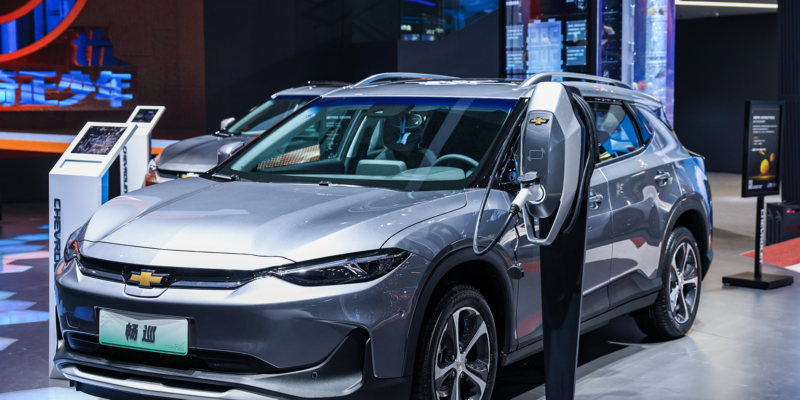
End of an Era: Chevrolet's Departure from China
After more than two decades of selling vehicles in the world's largest auto market, General Motors' Chevrolet brand has officially announced its exit from China. The decision, reported by CleanTechnica on August 12, 2026, marks a significant retreat for one of America's most iconic automotive brands. Chevrolet's sales in China have fallen dramatically, and the brand has struggled to keep pace with the rapid electrification of the Chinese auto market.
At its peak, Chevrolet was selling 760,000 vehicles per year in China, and over its 21-year presence, it accumulated 7.5 million sales to Chinese consumers. However, the landscape has changed drastically. The plug-in vehicle market in China now accounts for 63% of all new car sales, while Chevrolet's electric vehicle offerings have remained minimal. This mismatch between market demand and product lineup made it increasingly difficult for the brand to compete.
The Rise of Electric Vehicles in China
China's aggressive push toward new energy vehicles (NEVs) has reshaped the automotive industry. With government incentives, a vast charging infrastructure, and a host of domestic EV manufacturers like BYD, NIO, and Xpeng, the market has become fiercely competitive. Chevrolet, with its traditional internal combustion engine lineup and only a few electric models, found itself at a severe disadvantage.
The company's share of the Chinese market dwindled as consumers flocked to domestic brands that offered cutting-edge technology, longer ranges, and more affordable prices. The lack of a robust EV strategy in China ultimately sealed Chevrolet's fate.
Production Continues, But for Export
Interestingly, Chevrolet will not completely sever ties with China. The company plans to continue manufacturing vehicles in the country, but these cars will be sold in markets other than China and the United States. This strategic pivot allows GM to leverage its existing manufacturing infrastructure in China while focusing on growth in other export markets.
This move aligns with a broader long-term commitment between GM and its Chinese partner, SAIC Motor. The two companies recently signed a strategic renewal agreement that extends their joint venture, SAIC-GM, for another 20 years, until 2047. This is one of the longest renewal terms among major joint ventures in the region.
Future Plans: Electrification of Cadillac and Buick
As part of the renewed partnership, GM and SAIC have announced plans to launch at least 30 new energy vehicle (NEV) models by 2030. The primary focus will be on electrifying the Cadillac and Buick brands, which are expected to play a more prominent role in China's EV market. This indicates that while Chevrolet is exiting, GM is not abandoning China; rather, it is reallocating resources to brands with stronger potential in the NEV segment.
The decision to leave China is a clear acknowledgment that Chevrolet's brand image and product portfolio no longer resonate with Chinese consumers. By shifting focus to exports and concentrating on electrification for its other brands, GM aims to remain competitive in a market that is pivotal to the global automotive industry's future.

Implications for the Global Auto Industry
Chevrolet's exit from China is a telling sign of the challenges foreign automakers face in the world's largest car market. The rapid transition to electric vehicles, combined with the rise of domestic Chinese brands, has created an environment where only the most adaptable and innovative companies can thrive. For legacy automakers, this means that a strong EV lineup is no longer optional but essential for survival in key markets.
This development also underscores the growing importance of China as a manufacturing hub for exports. As Chevrolet continues to produce vehicles in China for other markets, it highlights the country's role as a global automotive production powerhouse. The decision to extend the SAIC-GM joint venture for another two decades signals a long-term commitment to this strategy.
What's Next for Chevrolet?
For Chevrolet, the exit from China represents a strategic retreat but not a withdrawal from the global stage. The brand will now focus on strengthening its presence in other markets, particularly where it has a competitive edge. By leveraging its manufacturing capabilities in China, Chevrolet can supply vehicles to regions like Southeast Asia, Latin America, and the Middle East, where demand for affordable and reliable cars remains strong.
At the same time, Chevrolet will need to accelerate its own electrification efforts to remain relevant worldwide. While the brand has announced plans for electric vehicles in the U.S. and other markets, the pace of change will be critical. The lessons from China are clear: without a compelling EV lineup, even the most established brands can lose ground quickly.

Conclusion
Chevrolet's departure from China after 21 years is a landmark moment in the automotive industry. It reflects the seismic shifts brought about by the EV revolution and the rise of Chinese automakers. While the brand's exit is a loss for its Chinese customers, it opens new opportunities for growth in other regions. As GM and SAIC extend their partnership and focus on electrifying Cadillac and Buick, the future of the joint venture looks promising. For Chevrolet, the road ahead will be defined by its ability to adapt to a changing world, where electric vehicles are no longer a niche but the mainstream.
This article is based on reporting by CleanTechnica. Read the original article.
Originally published on cleantechnica.com