Introduction: Heatwaves and the Power Sector
As climate change intensifies, heatwaves are becoming more frequent and severe, posing significant challenges to electricity generation worldwide. When temperatures exceed 40°C, as seen in parts of Europe during the summer of 2026, power systems face a double whammy: reduced generation capacity and surging demand from air conditioning and refrigeration. This strain often leads to higher electricity prices and, in extreme cases, blackouts.
However, not all power sources are affected equally. While wind and solar are often criticized for their variability, conventional sources like nuclear and gas also suffer under extreme heat. This article factchecks how each major technology responds to heatwaves, based on data from Carbon Brief and other sources.
Nuclear Power: Vulnerable to Heat and Water Scarcity
Nuclear reactors generate electricity by using fission to heat water into steam, which spins turbines. Many plants rely on river water for cooling, making them sensitive to high water temperatures and low river levels. During heatwaves, cooling water becomes too warm or scarce, forcing reactors to reduce output or shut down entirely.
In France, where nuclear power supplies about 70% of electricity, the July 2026 heatwave forced three of 57 reactors to shut down and reduced generation at seven others, causing an almost 9% drop in nuclear output. This is not an isolated incident; France has experienced similar reductions during heatwaves in 2003, 2006, 2015, 2018, 2019, 2022, and 2025.
Across Europe, low river levels on the Danube have impacted reactors in Romania and Hungary, and a Swiss reactor was shut down due to high river temperatures. Globally, about 14% of the world's 440 reactors use once-through river cooling, with eight in France alone. These plants are most at risk from heatwaves and droughts.

Gas Power: Efficiency Losses and Cooling Challenges
Natural gas plants, both combined-cycle and open-cycle, are also affected by high temperatures. Gas turbines operate less efficiently when intake air is hot, because hot air is less dense, reducing the oxygen available for combustion. This can lower output by up to 10% on very hot days.
Moreover, gas plants that use water for cooling face similar issues to nuclear reactors. In Europe, several gas plants had to reduce output during the 2026 heatwaves due to water restrictions. While gas is often seen as a flexible backup for renewables, its performance under heatwaves is far from optimal.
Wind Power: Stillness in the Heat
Wind turbines depend on wind speed, which can drop during heatwaves when high-pressure systems dominate. These stagnant conditions lead to low wind speeds, reducing wind generation. In the summer of 2026, parts of Europe experienced prolonged periods of low wind, causing wind output to fall significantly.
However, wind power is not uniquely vulnerable; its variability is well understood and can be forecasted. Modern grids are designed to manage these fluctuations with storage and demand response. Blaming wind for heatwave shortages ignores the fact that all sources face challenges.
Solar Power: Heat and Efficiency
Solar panels are affected by heat, too. While they need sunlight, high temperatures reduce their efficiency. Photovoltaic cells typically lose about 0.4% to 0.5% of their output for every degree Celsius above 25°C. During a 40°C day, that can mean a 6-8% drop in generation.
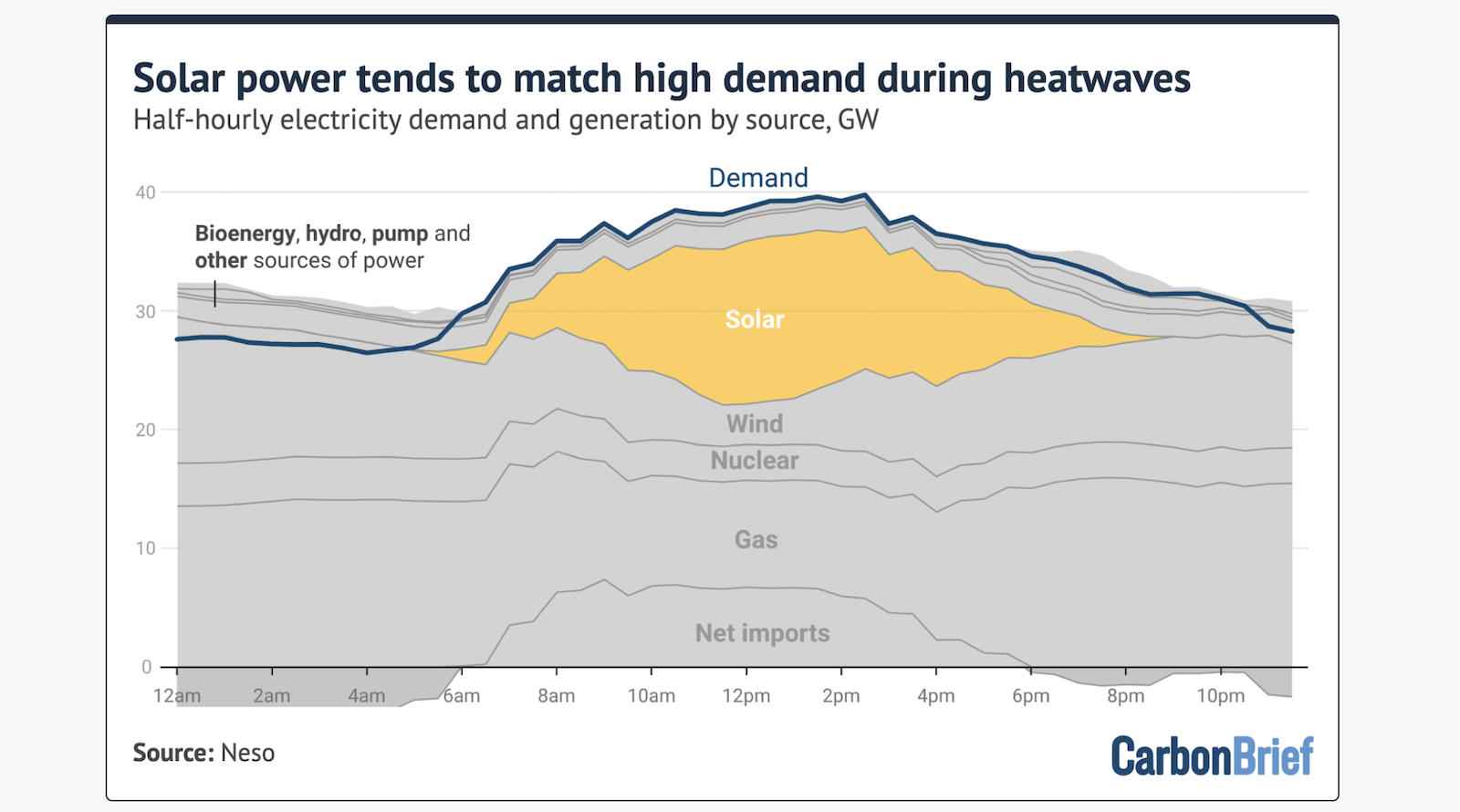
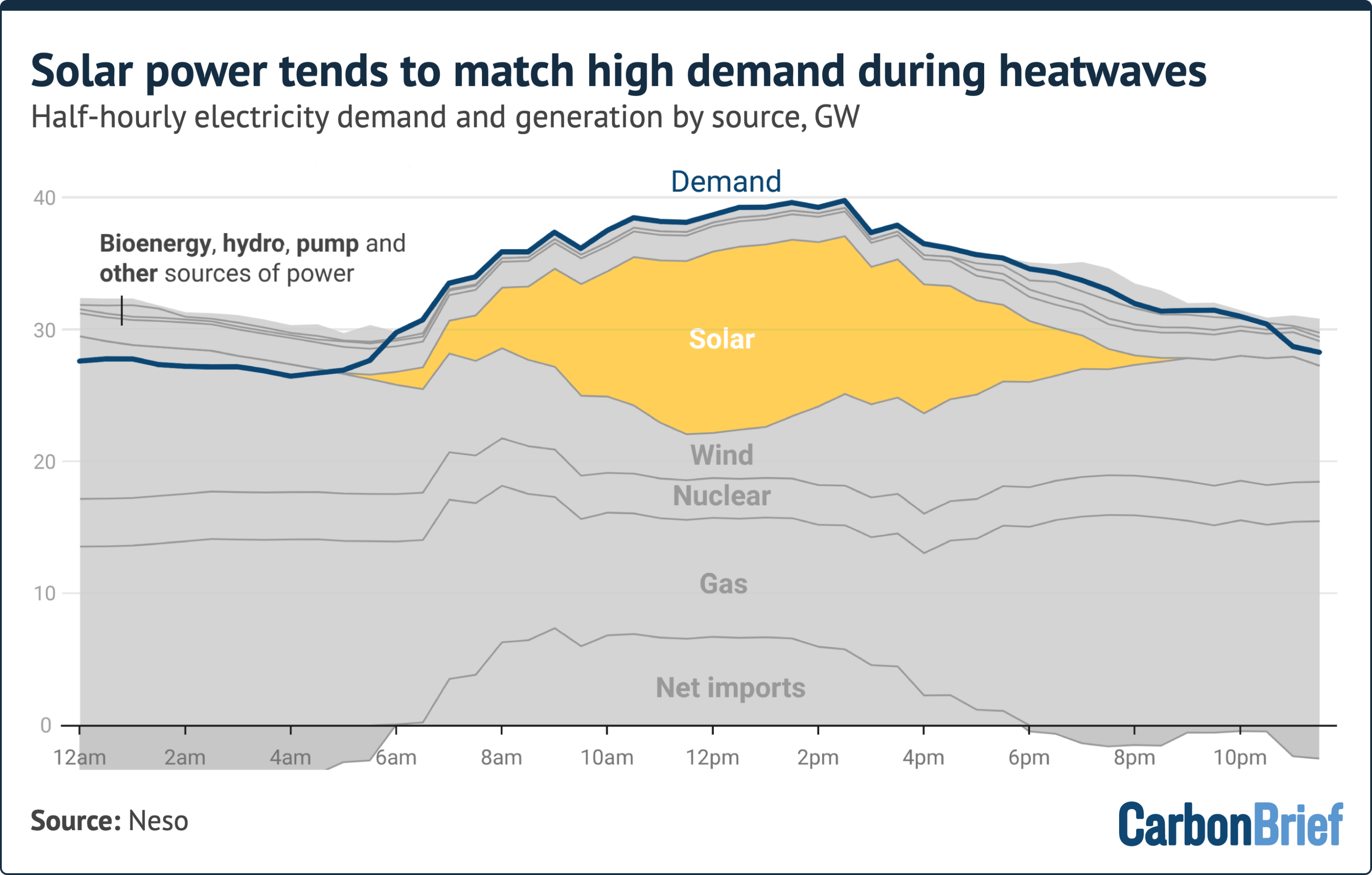
Despite this, solar often performs well during heatwaves because of clear skies. The real issue is the evening peak, when solar fades but demand remains high due to air conditioning. This is why storage and flexible sources are crucial.
Storage: A Growing Solution
Energy storage, particularly batteries, can help mitigate the impacts of heatwaves by storing excess generation during cooler periods and discharging when demand peaks. While storage itself can be affected by heat, modern systems are designed to operate within safe temperature ranges. As storage capacity grows, it will play an increasingly important role in balancing the grid during extreme weather events.

Demand Surge and Price Spikes
Heatwaves drive up electricity demand as people rely on air conditioning and refrigeration. In France, daily demand rose by almost 20% during a two-week heatwave in June 2026. This surge, combined with reduced generation, pushes wholesale prices higher. For example, day-ahead prices in several European markets spiked to record levels during the July 2026 heatwave.
This price signal encourages imports and activates peaking plants, but it also highlights the need for investment in grid resilience and demand-side management.
Misleading Narratives: Blaming Renewables
Some commentators use heatwaves to criticize wind and solar, calling them unreliable. However, this ignores the fact that nuclear and gas also underperform during extreme heat. The intermittency of renewables is a design challenge, not a failure. With adequate storage and grid interconnections, high shares of renewables can be managed reliably.
In fact, during the 2026 heatwaves, wind and solar collectively contributed more to meeting demand than nuclear in some periods, despite their challenges. The real lesson is that all energy sources need to adapt to a warming climate.
Conclusion: Building Resilience
Heatwaves are a stress test for power systems. They reveal vulnerabilities in every technology, from nuclear cooling to gas turbine efficiency, wind lulls, and solar thermal derating. To ensure reliable electricity in a hotter world, we need a diverse mix of generation, robust storage, and improved forecasting.
Policymakers and grid operators must invest in heat-resilient infrastructure, such as dry cooling for thermal plants, and encourage demand response programs. By understanding the true impacts of heatwaves on all power sources, we can make informed decisions that keep the lights on without falling for misleading narratives.
This article is based on reporting by CleanTechnica. Read the original article.
Originally published on cleantechnica.com