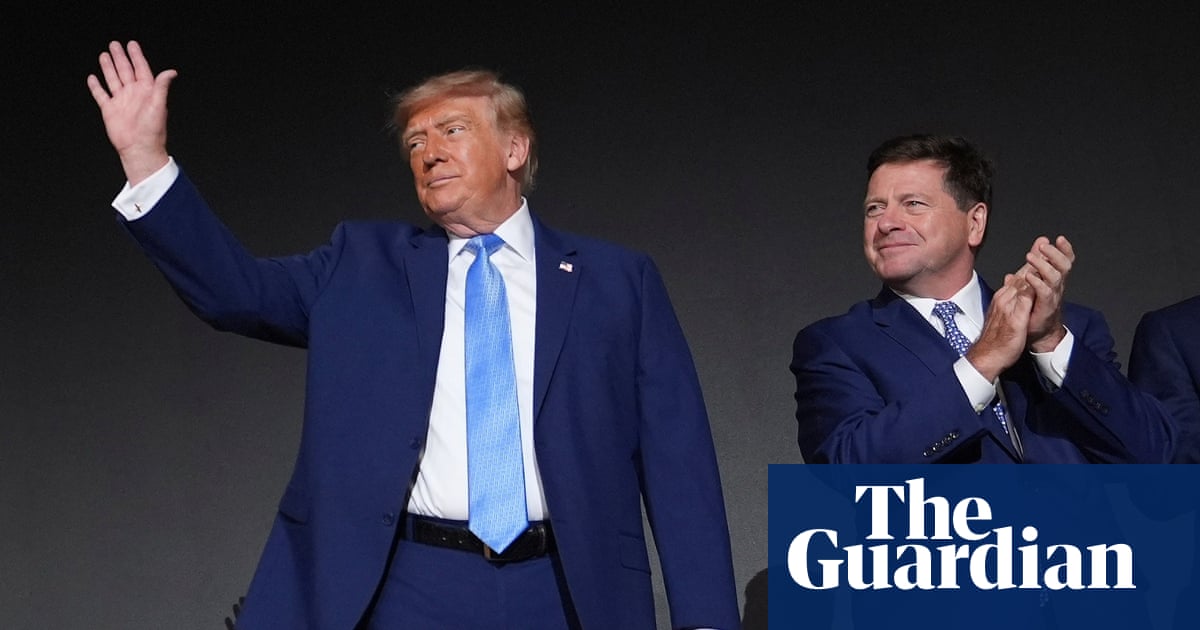
President Donald Trump announced on Sunday that Jay Clayton, the director of national intelligence, will serve a second role as the White House’s artificial intelligence czar, adding stewardship of federal AI policy to a portfolio that already includes oversight of the United States’ intelligence community.
The appointment, first reported by CBS News, was confirmed by Trump in a social media post. It places Clayton — a figure better known for financial regulation and federal prosecution than for technology policy — at the center of an administration that has spent much of the past year reorganizing how Washington engages with the fast-moving AI sector.
A dual mandate spanning intelligence and AI
Clayton currently leads the country’s 18 intelligence agencies as director of national intelligence. His résumé includes a stint as the top federal prosecutor in Manhattan and a term leading the Securities and Exchange Commission during Trump’s first presidency. That background in law enforcement and market regulation now sits alongside responsibility for the federal government’s approach to artificial intelligence.
The combination is unusual. Intelligence work and AI oversight have increasingly overlapped as governments weigh the national security implications of advanced models, but few officials have formally held both briefs at once. Clayton’s dual role means the same official will be weighing signals intelligence priorities and the industrial policy questions that surround AI development.
‘A gamechanger’ that also poses ‘a threat’
Clayton’s public comments on AI have been notably measured. During his Senate confirmation hearing for the intelligence post, he described artificial intelligence as a “gamechanger” while cautioning that it simultaneously represented “a threat.”
Pressed by lawmakers on how he viewed the technology, Clayton offered a framing that now reads as a preview of his expanded duties: “When something’s both an opportunity and a threat, you better get your arms around it.”
The remark captures the tension that has defined the administration’s approach — enthusiasm for rapid development paired with periodic acknowledgements that the risks deserve attention.
Inside the ‘Super Intelligence Force’
In his social media announcement, Trump said Clayton would lead what the president called “the Super Intelligence Force (SIF).” According to the post, the SIF would “coordinate the federal government’s engagement with consumers, public interest groups, religious organizations, critical infrastructure providers, and super intelligence companies.”
That list of stakeholders is broad, spanning civil society and the companies building the most capable systems. The stated goal of coordination, rather than regulation, echoes the administration’s preference for working alongside industry rather than imposing new rules from above.
- Consumers and public interest groups, who have pressed for stronger safety guarantees
- Religious organizations, newly named as participants in the consultation process
- Critical infrastructure providers, whose systems increasingly depend on AI tools
- Super intelligence companies, the developers at the center of the policy debate
From an ‘AI Force’ to a White House accord
The czar role did not appear in isolation. In September, Trump announced he was creating an “AI Force” along with a czar to oversee the technology’s growth and to monitor for what he described as “bad” development. That announcement followed warnings from technology industry leaders that AI was advancing too quickly to control and that it could harm humans.
To address those concerns, the president also established an advisory committee to work alongside the czar. He had previously said the effort would be led by a “High IQ” individual. Trump has also met with AI industry leaders to discuss their worries directly.
More recently, on Tuesday, Trump and six executives signed an AI accord at the White House. The agreement commits the participants to creating internal and external monitors intended to ensure the technology is used as intended and that any safety issues are addressed.
An expanding roster of AI roles
Clayton’s appointment adds another layer to an already crowded set of AI positions. Trump initially created an AI and cryptocurrency czar post when he returned to the White House in January 2025. David Sacks, the venture capitalist and technology businessman, served in that combined role.
The emergence of a separate AI czar under Clayton, alongside a dedicated advisory committee and the newly signed accord, suggests the administration is building overlapping structures rather than consolidating authority in a single office. How those pieces fit together — and who ultimately arbitrates when they disagree — remains an open question.

Datacenters, China and the limits of reassurance
Throughout the debate, Trump has largely brushed aside concerns about AI development and about the construction of datacenters, the enormous facilities that power the technology. He has insisted that continued development is paramount to defeating China in the global AI race.
That posture helps explain the shape of the new arrangements. The czar, the advisory committee and the industry accord are designed to address safety anxieties without slowing the pace of building. Whether coordination and voluntary monitoring satisfy critics who have warned that AI is developing too rapidly to control is a question the administration has not answered directly.
What to watch next
Clayton’s dual role gives him an uncommon vantage point, but it also invites scrutiny. Lawmakers who questioned him during his confirmation hearing will now be watching how he balances intelligence priorities against the commercial and civil-liberties questions raised by AI.
- How the Super Intelligence Force coordinates with the existing advisory committee
- Whether the voluntary monitors created by the AI accord carry any enforcement weight
- How Clayton divides attention between 18 intelligence agencies and AI policy
- Whether consumer and public interest groups gain meaningful influence in the process
For now, the announcement signals continuity more than course correction: an administration betting that speed, industry partnership and high-level coordination will keep the United States ahead, even as it acknowledges the technology cuts both ways.
This article is based on reporting by The Guardian. Read the original article.
Originally published on theguardian.com