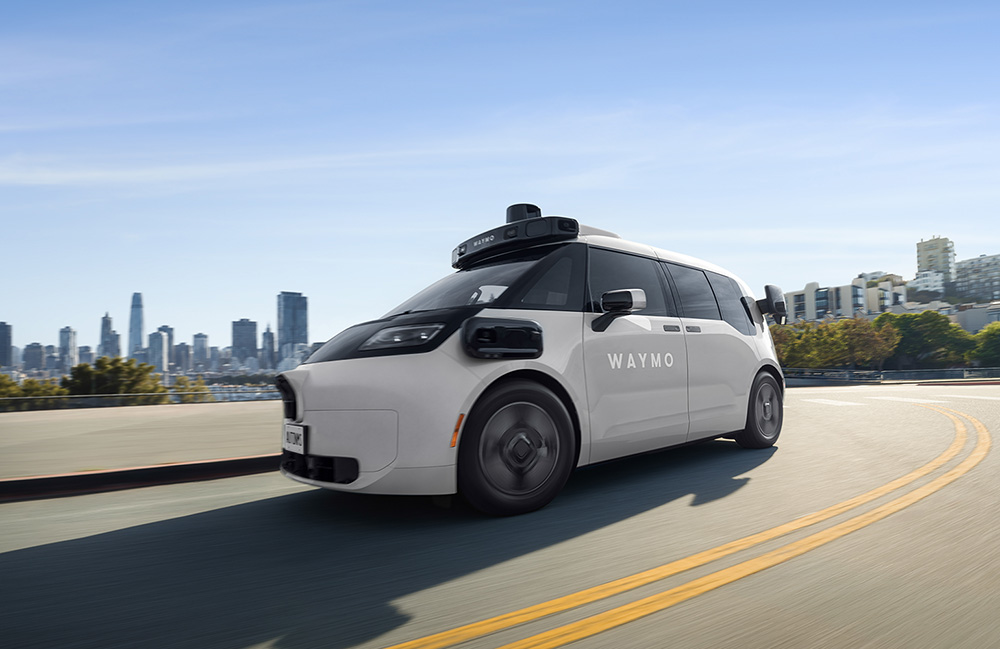
California has ordered Waymo to stop operating and testing its driverless vehicles on the state’s freeways, a significant restriction for one of the best-known commercial autonomous-vehicle operators in the United States. The California Department of Motor Vehicles issued the order on Nov. 11 after incidents involving Waymo vehicles on U.S. Route 101 near Burlingame and on Highway 280 in San Francisco.
The restriction applies specifically to freeways. Waymo said its ride-hailing service will continue on surface streets, where it says it serves more than half a million trips each week. But the company also said it has temporarily restricted freeway operations in all of its other operating markets while it evaluates performance.
Why California acted
The DMV said the action followed an incident in which three Waymo autonomous vehicles entered an active construction closure on U.S. 101 near Burlingame. It also cited an incident on Highway 280 in San Francisco involving California Highway Patrol vehicles. In that case, a Waymo vehicle was seen attempting to drive past officers conducting a traffic stop.
According to the DMV, recurring incursions into active construction zones created an immediate public-safety concern because those areas can contain workers, construction vehicles and equipment. The agency concluded that Waymo’s freeway operations posed an “imminent hazard to public safety” and barred the company from operating or testing driverless vehicles on every California freeway.
The order does not establish a fixed end date. Instead, it will remain in place until Waymo demonstrates that it has taken effective corrective action to address the deficiencies that led to the restrictions.

What Waymo must show
California’s requirements focus on situations that remain among the hardest for automated driving systems: temporary road changes and unpredictable emergency activity. The DMV said Waymo must provide evidence that its vehicles can safely detect and respond to construction zones, emergency vehicles and other roadway conditions within the vehicles’ operational design domain.
That formulation matters because autonomous vehicles are not approved in the abstract. Their permitted operation is defined by a specified set of roads, conditions and driving scenarios. A system may perform differently on a controlled urban street than it does on a high-speed freeway, especially where lane patterns are altered by road work or where first responders are directing traffic.
Waymo said the recent U.S. 101 construction-zone encounters did not involve injuries or collisions. Still, the company acknowledged the state’s restriction and said it was working with California officials and other state authorities to resume freeway operations responsibly.
A repeat concern for the regulator
The DMV said the latest action came despite a prior restriction and corrective actions put in place after similar incidents on May 18, 2026. That history appears central to the regulator’s decision. The agency’s concern was not limited to a single unusual encounter; it described recurring freeway incursions into active construction zones.
For Waymo, the restriction creates a practical limitation even if city-street service continues. Freeways are important connectors across metropolitan areas, and a service restricted to surface streets may face longer trips or routing constraints. The company’s decision to apply a temporary freeway restriction outside California broadens the immediate operational effect beyond the DMV order itself.
The episode also highlights the difference between operating a driverless ride-hailing service and proving that an autonomous system can manage every high-consequence edge case in a given environment. Construction zones can change quickly, with cones, closures, workers, equipment and temporary signs altering the road from one hour to the next. Emergency scenes add officers, stopped vehicles and instructions that may not follow normal traffic patterns.
Service continues on city streets
Waymo emphasized that the California order applies only to freeway operations and does not stop its city-street service. The company characterized the broader pause as consistent with its safety-first approach and said it would evaluate its performance before returning to freeway service.
That distinction will be closely watched. The DMV has not ended Waymo’s ability to provide autonomous rides in California generally; it has narrowed the approved environment while requiring evidence of improvement. The company now faces a concrete path back, but it depends on demonstrating that its vehicles can safely handle the road situations that prompted the order.
For the wider autonomous-vehicle sector, the case is a reminder that expansion into more complex road types can bring new regulatory scrutiny. Freeway driving may appear more structured than urban driving, but construction closures and emergency activity can rapidly turn a standardized roadway into an ambiguous, changing environment. California’s decision puts that challenge at the center of Waymo’s next safety review.
This article is based on reporting by The Robot Report. Read the original article.
Originally published on therobotreport.com