Robotics companies are chasing better data, not just bigger models
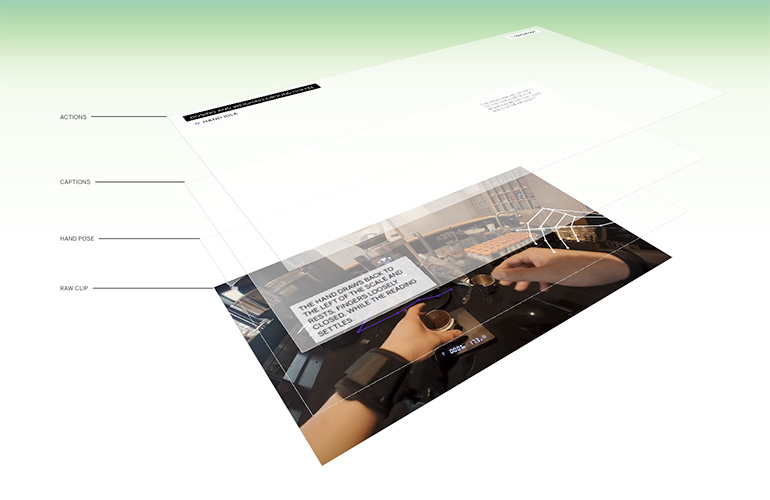
Memories.ai is building a data pipeline designed for robotics and physical AI, centered on first-person, or egocentric, video. The San Francisco-based company combines standardized video collection with AI-powered processing and annotation, aiming to turn footage of real-world activity into training material for robot-learning systems.
The company’s premise is that robots need data that shows how people interact with objects and environments from a useful physical perspective. Instead of operating only as a data vendor, Memories.ai says it wants to become a data-infrastructure partner for teams building robotics systems, world models, vision-language-action models, and humanoid robots.
That positioning puts the emphasis on repeatable collection and preparation. Robotics developers may have large amounts of video available, but inconsistent camera setups, uneven labeling, and poorly matched viewpoints can make it difficult to use that material for a specific training task. Memories.ai’s approach is to standardize the input before it reaches a customer’s model-development workflow.
How the proposed pipeline works
The company provides data collectors and partners with standardized capture hardware described as a modular camera setup, along with a uniform collection process. The goal is to gather footage in a consistent format while retaining flexibility for different tasks and camera views.
After partners submit the video, Memories.ai says it processes and annotates the footage with its own models. Its reported model set includes Memories-H0 for hand-pose information and EgoAction for action segments. Such labels are potentially valuable in robot training because they can connect visual scenes with the movements and actions taking place inside them.
The resulting material is organized as a curated video data lake, with custom annotation services and dataset tools. In practical terms, the pipeline is intended to give robotics developers access to prepared examples rather than leaving each team to solve capture, quality control, annotation, and storage independently.
Why egocentric video matters
First-person footage can capture the relationship between hands, tools, objects, and a changing environment. For physical AI systems, that relationship is important: a model intended to support manipulation or other real-world tasks needs more than a general recognition of an object. It may need to infer what action is underway, where an object is relative to the operator, and how an activity unfolds over time.
Memories.ai describes its data infrastructure as being built for physical AI. That phrase encompasses systems intended to understand or act in the real world, including robotics platforms and vision-language-action models. The company’s longer-term goal is to help make robots more capable of understanding physical environments by supplying data and processing tailored to those use cases.
Its modular design is also significant. Robotics tasks vary widely, from industrial workflows to household manipulation, and a single fixed camera viewpoint will not fit every application. A collection system that can support multiple views while preserving a standardized process could make it easier to build datasets aligned with particular tasks.
Using AI to prepare video for model development
Memories.ai said it used NVIDIA Cosmos to interpret video entering its data lake, then curates that material to post-train Cosmos for customers’ robotics and industrial applications. The company characterizes this as a loop that turns real-world video into models adapted to customer tasks.
The distinction between raw footage and usable training data is central to the business case. Capturing video is only the first step. The footage must be processed, segmented, labeled, and made available in a form that model developers can use. Automating part of that work with video-understanding models can help scale the pipeline, while custom annotation can adapt datasets to a customer’s particular requirements.
- Standardized capture is intended to improve consistency across contributors.
- AI-powered annotation is used to label elements such as hand pose and action segments.
- A curated data lake gives customers a shared foundation for post-training and dataset work.
- Modular hardware is intended to support varied tasks and camera viewpoints.

Infrastructure becomes a competitive layer
The rise of physical AI has made data collection and curation a strategic concern. A robot can only learn from the examples made available to it, and teams working on similar model architectures may differentiate themselves through the quality, relevance, and organization of their data. That creates room for specialist providers whose value lies in building the pipeline around the model rather than the model itself.
Memories.ai has also published multiple elements of its research on GitHub and reported publication activity at ICLR, NeurIPS, and EMNLP. Those details indicate an effort to participate in the research ecosystem while commercializing a data platform for robotics customers.
The company’s stated ambition remains broad, and its claims should be understood as its own description of the platform. Still, the direction is clear: as robotics moves from demonstrations toward more varied real-world deployments, standardized first-person data and reliable annotation may become as important as the algorithms that consume them.
The core challenge: translating experience into training material
For robotics, the useful unit of data is rarely just a video clip. It is a clip with enough context and structure to teach a model something actionable. By focusing on capture standards, video interpretation, and targeted annotations, Memories.ai is trying to package everyday physical activity into that more valuable form. Whether this approach becomes widely adopted will depend on the quality of the data, the applicability of the labels, and the performance gains customers can obtain from using it.
This article is based on reporting by The Robot Report. Read the original article.

Originally published on therobotreport.com