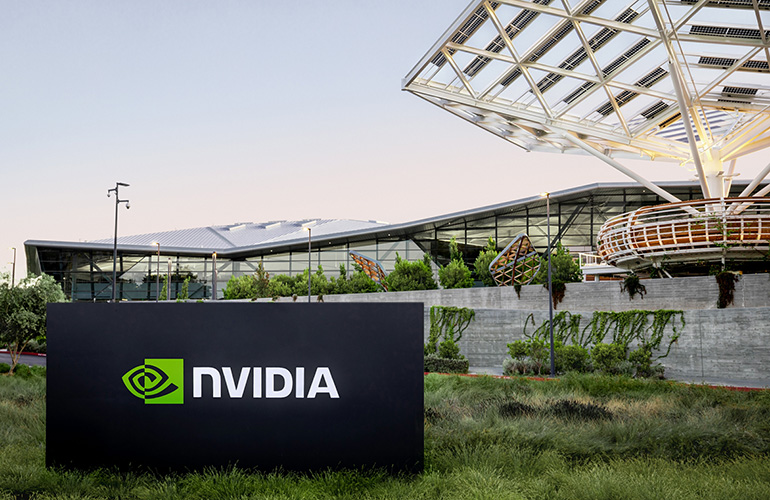
NVIDIA has named executive vice president and chief financial officer Colette Kress as interim chief executive after co-founder Jensen Huang stepped down, according to a report from The Robot Report. The company also appointed investor and former technology executive Harvey C. Jones as its first board chair.
The leadership shift comes during a period of pressure on the company, which the report says included an approximately 18.5% drop in its stock over the preceding week and scrutiny related to China, export controls and national-security concerns. NVIDIA said it would continue supporting customers through the transition.
A transition at the center of the AI hardware market
NVIDIA occupies an unusually consequential place in advanced computing. Its graphics processing units and software architectures are used across AI workloads and other forms of high-performance computing. The company’s technology is also used in industrial manipulators, autonomous mobile robots and emerging humanoid robotics, the report said.
That reach makes executive continuity particularly important. Hardware customers, cloud operators, developers and robotics companies depend on long-term product roadmaps, software support and reliable supply arrangements. An interim appointment cannot answer every strategic question, but it establishes an immediate executive center while the company navigates the leadership change.
Kress has served as NVIDIA’s executive vice president and chief financial officer since joining the company in September 2013. Before NVIDIA, she held finance roles at Cisco and Microsoft over nearly 25 years, according to the report. NVIDIA said she had played a key part in its growth and evolution.

Kress emphasizes continuity
In a statement cited by The Robot Report, Kress said NVIDIA would build on the foundation created over the company’s first 33 years and continue advancing the work that made it a leader in accelerated computing and AI. She said the immediate focus would remain on customers, partners, developers and shareholders.
That message is aimed at a broad set of stakeholders. NVIDIA’s business is not limited to chip sales; it depends on an ecosystem of software, systems, cloud deployments, researchers and manufacturers. Maintaining confidence in that ecosystem is a central task for an interim CEO, especially while questions about succession and governance are likely to persist.
Jones, who has been an entrepreneur, technology executive and venture investor for more than 30 years, has previously served as CEO and executive chairman of Synopsys. In remarks cited in the report, he said Kress had a deep understanding of NVIDIA’s business, customers, operations and financial position, and that she was backed by an experienced leadership team.
Scrutiny and an internal investigation
The report says Huang acknowledged extramarital affairs and that one involved an executive at Megaspeed, a company described in the article as being under suspicion of ties to Chinese espionage. Huang said NVIDIA’s board had initiated an independent investigation into national-security concerns raised in news reports and that he would cooperate.
These are serious allegations and remain allegations in the source material. The supplied report does not establish findings by the investigation, nor does it provide its scope, schedule or potential consequences. The key confirmed corporate action described is the change in leadership and the board’s decision to conduct an independent investigation.
The situation also lands amid wider sensitivity around the movement of advanced computing technology across borders. NVIDIA has become central to debates about AI infrastructure, export controls and access to high-performance chips. Leadership developments can therefore reverberate beyond the company, affecting investors, customers and policymakers who are already watching the sector closely.
What comes next
The announcement places Kress in charge on an interim basis, which signals a transition rather than a completed succession. NVIDIA has not, in the supplied article, identified a permanent chief executive, a timetable for selecting one or details about how the investigation may affect governance decisions.
For the business, the near-term test is operational steadiness. NVIDIA will need to keep serving customers and executing on its AI and accelerated-computing strategy while leadership changes unfold. The company’s established management team and Kress’s long tenure may help reduce disruption, but the broader scrutiny described in the report means the transition will be watched closely.
For robotics and AI users, the immediate significance is less about a change to a specific product than about stewardship of a company whose computing platforms underpin a growing share of the industry. NVIDIA’s next disclosures on permanent leadership, the board investigation and its China-related posture will help determine whether this is a short continuity exercise or the start of a more substantial corporate reset.
This article is based on reporting by The Robot Report. Read the original article.
Originally published on therobotreport.com