A global archive for an artist and a visual tradition
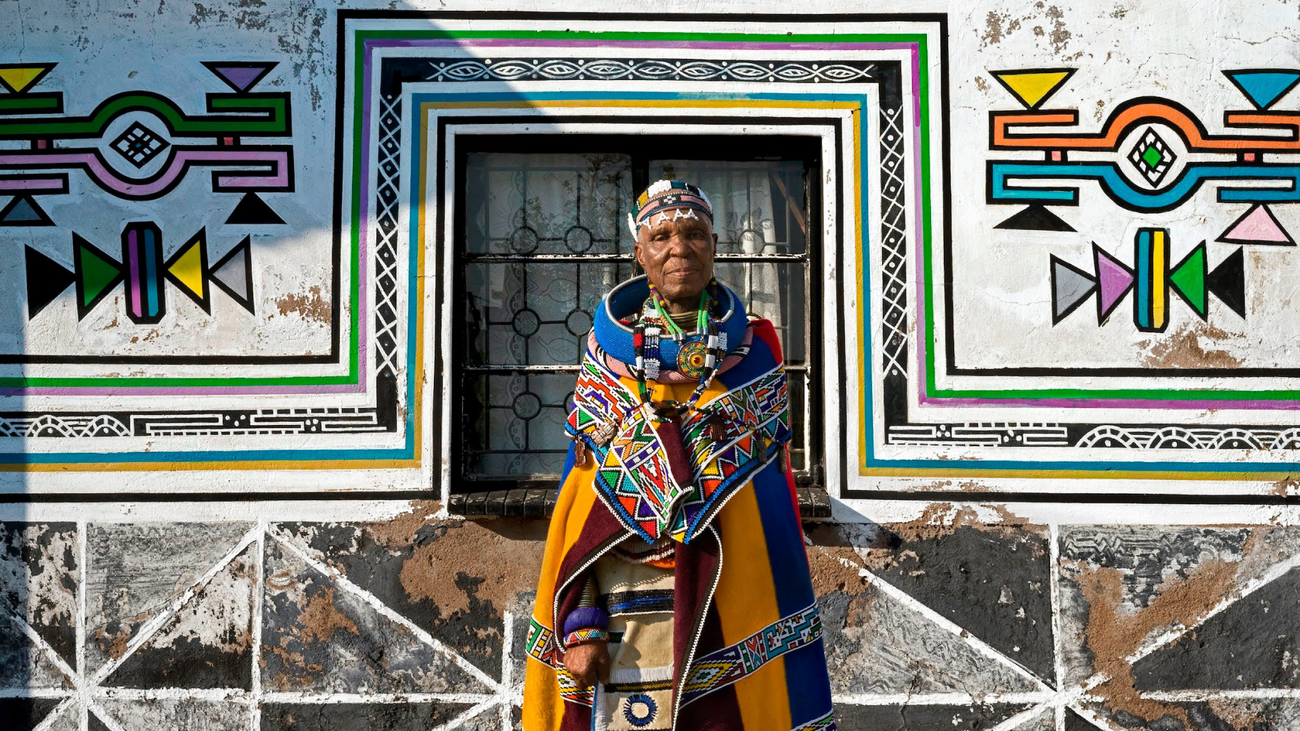
Google Arts & Culture has launched what it describes as the first online retrospective of South African artist Dr. Esther Mahlangu. Released in honor of Mahlangu’s 91st birthday, the project brings together more than 45 stories, archival materials, murals and accounts of her life and artistic legacy for a global online audience.
The retrospective is presented as both an archive and an interpretive exhibition. Its focus is Mahlangu’s work and the Ndebele cultural heritage connected to it. For visitors who may encounter the artist’s practice digitally for the first time, the collection offers a route into her life, imagery and legacy without requiring travel to a physical exhibition.
The launch also illustrates one way cultural institutions are using new media tools: not simply to digitize existing objects, but to address gaps in the historical record. In this case, Google Arts & Culture says artificial intelligence and new video technology were used to recreate aspects of Mahlangu’s early life that were not documented before her first recorded works.
Using AI around incomplete records
The project’s use of artificial intelligence is framed around childhood memories and early history. According to the announcement, some parts of Mahlangu’s early life were undocumented. The online retrospective uses AI-generated recreations based on her own stories to bring those memories to life.
That is a distinct use case from treating AI output as a newly discovered archival source. The announcement describes the material as a recreation grounded in the artist’s recollections and historical research. The distinction matters for digital heritage projects: archival documents, curatorial interpretation and AI-assisted visual reconstruction are different kinds of material, even when they appear together in a single experience.
Google’s presentation labels its AI-generated article summaries as experimental. The larger project is positioned as an effort to make a collection of stories, archival materials and visual documentation accessible to audiences beyond the locations where the physical records and murals may be held.

More than 45 stories in one online exhibition
The retrospective includes more than 45 curated stories, along with rare archival materials and virtual-tour elements. The announcement says visitors can explore murals and learn about Ndebele culture through the collection. Its scope therefore extends beyond a conventional biographical profile: the exhibition aims to connect an individual artist’s work with the cultural context that informs it.
For online audiences, this structure can be especially valuable. A physical exhibition often has to make choices about how much history, process and context can fit in a gallery. A digital archive can organize a body of material into multiple entry points, allowing visitors to move among biography, images, stories and related cultural information.
That does not eliminate the need for careful curatorial framing. Digital exhibitions can make cultural materials easier to reach, but they also shape how visitors understand provenance, authorship and context. The announcement emphasizes that the retrospective was developed to honor Mahlangu and preserve Ndebele heritage for a worldwide audience.
A cultural project with a technology layer
The project arrives from Google Arts & Culture rather than as a conventional AI product launch, but it is still an example of how generative tools are entering public-facing cultural work. The technology is used here to visualize memories that otherwise lack a recorded visual history, while the core of the exhibition remains the artist’s life, art and archive.
This approach places an important responsibility on the presentation itself. Audiences need to understand what is archival, what is interpretive and what is AI-generated. Google’s announcement explicitly identifies AI-generated recreations and describes their basis in Mahlangu’s own stories. That disclosure gives visitors a clearer way to read the project’s different materials.
For artists and cultural organizations, the appeal is evident. Digitization can expand access to fragile or geographically dispersed material. Interactive and video-based formats can provide context that static image galleries may not. Generative tools can offer a way to visualize remembered scenes where no historical photograph or film exists. But those possibilities depend on maintaining a visible distinction between documentation and reconstruction.

Expanding access while preserving context
Google Arts & Culture says the retrospective makes Mahlangu’s art, life and legacy accessible from anywhere. The project’s timing, on her 91st birthday, makes the archive an act of recognition as well as a publishing initiative. It also gives audiences a single place to encounter a substantial collection of stories and materials connected to her work.
The online format can broaden who gets to engage with a cultural legacy, especially for people unable to visit exhibitions or archives in person. At the same time, its value depends on the care taken in representing the culture from which the work emerges. The announcement places preservation of Ndebele heritage at the center of the project’s purpose.
In that respect, the retrospective’s most significant contribution may be its combination of access and attribution. It gathers material about Mahlangu’s artistic life, situates it in a cultural context and clearly presents AI-assisted reconstructions as reconstructions. The result is a digital exhibition that uses technology to extend an archive rather than to replace it.
As cultural institutions continue to experiment with generative systems, this model will be closely watched. The question is not only whether AI can create compelling images or video. It is whether those tools can be used in ways that honor living artists, preserve cultural context and help audiences distinguish memory, interpretation and historical record. Google Arts & Culture’s new Mahlangu retrospective puts that question into practice on a global stage.
This article is based on reporting by Google AI Blog. Read the original article.
Originally published on blog.google