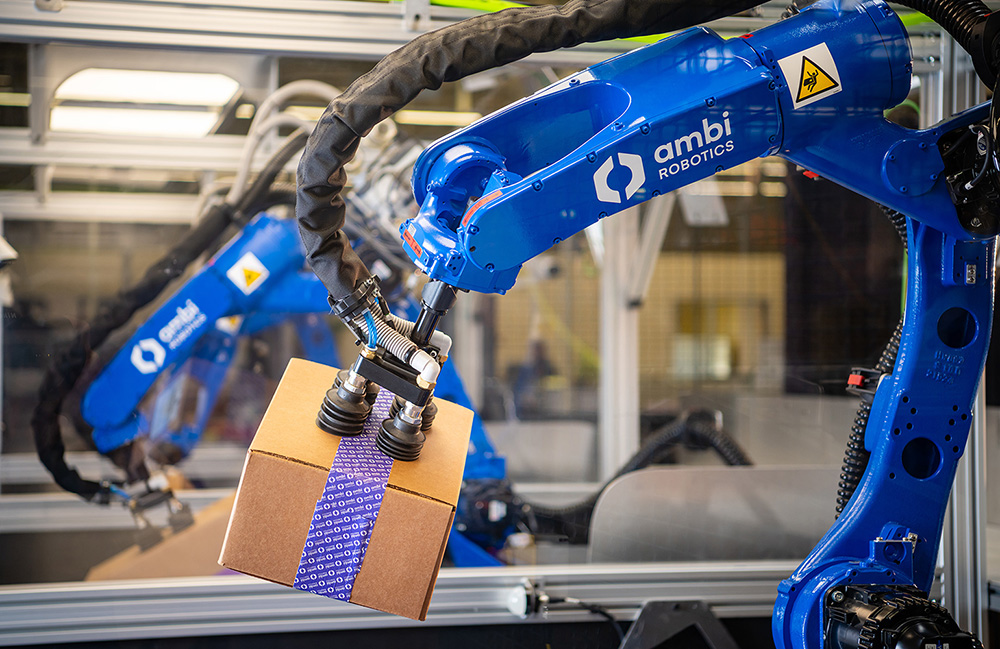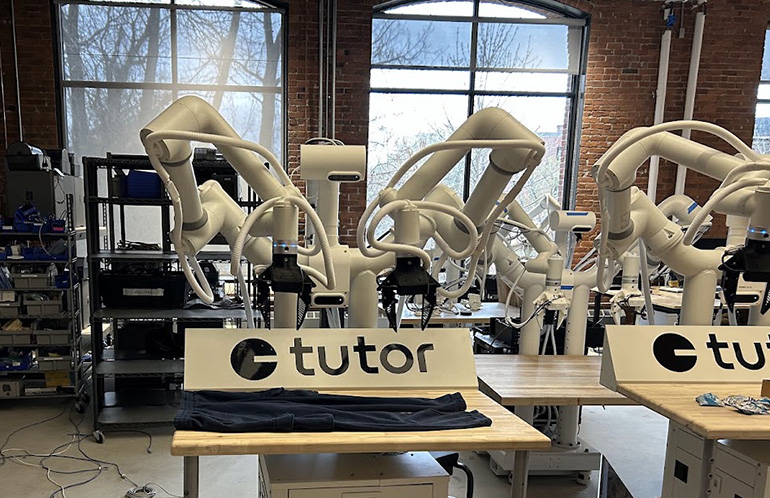
High-precision manufacturing is increasingly within reach of midmarket and smaller companies as industrial robots, collaborative robots and integrated sensing systems become easier to deploy, according to a new analysis from The Robot Report.
The shift does not mean every factory needs a wholesale automation overhaul. Instead, manufacturers can modernize selected workflows with systems designed for tighter footprints, more intuitive programming and faster reconfiguration. For businesses confronting labor shortages, rising costs and persistent quality demands, that targeted approach can be especially significant.
Precision is moving beyond the largest factories
Highly automated precision production was once commonly associated with large companies that could absorb the cost and complexity of specialist equipment. The Robot Report argues that advances in robotic integration are changing that calculation. Smaller operations now have more ways to introduce automation into existing production layouts while retaining flexibility for varied jobs and batch sizes.
The underlying change is not a single new machine. It is a combination of smaller systems, improved software, sensors and integration practices. Together, these tools can allow manufacturers to automate handling, machining-adjacent processes and other repeatable tasks while continuing to rely on people where dexterity, judgment or rapid adaptation are most useful.
That is an important distinction. Automation in a midmarket facility is often not about eliminating an entire workflow or creating a fully lights-out factory. It can mean identifying a constrained process and building a more reliable way to feed, grip, inspect or move parts through it.

Four enablers of broader adoption
The analysis identifies several developments that are lowering barriers to robotic precision manufacturing.
- Lower potential investment costs and compact designs can make robots more practical for existing factory layouts.
- Intuitive interfaces and lead-through teaching can reduce the amount of specialist programming required for deployment and changeovers.
- Vision and force-torque sensors can be combined with AI-driven capabilities so robots can perceive, react and adapt more precisely.
- Collaborative robots can work alongside people without extensive guarding, supporting flexible human-robot operations.
Each factor addresses a common obstacle. A system that occupies too much space may not fit a smaller plant. A system that requires extensive coding expertise can be difficult to maintain. A machine that cannot cope with variation may be unsuitable for medium-volume production. And a heavily segregated installation may remove the flexibility that makes human workers valuable.
Improving all of these dimensions at once does not make integration effortless. It does, however, expand the range of processes that can be considered for automation.
Sensors and software reshape what robots can do
Robots are most useful when they can interact reliably with the real conditions of a factory rather than only repeating a fixed motion in an idealized environment. The Robot Report highlights vision systems and force-torque sensors as tools that can help make that possible.
Vision can give a system information about the presence, position or orientation of a part. Force-torque sensing can provide feedback when a robot grips, inserts or otherwise contacts an object. Combined with AI-driven capabilities, these sensor inputs can help a robot understand and respond to changing conditions with greater precision.
For manufacturers, this can be a practical route to better repeatability. A robot that can handle variation in components or fixtures may reduce the need for perfectly uniform presentation. It may also enable a process to be reconfigured for a different product more quickly than a dedicated machine designed for only one task.
The value lies in the integrated system, not merely in the robot arm. Grippers, fixtures, software, sensing and workflow design determine whether an installation can meet its intended accuracy and reliability goals.

Example: flexible production at Torneria Novoletto
The Robot Report points to Italian manufacturer Torneria Novoletto as an example of targeted integration. The company produces sophisticated components for chemical, medical and pharmaceutical sectors and faced challenges in maintaining precision and process reliability for medium-sized batches.
It adopted SCHUNK’s R-C2 automation concept, integrating advanced clamping devices and grippers with robotic handling. According to the report, the system supported operational flexibility and reduced setup and changeover times. The R-C2 approach allowed continuous handling of workpiece sizes and automated reclamping.
This example captures why flexibility matters to midmarket manufacturers. A large, steady production run can justify equipment tailored to a single part. Medium-sized batches, by contrast, require a production system that can switch between jobs without consuming disproportionate time in setup. Automation that reduces those transitions can improve the usefulness of precision equipment without requiring a dedicated line for every variation.
Collaboration, not just replacement
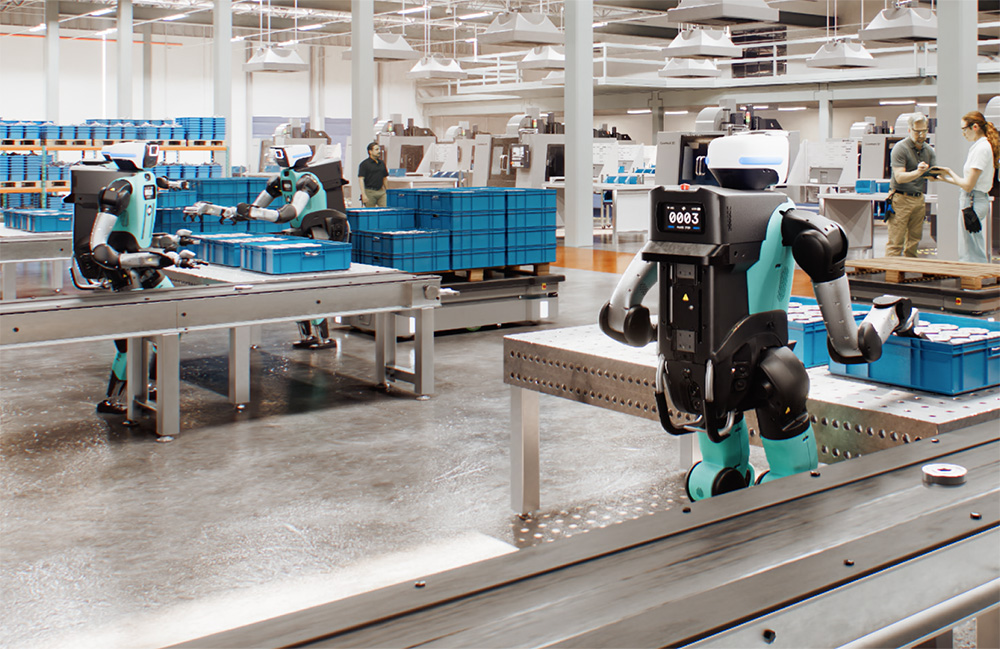
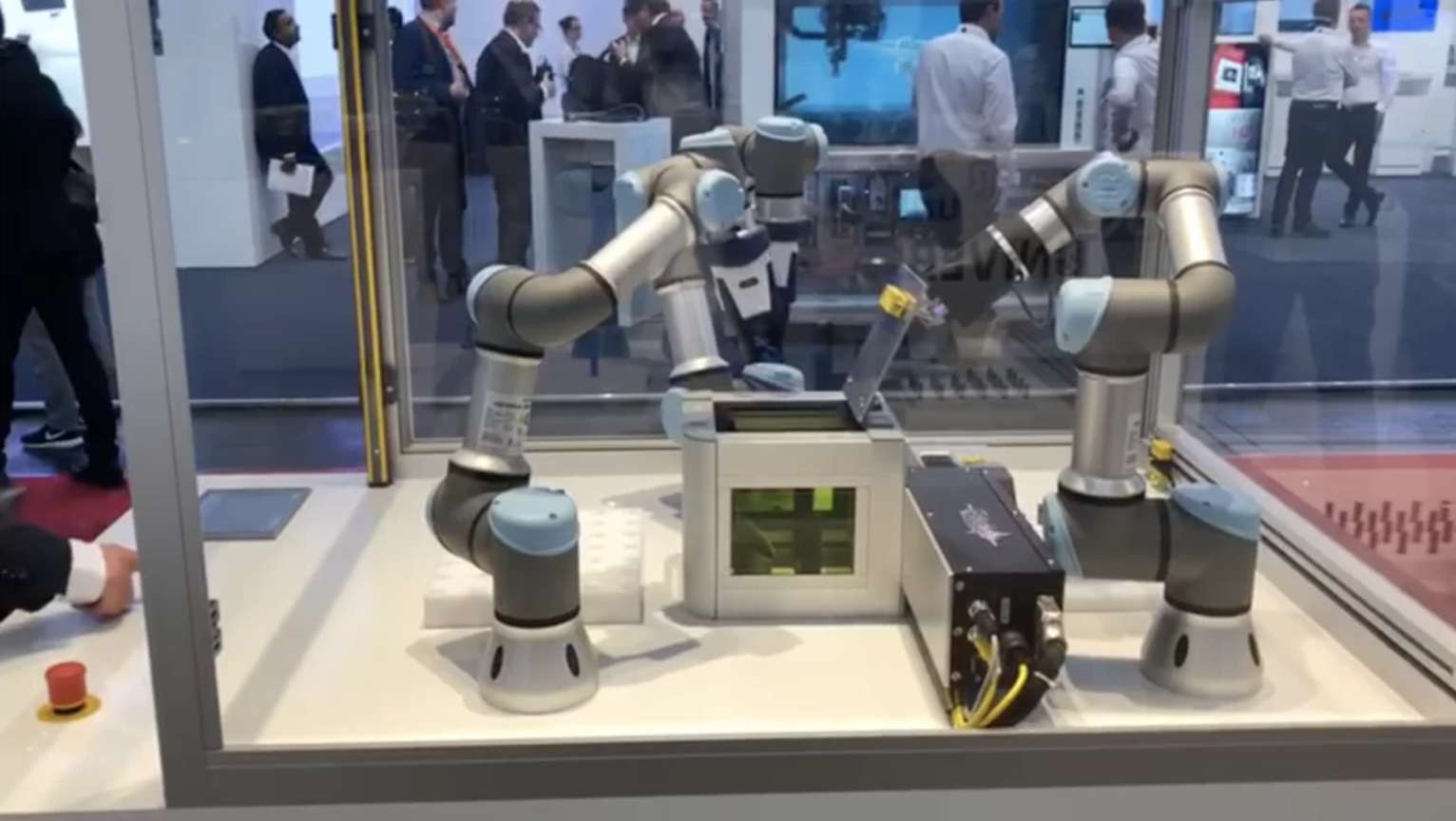
Collaborative robots, or cobots, are part of this transition because they can be designed to operate alongside workers. That makes them relevant in factories where people still perform a broad range of tasks and floor space is limited.
A flexible human-robot workforce can combine robotic consistency with human dexterity. Workers can handle exceptions, oversee quality or carry out complex tasks, while robots take on repeatable movements and precisely controlled handling. The precise division of work will differ by operation, but the aim is to use automation where it produces a clear operational benefit.

Integration remains the central challenge
The report’s core message is also its caution: access to robotic hardware alone is not enough. Effective integration determines whether a manufacturer gains the promised accuracy, efficiency and flexibility. Companies need to evaluate the workflow, the parts to be handled, the required sensing, safety arrangement, operator training and likely changeover patterns.
For midmarket manufacturers, the opportunity is to begin with a well-defined need instead of treating automation as an all-or-nothing transformation. As robotic systems become more compact, adaptable and sensor-enabled, precision production is becoming less exclusive to the largest industrial players.
This article is based on reporting by The Robot Report. Read the original article.
Originally published on therobotreport.com